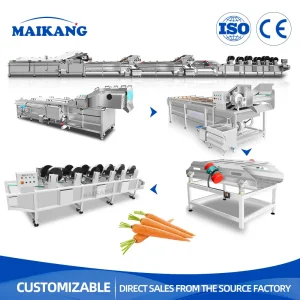
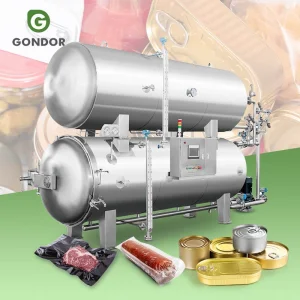
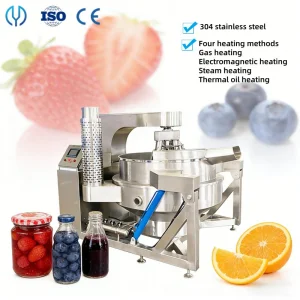
High-efficiency, state-of-the-art steam boilers and cooking mixers specifically tailored for Qatar's high-capacity hospitality and central kitchens.
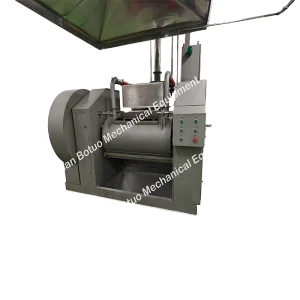
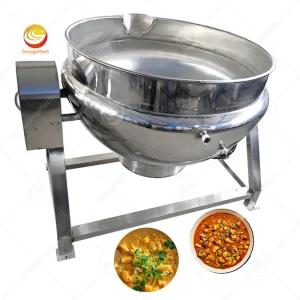
A Comprehensive Guide to Steam Boiler Integration, Industrial Safety Standards & Thermal Efficiency in Doha's Commercial Culinary Ecosystem
As Qatar advances towards the goals of its National Vision 2030, the city of Doha has transformed into a global hub for luxury hospitality, sports tourism, and international conferences. This rapid infrastructural development has catalyzed an unprecedented demand for large-scale food production. Commercial kitchens, catering companies, and food processing plants are scaling up operations to meet the food quality and safety expectations of international standards.
In Doha's high-temperature environment, operating a commercial kitchen presents unique challenges. Conventional direct-flame gas systems transfer vast amounts of radiant heat into the kitchen workspace, driving up cooling utility bills and lowering staff efficiency. Steam cooking boiler equipment solves this thermodynamic bottleneck. By using sealed pressurized steam jackets, heat energy is transferred directly to the cooking medium with minimal radiation loss, maintaining cooler work areas and cutting energy consumption by up to 30% compared to traditional configurations.
From the industrial catering lines in Ras Laffan and Mesaieed to the prestigious hotel kitchens in West Bay and The Pearl-Qatar, high-output steam jacketed kettles, planetary mixers, and retort sterilizers are now core components of modern kitchen architecture. Local businesses require robust, high-performance equipment to process hundreds of kilograms of rice, stews, sauces, and local Qatari culinary items daily, while maintaining strict HACCP compliance.
The industrial food processing market is shifting from manual, flame-heated batch cooking to fully automated, digitally monitored thermal systems. Key technology trends include:
Global procurement directors in the food and beverage industry focus on three main metrics when selecting boiler and cooking systems: Long-term reliability, compliance certifications, and total cost of ownership (TCO).
Suppliers must show strict compliance with international manufacturing codes. Because pressurized steam equipment is subject to high mechanical stresses, uncertified boilers present significant safety hazards in commercial environments. Procurement agents look for pressure vessel manufacturing credentials, safety relief valve certifications, and food-grade material validation (specifically polished SUS304 or SUS316L stainless steel) to protect their staff and brand reputation.
How Shandong Linru Import & Export Integrates Advanced Manufacturing with Global Logistics to Deliver High-Performance Equipment
Located in Shandong, China's main industrial hub, Shandong Linru Import & Export Trading Co., Ltd. (also operating under the Feijin Import & Export brand) runs a specialized commercial kitchen manufacturing facility that utilizes advanced Factory 4.0 processes. Over 15 years, the company has transitioned from producing simple kitchen stoves to manufacturing a diverse portfolio of high-capacity food processing equipment, planetary mixers, and pressurized steam kettles.
Our Factory 4.0 setup features automated robotic welding for pressure jackets, CNC laser cutters for precise sheet metal fabrication, and digital radiographic testing of weld seams. This advanced manufacturing framework ensures every steam cooking boiler is perfectly sealed and built to withstand decades of high-pressure operation. By controlling the entire manufacturing process in-house, we protect our supply chain from raw material cost fluctuations and deliver reliable machinery with shorter lead times than Western European competitors.
In addition, our manufacturing standards are backed by full-range CCC (China Compulsory Certification) and the National Pressure Vessel Manufacturing License. This means when hospitality chains and industrial caterers in Doha procure our equipment, they are acquiring safety-certified, pressure-tested machinery designed for safe daily operation.
Explore our industrial range of planetary cooking mixers, gas-heated boiling vessels, and food processing machines.
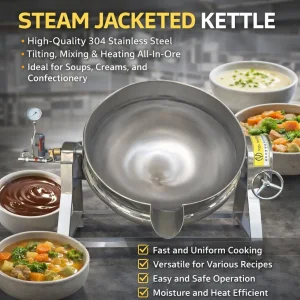
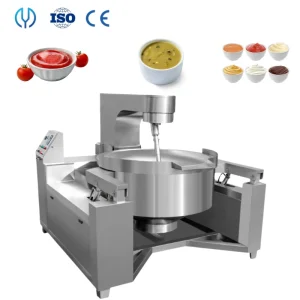
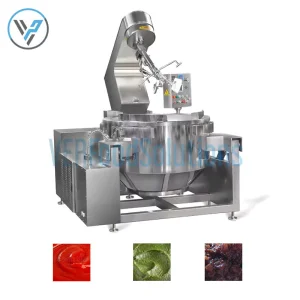
How we customize our steam boiler and refrigeration systems to perform reliably in Middle Eastern operating conditions
Selling cooking machinery in Doha requires a deep understanding of local operating conditions. Simply importing standard machinery often leads to premature component failure, piping corrosion, or high energy consumption. At Feijin / Shandong Linru Import & Export, we customize our hardware to match the specific needs of the Qatari market:
Doha's tap water is primary processed through municipal desalination plants. This water contains trace chlorine ions and minerals that can accelerate corrosion at high temperatures. To prevent this, we construct our heating tubes, boiler shells, and jacket linings from high-grade, low-carbon SUS304 or SUS316L stainless steel. This specialized metallurgy resists pitting corrosion, ensuring the boiler system remains hygienic and leak-free for years of operation.
With summer temperatures in Doha often exceeding 45°C, commercial kitchens run high-capacity air conditioning systems. Standard, uninsulated boilers radiate significant heat, placing a heavy load on kitchen HVAC systems. Our steam boilers and jacketed kettles are designed with thick, double-layered insulation filled with high-density rock wool or polyurethane. This design traps heat energy inside the vessel, reducing thermal emissions into the room, protecting kitchen staff, and lowering HVAC electricity costs.
In addition to our heating lines, we apply these same high-quality standards to our commercial refrigeration equipment. Each refrigeration unit is engineered to meet national quality guidelines and customized for Middle Eastern environments. We use tropicalized compressors and oversized condensers to ensure consistent cooling performance, even when kitchen temperatures rise.
Backed by 15 years of industry experience, we reject low-cost, low-quality shortcuts. Our equipment complies with national quality standards, giving you peace of mind during municipal inspections in Doha.
We tailor technical specifications, pressure ratings, mixing paddles, and electrical configurations (380V/50Hz/3Phase) to match your kitchen's utility connections and daily output targets.
We use heavy-gauge 304 or 201 stainless steel in our commercial preparation tables, storage units, and sink lines, focusing on load-bearing structural design and durable weld finishes.
Our focus is on long-term equipment stability. We design commercial kitchen machinery built to deliver consistent performance over a long service life.
How Shandong Linru / Feijin Implements Strict Material Standards and Industrial Safety Controls
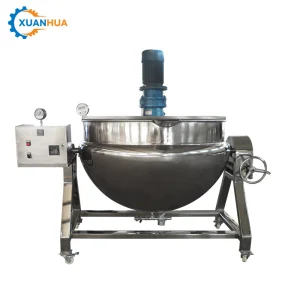
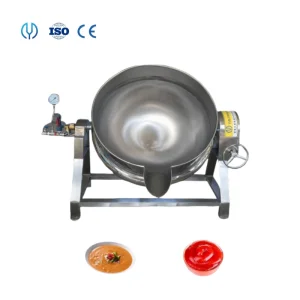
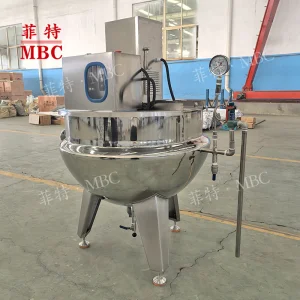
A high-capacity steam jacketed boiler is essentially a specialized thermal heat exchanger. The vessel features an inner and outer wall, creating a jacket space where steam is introduced at pressure. As the steam contacts the cooler inner wall, it condenses back into water, transferring its latent heat of vaporization directly to the food inside the kettle. This process allows for fast, even heat distribution, which is why jacketed kettles are popular for preparing sauces, soups, gravies, and large batches of rice.
At Shandong Linru Import & Export Trading Co., Ltd., we utilize advanced manufacturing techniques to produce these systems:
We apply these same rigorous quality standards to our refrigeration lines. Our walk-in coolers, upright chillers, and display cases are built with high-density polyurethane insulation and tropicalized compressors. This ensures stable cooling performance, even when ambient temperatures in Doha's kitchens rise during peak service hours.
Connect with our engineering team to design a steam boiler or jacketed kettle solution tailored to your kitchen layout, capacity needs, and utility connections.
Send Inquiry NowExpert engineering answers regarding installation, utility connections, safety, and operation in the Middle East market
For the Qatari market, we customize our electrical panels to match the standard 380V-415V, 50Hz, 3-Phase configuration (or 220V-240V Single Phase for control systems and smaller units). Our water and steam connections use standard BSP/NPT threads to integrate easily with local plumbing networks.
Pressurized steam jackets store high thermal energy. Without proper design, high pressures can cause structural failure or explosions. A Pressure Vessel Manufacturing License certifies that the vessel has been designed, welded, and pressure-tested according to strict industrial safety codes.
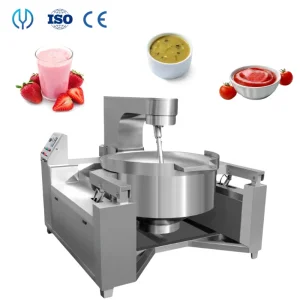
Planetary mixers rotate on their own axis while revolving around the center of the kettle. This dual-motion scraper setup sweeps the entire inner surface of the kettle, preventing thick sauces or rice dishes from sticking and ensuring even heat distribution throughout the batch.
Yes. Our heavy-duty jacketed kettles are also used in chemical, pharmaceutical, and cosmetics manufacturing. They are well-suited for mixing and heating wax, petroleum jellies, soaps, and specialized coatings that require gentle, indirect heating to prevent flash points or degradation.
Standard manufactured items ship within 25–40 days from our Shandong facility. We coordinate ocean freight directly to Hamad Port in Doha and handle all customs documentation, material test reports, and certifications to ensure a smooth import process.
Daily cleaning of the food contact area is required. We also recommend weekly checks of the steam safety pressure valves and water level indicators. The jacket should be flushed periodically to prevent mineral scale buildup, especially when operating in regions with hard or desalinated water.
A comprehensive range of high-capacity jacketed kettles, sauce mixers, and sugar boilers designed for industrial kitchens in Doha.
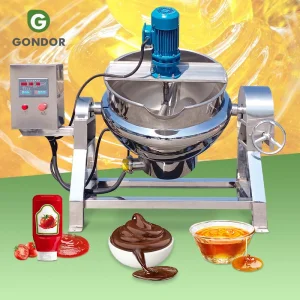
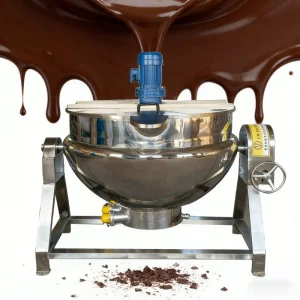
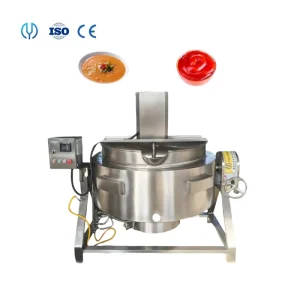
 Linru Kitchen Equipment