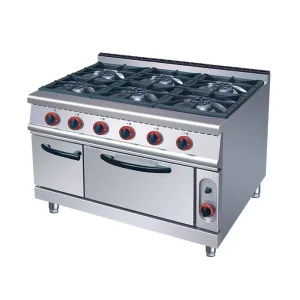
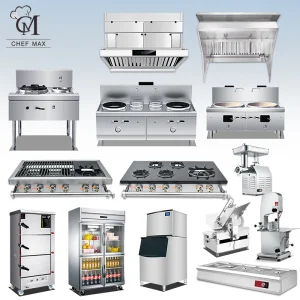
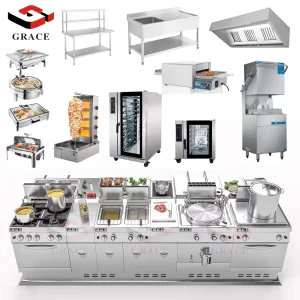
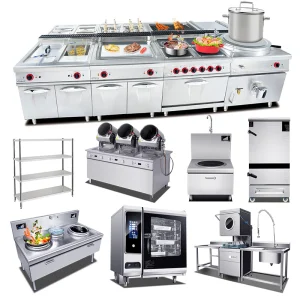
Commercial Stainless Steel Cooking Range Factories & Suppliers

High-End Engineering & Global Procurement Whitepaper for Industrial Kitchen Infrastructure

Global Commercial Kitchen & Cooking Range Landscape

Analyzing market demands, energy regulations, supply chain shifts, and structural transitions in industrial foodservice.

The worldwide hospitality, catering, and institutional foodservice sectors are undergoing a massive evolution. Today’s industrial kitchens require cooking equipment that is not only highly durable but also strictly optimized for energy conservation, minimal downtime, and safe integration. The modern commercial stainless steel cooking range has transitioned from a standard mechanical appliance into a highly sophisticated thermodynamic system designed to withstand uninterrupted operations in extreme environments.
Globally, national regulatory agencies are implementing tougher codes concerning gas emission parameters, electrical safety certifications, and sanitary material compositions. As a result, B2B stakeholders—from heavy-duty industrial project procurement agents to multinational franchise developers—are searching for top-tier manufacturing partners who combine material mastery with global standard compliance. This whitepaper analyzes how high-performance stainless steel configurations dictate productivity rates, thermal performance, and compliance metrics across modern global commercial kitchen setups.

Thermal Efficiencies

Implementation of next-generation burner rings and dynamic manifold pressure regulators to maximize gas-combustion efficiency and reduce heat waste.

Strict Regulatory Compliance

Engineering configurations developed to fulfill CCC guidelines, CE testing criteria, and global pressure vessel safety certifications.

Structural Integrity

Full utilization of heavy-gauge SUS 304 and SUS 201 steel profiles, engineered to carry loads up to 250kg under sustained high-temperature conditions.

Material Science: SUS 304 vs. 201

In commercial cooking and preparation environments, the choice of raw materials directly determines the lifespan, hygienic safety, and structural integrity of the equipment. At Shandong Linru Import & Export Trading Co., Ltd. (commonly known as Feijin Import & Export), we have refined our manufacturing criteria during our 15 years of industrial experience. We select high-grade SUS 304 or SUS 201 stainless steel based on strict load-bearing parameters, chemical resistance needs, and structural stress analyses.
SUS 304 (Austenitic Chromium-Nickel Steel): The gold standard for commercial cooking systems. Featuring a minimum of 18% chromium and 8% nickel, it forms a self-healing, passivated oxide barrier that is highly resistant to organic acid corrosion, localized pitting, and moisture-induced oxidation.
SUS 201 (Lower-Nickel Manganese Steel): An exceptionally cost-effective alternative for structural support, under-shelving, worktables, and external side panels. SUS 201 has higher yield strength and impact resistance, making it an excellent choice for structural framework parts where contact with acidic foods or heavy salt concentrations is minimal.
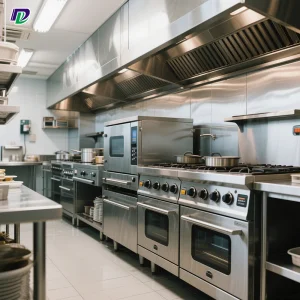
Feijin Commercial Kitchen Quality Control and Stainless Steel Design
15+ Years Experience
100% CCC Certified Stoves
Grade A Pressure Vessel License
80+ Global Export Markets

Macro-Industry Solutions & Localized Applications

Tailoring structural configurations for varying thermal footprints, kitchen workflows, and regional requirements.

Multinational Franchise Operations

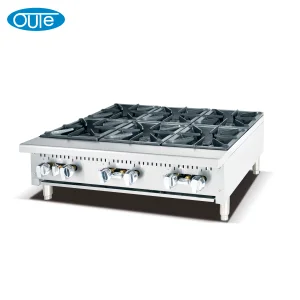
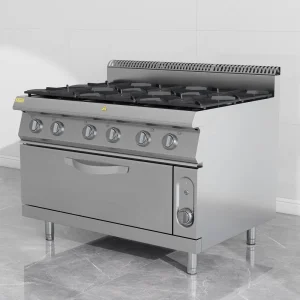
Heavy-duty, six-burner configurations and modular lines designed to maintain thermal stability across multiple franchise locations, ensuring standardized dish outputs.

High-Altitude & Extreme Climates

Specially calibrated oxygen-mixing valves, automatic flame-out sensors, and specialized ventilation configurations ensure clean, complete combustion at high altitudes.

Industrial Catering & Cloud Kitchens

Multi-fuel systems (combined gas and induction cooking zones) that optimize production speeds while reducing operational energy footprints by up to 30%.

Shandong Linru (Feijin) Compliance Declaration

"Feijin Import & Export remains committed to professional, mid-to-high-end kitchen manufacturing. We choose not to participate in low-cost, low-quality shortcuts. All of our heating appliances and stoves have earned full-range China Compulsory Certification (CCC). Additionally, our industrial jacketed kettles are manufactured under the strict supervision of the National Pressure Vessel Manufacturing License, protecting long-term plant operations from sudden safety issues and system failures."

Technology Roadmap & Future Outlook

How digitalization, safety advancements, and green energy demands are shaping the next generation of industrial cooking ranges.

The integration of IoT (Internet of Things) frameworks into heavy-duty cooking zones is changing how kitchen managers handle resource allocation. Modern cooking ranges are shifting toward closed-loop thermal management. Thermocouples connected to microcontroller boards monitor flame performance and heat transfer efficiency in real time. If a burner is left idle, the system automatically dials down the gas supply, lowering utility costs and cutting down on unnecessary heat in the workspace.
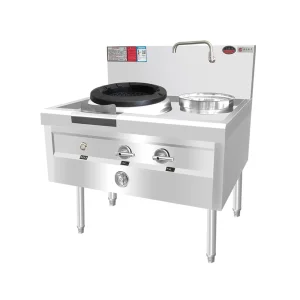
Furthermore, clean energy laws are driving the adoption of hybrid energy configurations. Dual-fuel gas and electric cooking ranges allow operators to switch between gas burners for high-heat wok cooking and electric or induction surfaces for simmering and precise temperature control. Integrated noise reduction systems also help quiet down the cooking space, making for a safer, more comfortable environment for kitchen staff.

Global Procurement FAQ (User Intent Mining)

Addressing key engineering, safety, and supply questions for commercial kitchen projects.

Q1: What are the main benefits of choosing SUS 304 over SUS 201 for cooking range bodies?
SUS 304 contains a higher level of nickel (minimum 8%), which makes it exceptionally resistant to pitting, rust, and chemical corrosion caused by salt, food acids, and sanitizing solutions. SUS 201 is stronger structurally, but it has a lower nickel content, making it more prone to rust in humid, acidic environments over time. For maximum service life in wet or high-heat areas, SUS 304 is the recommended choice.
Q2: Why are CCC certification and a National Pressure Vessel License critical for commercial kitchens?
These certifications ensure the equipment meets rigorous safety, heat management, and pressure control standards. Buying non-certified cooking or boiling equipment exposes operators to severe risks like structural failure, gas leaks, or electrical short circuits. It can also lead to issues with local building inspectors and insurance coverage.
Q3: How do you customize refrigeration and cooking range profiles to meet specific client needs?
We work closely with clients to tailor key technical parameters, such as burner configurations, BTU outputs, electrical setups (voltage/phase), overall dimensions, and integrated shelving layouts. This ensures the final units fit perfectly into localized kitchen workflows and comply with regional energy codes.
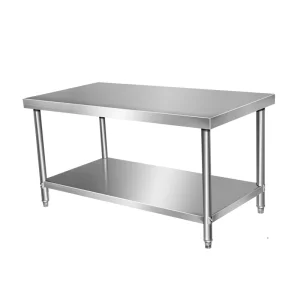
Q4: What measures are taken to ensure the quality of high-load commercial prep worktables?
We use thick-gauge steel sheets supported by reinforced under-channeling. Welds are ground smooth and polished to prevent corrosion and bacteria buildup, and all legs feature heavy-duty adjustable bullet feet to keep the table stable on uneven floors.
All Commercial Stainless Steel Cooking Range Products