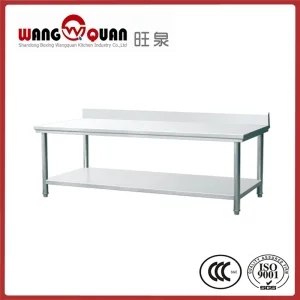
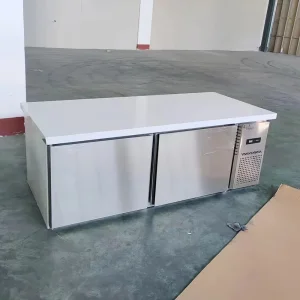
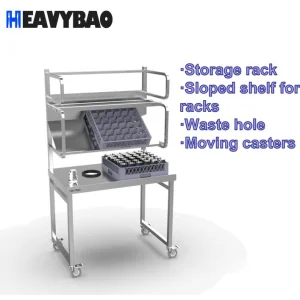
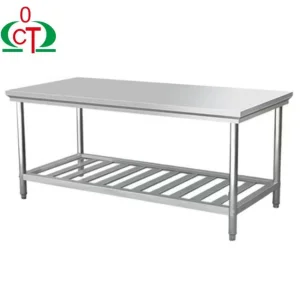
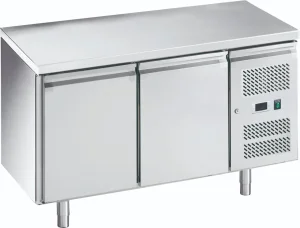
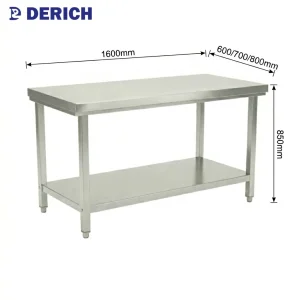
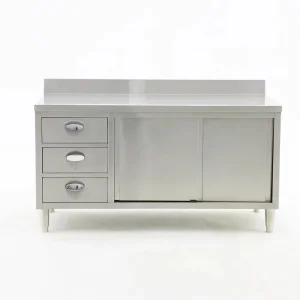
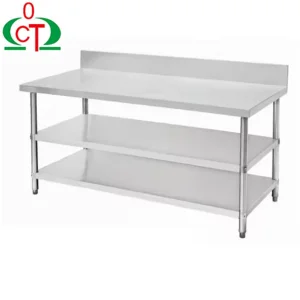
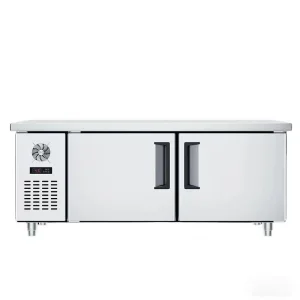
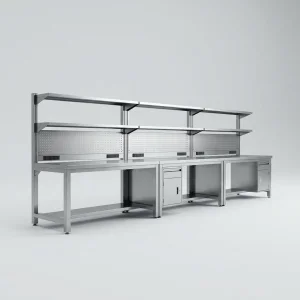
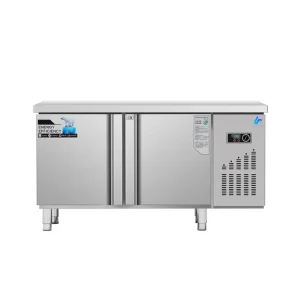
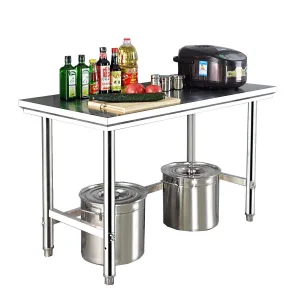
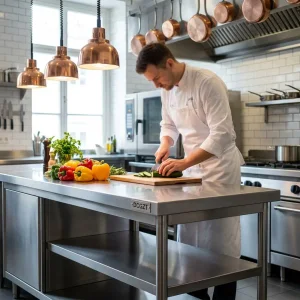
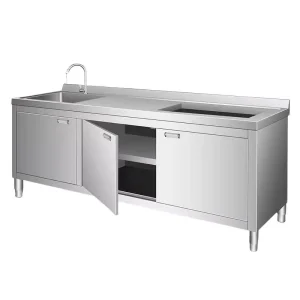
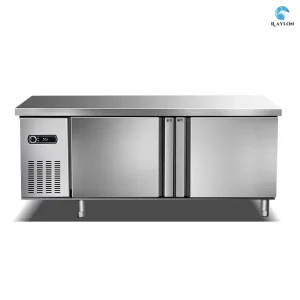
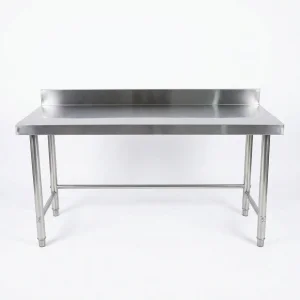
Explore our flagship series of commercial worktops, bakery workstations, and integrated sink prep configurations designed to maximize sanitation and heavy-load durability.
Understanding Material Integrity, Manufacturing Scale, and Compliance Engineering in Industrial Kitchen Infrastructure.
Shandong Linru Import & Export Trading Co., Ltd. (operating globally under Feijin Import & Export) stands as a beacon of high-end manufacturing in China's industrial commercial kitchen equipment corridor. Over the past 15 years, our enterprise has evolved systematically from a focused assembly line of commercial heating stoves to a comprehensive, multi-disciplinary manufacturer of premier commercial kitchen infrastructure.
In the global arena of food processing and catering infrastructure, product quality is synonymous with brand reputation and public safety. At Feijin, we bypass the short-sighted paradigm of low-cost, low-quality replication. Instead, we invest heavily in continuous material research, precision metal forming, and stringent sanitary compliance to ensure that every stainless steel prep worktable delivers lifetime stability, structural soundness, and ease of sanitization.
Feijin's heating elements and kitchen appliances carry the full-range CCC (China Compulsory Certification) validation. Furthermore, our industrial jacketed kettles hold the prestigious National Pressure Vessel Manufacturing License. This dedication to strict certification underlines our capacity to manufacture specialized equipment that adheres to rigorous mechanical and thermodynamic stress parameters.

Feijin Integrated Manufacturing Complex - Precision Metal Processing Operations
Analyzing the metallurgical ecosystem, automated production pipelines, and economic integration that drive global value.
Modern Chinese factories utilize high-precision CNC laser cutters, robotic MIG/TIG welding cells, and automated polishing systems. This deep integration of robotics ensures structural consistency across thousands of production batches, maintaining zero-tolerance standards for weld gaps, surface roughness (Ra values), and alignment integrity.
Feijin benefits from direct alignment with the world's most robust steel manufacturing clusters. By securing raw cold-rolled austenitic and ferritic sheets directly from major domestic mills, we ensure complete traceability of raw material composition, including strict control over chromium and nickel ratios for guaranteed rust resistance.
Unlike many Western counterpart distributors who offer only standard catalog dimensions, Feijin provides end-to-end customizable parameters. From custom loading capacities to customized shapes for specific floorplans, hospital-grade specifications, and specialized shelf slopes, our technical teams model every configuration using 3D CAD before manufacturing.
A deep dive into structural thickness, bracing design, and alloy choices to avoid catastrophic field failures.
Selecting the appropriate alloy dictates the service life of your prep station. SUS304 Stainless Steel contains approximately 18% chromium and 8% nickel. It is highly resistant to organic acid corrosion, oxidation, and pitting, making it the industry standard for high-humidity prep zones, meat carving, and laboratories.
For dry storage applications, bakery prep work, and dry ingredient sorting, SUS201 Stainless Steel offers a high tensile, cost-efficient alternative. By substituting manganese for portion of the nickel content, SUS201 delivers exceptional hardness and structural integrity under high load, though it is suited for dry or mild-moisture environments.
At Feijin, we do not compromise by hiding cheap structural fillers under the tabletop. We reinforce our tops with high-density hat channels and deadening sound pads, ensuring that heavy cleaver impact, mixing machine vibration, and direct mechanical forces do not lead to buckling or structural noise.
From michelin-star restaurants to hospital kitchens, here is how our prep worktables fit into the global commercial standard.
Hospital prep kitchens demand ultra-hygienic configurations. Our sanitary stainless steel kitchen worktables, integrated with Donper compressors for refrigerated storage, maintain continuous temperature control while the medical-grade SUS304 surface prevents microbes from penetrating the prep surfaces.
Pastry chefs require cool, highly stable, and broad surfaces for dough lamination. Our commercial refrigerated prep worktables combine rapid cooling, dense insulation, and clean flat tops, providing bakeries with the exact climate control and work space they need.
For busy central kitchens and banquet spaces, heavy duty tables with sloped racks, built-in prep sinks, and multi-tier modular prep tables enable continuous workflow from washing and sanitizing to final plating.
How technical innovations and sustainability concerns are shaping the next generation of stainless steel equipment.
The modern kitchen floorplan is shrinking due to rising real estate costs. This forces dual-utility designs. Prepping worktables are no longer simple static benches. They are actively integrated with smart, variable-speed compressors, auto-defrost systems, and digital telemetry controllers. This permits real-time temperature logs required for local health department compliance.
High global ocean freight costs have accelerated the demand for flat-pack, easy-assembly (KD) worktables. Advanced manufacturers are redesigning heavy-duty joints. By engineering internal gussets and interlocking locking mechanisms, modern KD tables achieve the identical stability of fully welded units while reducing shipping volumes by up to 70%.
Environmental regulations are prompting carbon-footprint tracing in supply chains. Leading buyers now request environmental product declarations (EPDs). Feijin actively sources steel sheets manufactured using high-efficiency electric arc furnace (EAF) processes, offering significant carbon reduction without sacrificing metallurgical properties or tensile resilience.
Feijin Design Focus: Ergonomics & Operator Efficiency
By introducing height-adjustable bullet feet, vibration-dampening undermount structures, and optimized task heights, Feijin products minimize fatigue and repetitive strain injuries in high-throughput food prep operations.
Explore the rest of our comprehensive catalog, including double-tier designs, under-counter cooling compartments, and integrated cabinets.
Addressing critical engineering, logistical, and structural compliance concerns of procurement specialists.
 Linru Kitchen Equipment