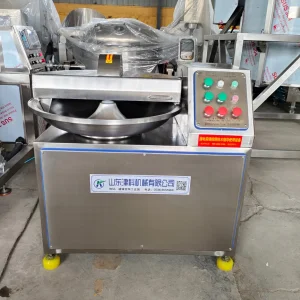
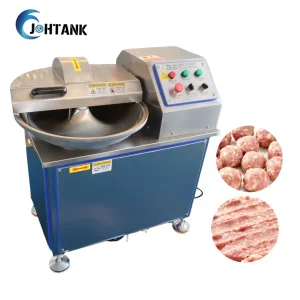
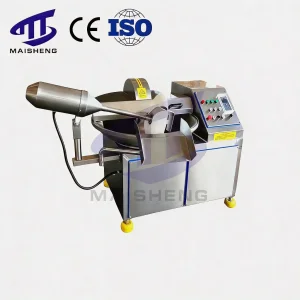
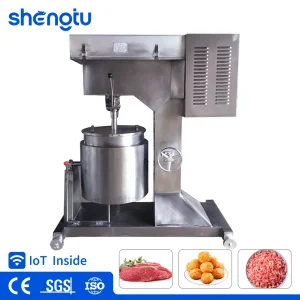
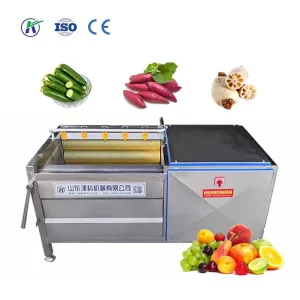
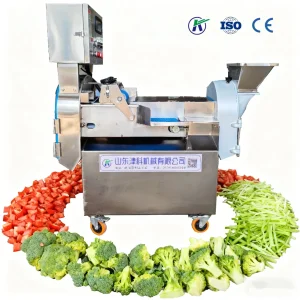
Engineered to streamline modern food factory lines, enhancing consistency, hygiene compliance, and daily raw output.
Analyzing key pain points, operational methodologies, and standard mechanical requirements for global fresh-cut factories.
The rapid urbanization and shifts in consumer lifestyles worldwide have triggered an unprecedented demand for pre-processed vegetables, ready-to-eat meals, and fresh-cut produce. According to recent industrial data, the global fresh-cut vegetable processing market is expanding at an accelerated compound annual growth rate (CAGR), driven by commercial kitchens, quick-service restaurant (QSR) chains, and hypermarket packaging networks. To maintain profitability and adhere to strict food safety protocols, processors can no longer rely on manual or semi-automated labor. Achieving consistent slicing dimensions, avoiding product bruising, minimizing enzymatic browning, and keeping microbial counts at negligible levels requires robust, high-precision industrial food processing machinery.
From high-throughput washing channels to dynamic dicing, slicing, and pureeing systems, vegetable processing preparation equipment forms the primary layer of modern food factories. As food processors aim for maximum extraction yields and minimal waste, advanced structural machinery—such as SUS304 food-grade stainless-steel constructions, frequency-controlled cutting heads, and automated conveyor configurations—has become the industry baseline. This transition is not merely about mechanical speed; it represents a comprehensive structural evolution that improves line throughput while upholding strict sanitation protocols.
Corporate buyers, facility managers, and food engineering firms face critical operational challenges when planning clean-room processing layouts. Mechanical failures, structural degradation, cleanability issues, and inconsistent outputs directly translate to financial losses. Consequently, the criteria for selecting vegetable processing equipment manufacturers have shifted toward strict technical standards:
Sanitary Engineering & IP69K Compliance: Equipment must feature open profiles, continuous welds, and smooth surfaces that prevent water pooling and bacterial harborage. This facilitates quick washdowns and complies with FDA, EHEDG, and HACCP rules.
Blade Material Integrity & Cut Quality: Precision slicing requires German-engineered or hardened chrome alloy stainless-steel blades. These blades must maintain sharpness over extended runs to prevent tearing cellular structures, which accelerates oxidation and reduces shelf life.
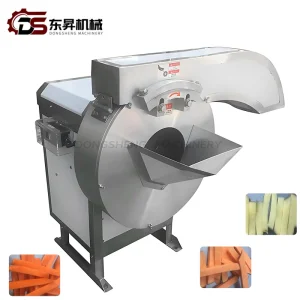
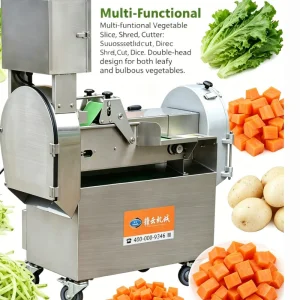
Operational Versatility: Industrial systems must adapt to a variety of seasonal raw materials. Quick-change cutting heads allow a single unit to switch from dicing root vegetables (carrots, potatoes) to slicing delicate items (cucumbers, onions, peppers) within minutes, reducing line downtime.
Modern agricultural processing plants require integrated lines rather than isolated units. A standard vegetable preparation sequence requires seamless transitions across multiple stages:
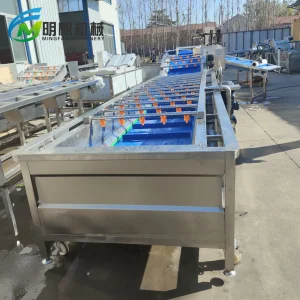
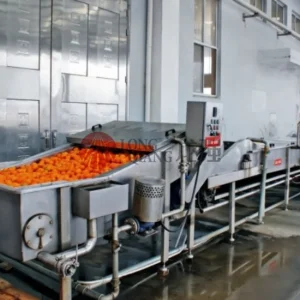
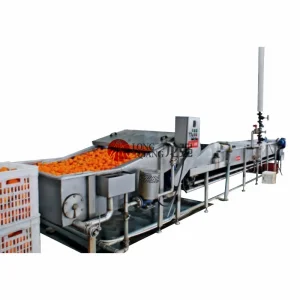
Utilizing high-pressure bubble washing machinery integrated with ozone injection and particle filtration. This ensures complete removal of soil residues, pesticide residues, and microbial load from delicate leafy greens and hard tubers without damaging their surfaces.
Implementing rotary abrasive drum peelers, roller brushes, or knife cutting modules. These systems achieve clean, uniform peel extraction with minimal loss of nutrient-dense pulp. Frequency converters optimize blade speeds for varying material densities.
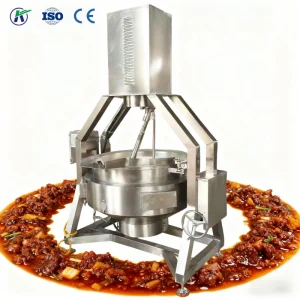
Utilizing pressure-rated commercial jacketed kettles and vacuum emulsion systems. These units perform blanching, boiling, pasteurization, and intensive mixing processes, securing the enzymatic stability and microbial safety of the final product.
The industrial food processing sector is moving toward digitalization, automation, and environmental sustainability. Future-oriented food factories are increasingly integrating remote telemetry systems to monitor real-time operating metrics, motor temperatures, and blade degradation rates. By applying predictive maintenance algorithms, processors can avoid unplanned shut-downs during critical crop harvest windows.
Additionally, water conservation and energy recycling are key priorities for equipment designers. Standard modern washing setups now feature multi-stage water filtration loops that continuously recycle water while filtering out fine organic matter. On the heating side, steam jacketed cookers utilize condensate return systems to lower thermal load requirements. Advanced processing systems also feature direct interface linkages with SCADA plant management systems, giving line operators complete visibility over output speeds, water consumption rates, and thermal efficiency.
Shandong Linru Import & Export Trading Co., Ltd. (Feijin Import & Export)
With over 15 years of industry experience, Shandong Linru Import & Export Trading Co., Ltd. (known globally as Feijin Import & Export) has grown from a specialized manufacturer of kitchen stoves into a major supplier of commercial food processing machinery. Our product portfolio includes advanced cold-chain refrigeration units, mechanical cutting systems, washing lines, and high-capacity industrial boiling kettles.
Rather than competing on low-cost shortcuts, we focus on engineering quality and structural durability. Every machine is manufactured in strict compliance with international mechanical regulations, utilizing certified heavy-duty stainless-steel components (SUS304/SUS316) that resist corrosion, chemical degradation, and physical wear in demanding 24/7 processing environments.

Shandong Linru Import & Export Trading Co., Ltd. is a professional enterprise integrating the production and sales of commercial kitchen equipment. With 15 years of experience in the field, we have grown from a single line of kitchen stoves to a diversified portfolio of high-quality branded products. Our heating range has obtained full-range CCC (China Compulsory Certification). Crucially, our jacketed kettles are certified under the National Pressure Vessel Manufacturing License, providing peace of mind to factory operators worldwide.
Further high-throughput solutions for food factories, catering facilities, and industrial scale production lines.
Navigating international shipping routes, customs clearings, and setup protocols requires an experienced export partner. Shandong Linru (Feijin) maintains a dedicated logistics team that manages end-to-end global shipments. This ensures that heavy freight units, pressure-rated vessels, and delicate optical sorting machinery arrive intact, rust-free, and ready for installation.
Furthermore, our engineers offer technical consultation for line integration. We help operators align electrical specifications (such as phase, voltage, and frequency variations across regions) to prevent performance drops. Our team also provides spare parts lists and direct remote support. This minimizes downtime by ensuring wear components—like drive belts, custom gears, and slicing blades—can be quickly replaced.
Addressing common technical and regulatory queries from procurement managers and plant engineers.
Our food processing machinery is built with food-grade SUS304 stainless steel as the standard. For environments exposed to high levels of salinity or acidity, we offer custom upgrades to SUS316. This provides superior resistance against chloride-induced stress corrosion cracking.
Our jacketed cooking kettles are certified under the National Pressure Vessel Manufacturing License and bear the necessary safety valves, pressure gauges, and structural test marks. They also carry full-range CCC certification to ensure they meet standard factory safety protocols.
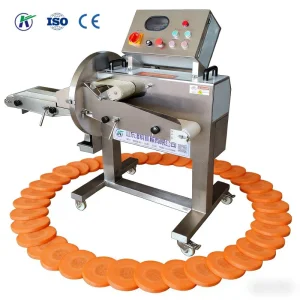
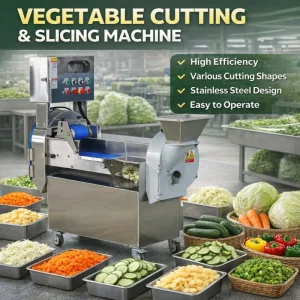
Yes, our industrial slicers and dicers feature variable-speed controllers and quick-change cutter blocks. This allows operators to run different programs and swap tooling setups within minutes, adapting the line to process root tubers, bulb vegetables, leafy greens, or cheese blocks.
We provide comprehensive installation manuals, online video support, and electrical schematic reviews to simplify system integration. We also maintain a stock of critical wear items (such as blades, gaskets, and drive components) for rapid dispatch, helping to minimize unplanned downtime.
 Linru Kitchen Equipment