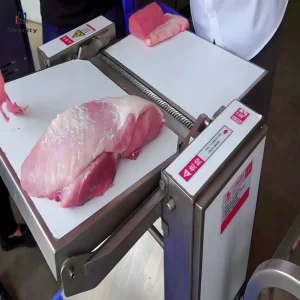
Explore our highly-specialized kitchen components built specifically to align with Oceania's strict operational, sanitation, and performance guidelines.
Understanding local food-grade compliance, energy limits, and labour trends in Victoria, New South Wales, Queensland, and Western Australia.
With hospitality wages rising steadily across major hubs like Sydney, Melbourne, and Brisbane, kitchen operators are forced to turn away from manual labor. Automated kitchen machinery, including vegetable slicers, high-speed meat cutters, and automated cooking robots, provides the operational throughput needed to stay profitable.
Australian standards dictate that all commercial machinery must meet JAS-ANZ accredited third-party electrical safety ratings (SAA approvals or AS/NZS 3820), gas safety parameters (AS 4563 for commercial catering gas appliances), and water connection safety (WaterMark certification). Non-compliant equipment leads to massive operational liabilities.
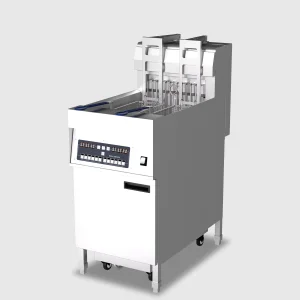
Electricity and water rates across Australia are among the highest in the OECD. This translates into an urgent preference for kitchen machinery that operates under strict energy management parameters, such as MEPS (Minimum Energy Performance Standards) compliant refrigeration, and rapid-recovery high-efficiency fryers.
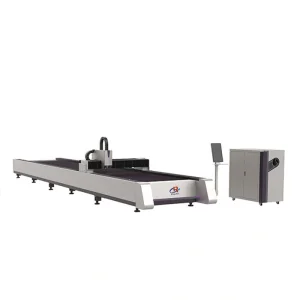
Bridging heavy industrial CNC sheet metal processing with targeted commercial catering applications.
How we are designing tomorrow's commercial kitchen technology for the Australian market.
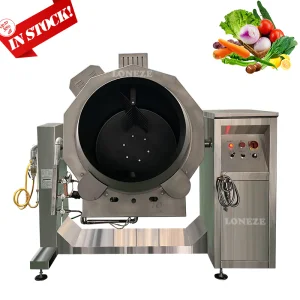
Our next-generation gas heating cooking robots are designed with thermal feedback loops and planetary-gear mixing blades. By integrating smart recipe profiles, the unit monitors the precise viscosity and internal temperature of food compounds, dynamically adjusting thermal inputs to prevent scorching and reduce energy waste by up to 22% compared to standard commercial burners.
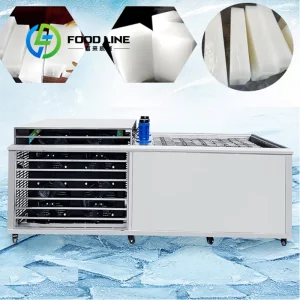
Our refrigeration and large-scale continuous commercial ice machines are being upgraded with cloud-linked microcontrollers. These modules track compressor cycles, condenser pressure levels, and water flow metrics in real-time. Before a component fails, the system triggers a telemetry alert, allowing Australian technicians to perform preventive service before a kitchen experiences downtime.
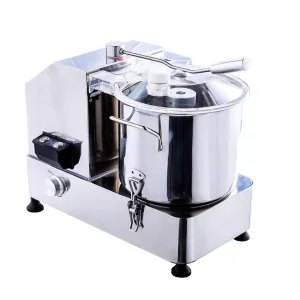
By utilizing advanced geometric layouts developed on our internal CNC fiber laser cutters, we are designing food processors and meat mixers that can be fully disassembled without manual tools. IP69K-rated sealed electrical enclosures ensure that kitchens can perform high-pressure washdowns without damaging internal drive systems or sensory panels.
With 15 years of experience in the field, we have grown from a single line of kitchen stoves to a diversified portfolio of high-quality branded products. From the very beginning, we have been committed to improving our product quality step by step, firmly believing that only by ensuring consistent quality can we truly earn our customers’ trust and recognition.
In the field of refrigeration equipment, we adhere to strict quality standards and rigorous requirements. Every product is built to meet national quality standards, customized to satisfy client needs, and crafted with attention to detail that reflects our company’s commitment to excellence.
Our heating products, including stoves, have obtained full-range CCC (China Compulsory Certification). In addition, our jacketed kettles are certified not only with CCC but also with the National Pressure Vessel Manufacturing License, ensuring customers can purchase with confidence and use with peace of mind.
By scaling our international export operations under the Feijin Import & Export banner, we have established direct shipping lines and local service agent channels throughout Melbourne, Sydney, Fremantle, and Brisbane, offering reliable, duty-compliant B2B deliveries.

Four structural pillars that define our commitment to quality, efficiency, and industrial excellence.
With 15 years of experience in commercial kitchen equipment manufacturing, Feijin Import & Export is committed to continuous product refinement, rejecting low-cost, low-quality shortcuts to ensure every piece of equipment delivers long-term stability and reliability.
For refrigeration products, Feijin Import & Export combines high standards with customization — guaranteeing full compliance with national quality standards while tailoring technical parameters to match each client’s specific application and usage environment.
Feijin’s stainless-steel preparation equipment is built using high-grade 304 or 201 stainless steel, with meticulous attention to load-bearing design, craftsmanship, and finishing details, ensuring both durability and aesthetic excellence.
With 15 years of experience in commercial kitchen equipment manufacturing, Feijin Import & Export is committed to continuous product refinement, rejecting low-cost, low-quality shortcuts to ensure every piece of equipment delivers long-term stability and reliability.
A breakdown of the strict certification paths required for industrial kitchen installations across Oceania.
Strict electrical wiring and insulation guidelines required for commercial kitchens to survive heavy washdowns.
Stringent thermal and flame protection benchmarks required for all automated gas cooking pots and fryers.
Compulsory certification for commercial ice makers and dishwashers connecting to municipal water lines.
Sanitary construction, rounded corners (R-profiles), and biological contamination mitigation standards.
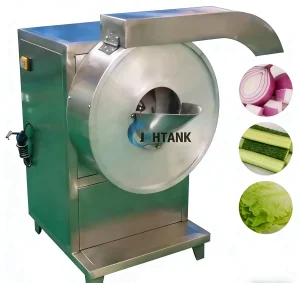
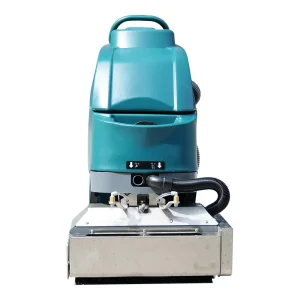
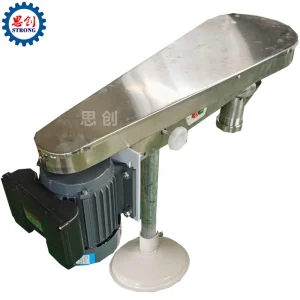
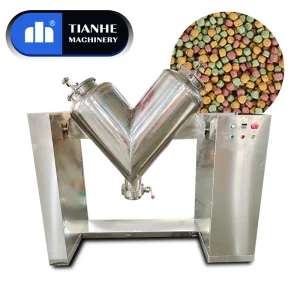
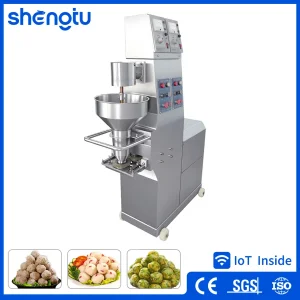
Our complete range of industrial food-grade machinery and heavy fabrication platforms ready for Australian distribution.
Crucial engineering, electrical, and shipping queries answered by our compliance department.
Yes. All electrical units exported to the Australian market are configured with certified SAA-approved components, complying with the AS/NZS 3000 (Wiring Rules). We construct control boards using IP65 or higher ingress ratings to ensure safety during sanitization cycles. In addition, our automated cooking robots and heavy mixers can be certified to meet RCM (Regulatory Compliance Mark) frameworks prior to shipping.
Under Australian state plumbing regulations, any appliance directly connected to the potable municipal water supply must have a WaterMark certification to prevent backflow contamination. Our continuous large-capacity commercial ice maker machines can be fitted with WaterMark-certified solenoid inlet valves and double-walled air-gap drain setups, ensuring compliance with AS/NZS 3500 plumbing standards.
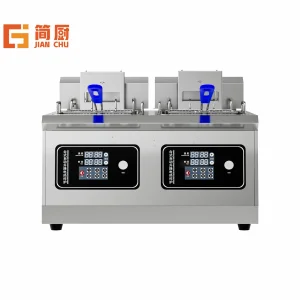
For all structural frameworks, we utilize high-grade SUS304 stainless steel. For environments processing heavy saline, seafood, or acidic marinades (such as our rapid heat desktop fryer tanks or large mixing bowls), we offer upgraded SUS316 configurations. SUS316 provides superior molybdenum alloying, preventing localized pitting corrosion under harsh chlorine-based sanitizer washing regimens.
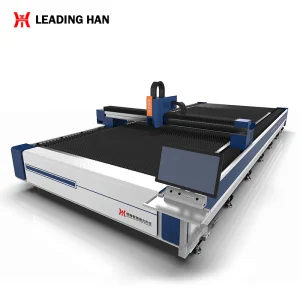
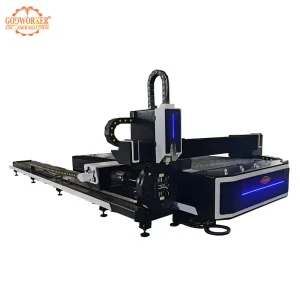
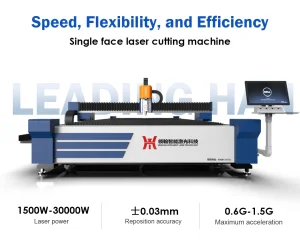
To ensure absolute precision and sanitary safety in food-processing machinery, standard punching presses are insufficient. We integrate high-powered (1500W to 6000W) fiber laser cutters in our sheet metal division. Due to growing international demand from local commercial kitchen fabricators in Australia, we also export these CNC systems directly to engineering workshops that perform customized on-site benching and exhaust hood integrations.
Absolutely. Our heavy-duty jacketed kettles hold a valid National Pressure Vessel Manufacturing License and CCC certification. For Australian clients, we provide full quality tracking reports, hydraulic pressure testing documentation, and weld radiographic inspections, ensuring that local plant inspectors can easily approve pressure vessel commissioning under WorkSafe frameworks.
Standard production runs require 25 to 35 business days. For customized dimensions or special motor/wiring variations (such as 415V three-phase setups for heavy-duty commercial meat cutters), the lead time is approximately 45 days. We coordinate directly with major shipping lines to provide direct ocean freight to Brisbane, Sydney, Melbourne, Adelaide, and Fremantle ports.
We provide a comprehensive 12-month structural and component warranty. Our export department maintains a dedicated inventory of critical mechanical components, including thermal sensors, contactors, mixer gear sets, and fryer elements. These can be dispatched via express air courier to Australia within 48-72 hours, reducing potential kitchen downtime.
Our heating systems utilize advanced gas-air proportional mixing technology on gas cooking robots, lowering carbon monoxide emissions and reducing natural gas consumption. Our commercial refrigeration and continuous ice machines are optimized to run on eco-friendly refrigerants and high-efficiency hermetic compressors that meet greenhouse gas emission limits specified by the Australian Department of Climate Change and Energy Efficiency.
 Linru Kitchen Equipment