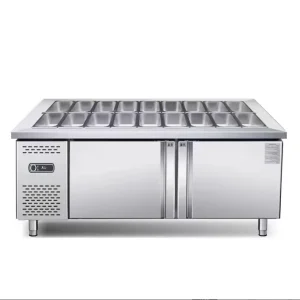
High-performance stainless steel systems built to meet demanding global health and safety certifications.
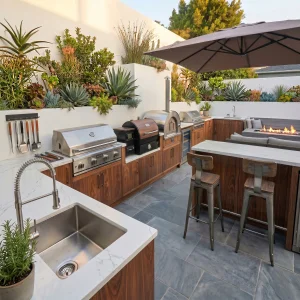
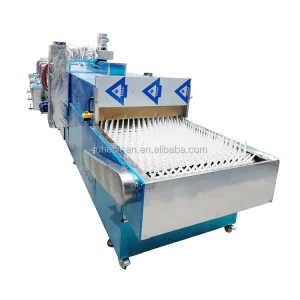
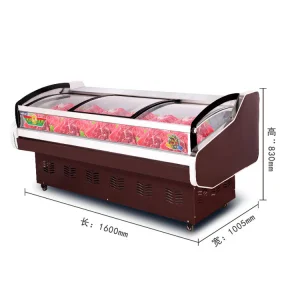
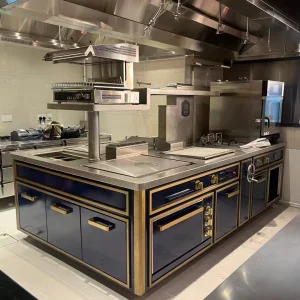
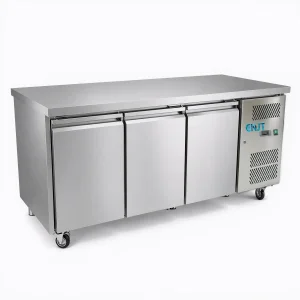
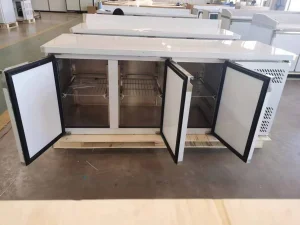
The technical baseline for commercial prep table sourcing, structural integrity, and durability optimization.
In high-capacity hospitality, food production, and pharmaceutical prep lines, the choice of stainless steel work surfaces dictates not just processing efficiency, but sanitation compliance and facility safety. Worktops serve as the foundational interface where raw ingredients transition to finished products. Choosing an overseas manufacturing partner requires an understanding of materials science, metallurgy, load structural calculation, and food safety standards.
Commercial stainless steel worktops are primarily manufactured using austenitic stainless steel alloys, classified under the SAE designation system as Grade 304 and Grade 201. Understanding the elemental differences is crucial for commercial buyers:
| Alloy Grade | Chromium (Cr) % | Nickel (Ni) % | Manganese (Mn) % | Corrosion Resistance | Recommended Application Environments |
|---|---|---|---|---|---|
| AISI 304 | 18.0% - 20.0% | 8.0% - 10.5% | ≤ 2.0% | Exceptional (High resistance to acids, salts) | High humidity zones, cold rooms, wet prep areas, marine galleys. |
| AISI 201 | 16.0% - 18.0% | 3.5% - 5.5% | 5.5% - 7.5% | Moderate (Susceptible to corrosion under long salt exposure) | Dry goods storage, dining room tables, low-humidity staging areas. |
Grade 304 contains a higher nickel content, which provides structural stabilization for austenitic steel and builds a self-healing chromium oxide passivation layer. This layer prevents corrosion from chlorine exposure, sanitizing agents, and naturally occurring food acids. Grade 201 replaces a portion of the nickel with manganese, offering high tensile strength and impact resistance at a lower price point, but it remains susceptible to pitting in highly humid or saline conditions.
The thickness of the stainless steel sheet determines the mechanical stability of the food prep table under stress. Heavy-duty applications rely on precise thickness measurements:
Quality manufacturing extends beyond the surface plate. Premium tables feature structural reinforcements, such as hat-channel supports, welded to the underside of the table top. These channels dampen vibration, prevent surface bowing under heavy weight, and minimize sound reflection in busy kitchens.
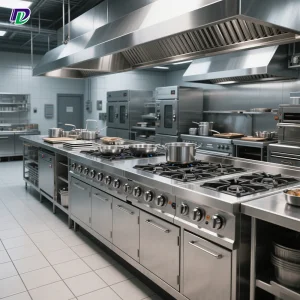
Shandong Linru Import & Export Trading Co., Ltd. is a professional enterprise integrating the production and sales of commercial kitchen equipment. With 15 years of experience in the field, we have grown from a single line of kitchen stoves to a diversified portfolio of high-quality branded products.
From the very beginning, we have been committed to improving our product quality step by step, firmly believing that only by ensuring consistent quality can we truly earn our customers’ trust and recognition. In the field of refrigeration equipment, we adhere to strict quality standards and rigorous requirements. Every product is built to meet national quality standards, customized to satisfy client needs, and crafted with attention to detail that reflects our company’s commitment to excellence.
Our heating products, including stoves, have obtained full-range CCC (China Compulsory Certification). In addition, our jacketed kettles are certified not only with CCC but also with the National Pressure Vessel Manufacturing License, ensuring customers can purchase with confidence and use with peace of mind.

How our manufacturing processes translate to long-term reliability and compliance for global procurement officers.
With 15 years of experience in commercial kitchen equipment manufacturing, Feijin Import & Export is committed to continuous product refinement, rejecting low-cost, low-quality shortcuts to ensure every piece of equipment delivers long-term stability and reliability.
For refrigeration products, Feijin Import & Export combines high standards with customization — guaranteeing full compliance with national quality standards while tailoring technical parameters to match each client’s specific application and usage environment.
Feijin’s stainless-steel preparation equipment is built using high-grade 304 or 201 stainless steel, with meticulous attention to load-bearing design, craftsmanship, and finishing details, ensuring both durability and aesthetic excellence.
With 15 years of experience in commercial kitchen equipment manufacturing, Feijin Import & Export is committed to continuous product refinement, rejecting low-cost, low-quality shortcuts to ensure every piece of equipment delivers long-term stability and reliability.
Proven production parameters, delivery speed, and high fabrication capacity.
Optimizing workspaces for central processing plants, food service operations, and cold storage units.
Modern kitchen logistics demand space optimization. The spatial configuration of food preparation tables directly influences labor efficiency, cross-contamination prevention, and compliance with Hazard Analysis Critical Control Point (HACCP) frameworks. Feijin works with engineering partners globally to deliver customized tables for various industries.
Industrial kitchen layouts vary according to throughput demands, geographic space, and target product viscosity. Sourcing from our manufacturing base in China allows global partners to specify localized parameters:
Entering international commercial kitchen markets requires compliance with local standards. Shandong Linru manufactures food preparation equipment with these requirements in mind:
Innovating metal fabrication, smart kitchen connectivity, and green manufacturing.
As the commercial food service sector changes, preparation equipment is shifting from passive worktops to active, smart surfaces. We focus on integrating technology with metal fabrication to prepare for future kitchen layouts:
Utilizing high-power, industrial fiber laser cutters (ranging from 2000W to 6000W) allows our factory to execute precision cuts on stainless steel sheets without creating heat-affected zones (HAZ). This preserves the original passivated layer on the material edges, reducing rusting at corner joints and weld points.
Future food safety will require real-time temperature tracking. Our engineering team is developing integrated refrigerated salad and prep worktables with sensor arrays that monitor and log surface temperatures. This provides commercial operations with automated proof of cold-chain compliance during raw ingredient processing.
We are reducing our environmental footprint by using recycled alloys that meet strict metallurgical purity requirements. By optimizing material usage using CAD layouts and utilizing scrap recovery programs, our operations minimize structural waste while maintaining product stability.
Detailed answers to structural, chemical, and shipping questions.
Grade 304 contains 8-10.5% nickel and 18-20% chromium, which creates a passivated protection layer that resists acid and chemical corrosion. Grade 201 contains manganese instead of nickel, making it less corrosion resistant in wet, salty, or acidic commercial food environments.
Look for key safety and quality certifications such as NSF/ANSI Standard 2 for food zone sanitization, CE markings for European safety regulations, and CCC or National Pressure Vessel Licenses for specialized equipment like stoves and jacketed kettles.
Hat channels are reinforced steel structures welded beneath the top sheet. They increase load capacity, prevent bowing under heavy weight, and dampen vibrations and metallic sound during food preparation.
The lower the gauge number, the thicker the metal sheet. A 14-gauge table (1.9mm) is built for heavy prep work like butchery, 16-gauge (1.5mm) is the industry standard for general commercial prep, and 18-gauge (1.2mm) is suited for light storage or undershelves.
Yes, we provide full CAD/CAM custom sizing. We adjust layouts, leg configurations, shelf placements, and steel grades to match your project specifications.
Additional heavy-duty products designed for commercial kitchens and manufacturing plants.
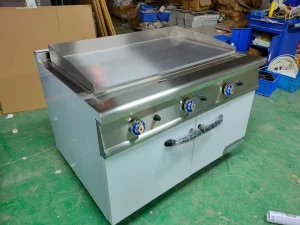
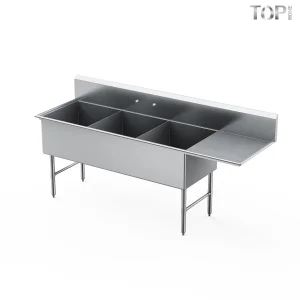
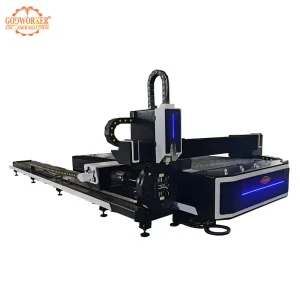
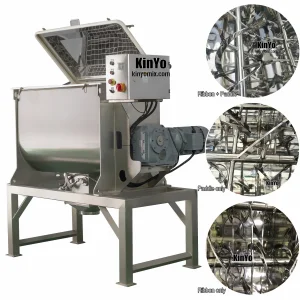
 Linru Kitchen Equipment