The global culinary landscape is experiencing a paradigm shift. Sushi, once considered an artisanal Japanese delicacy handcrafted exclusively by master chefs, has transitioned into a multi-billion-dollar global fast-casual and retail staple. To support this massive scaling while maintaining uncompromising hygiene, consistency, and structural integrity of the food, the integration of automation is no longer optional—it is a critical operational mandate.
At Shandong Linru Import & Export Trading Co., Ltd. (historically recognized alongside our production networks as Feijin Import & Export), we bridge the gap between traditional food craft and advanced industrial food engineering. Leveraging over 15 years of industry experience, we design, manufacture, and export high-performance machinery capable of facilitating automated sushi preparation, large-scale rice seasoning, and automated component processing for industrial food factories and central kitchens worldwide.
This technical whitepaper outlines the key macroeconomic trends, engineering challenges, compliance pathways, and technical specifications that procurement officers, plant managers, and QSR (Quick Service Restaurant) franchise owners must analyze when sourcing industrial sushi rolling and prep machinery.

The automated food preparation industry is undergoing rapid transformation, driven by shifts in labor availability, strict hygiene regulations, and the rising demand for premium convenience foods. When designing or sourcing OEM/ODM sushi rolling equipment and macro prep machinery, manufacturers must account for the following industry trends:
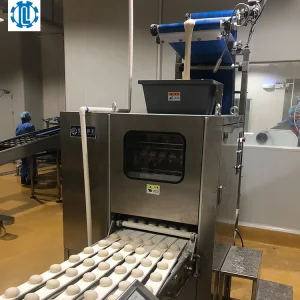
Unlike standard grains, sushi rice must maintain specific moisture, density, and stickiness. Modern automated rollers utilize dynamic tension grids to simulate the exact compaction of human hands, preventing starch rupture and preserving grain structure.
The vinegar, sugar, and starch present in seasoned sushi rice create a highly adhesive residue. Automated systems now feature modular sanitary designs utilizing clean-in-place configurations to minimize downtime and prevent cross-contamination.
Industry 4.0 integrations allow manufacturing plants to track batch profiles in real-time, monitoring vinegar distribution, cooking heat cycles, mixing torque, and cooling rates to guarantee uniform flavor profile across thousands of units.
B2B procurement agents sourcing commercial food preparation machinery must move beyond low-cost targets and assess long-term Operational Expenditure (OPEX) metrics, safety compliance, and engineering robustness. The following critical parameters define our manufacturing philosophy:
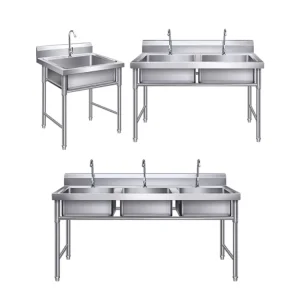
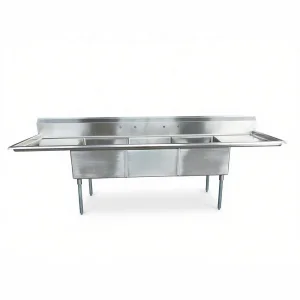
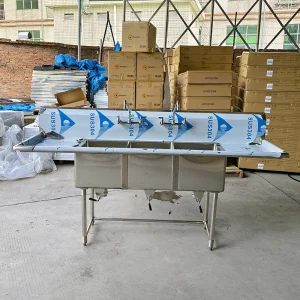
Because sushi rice contains high concentrations of acetic acid (sushi vinegar), using standard carbon steel or lower-grade alloys leads to rapid galvanic corrosion and pitting. Our preparation lines, mixing tanks, and commercial sinks are fabricated strictly from food-grade Stainless Steel 304 or 316L. These materials undergo pickling and passivation treatments to build a chrome-oxide protective layer that prevents organic acids from compromising the metal surface.
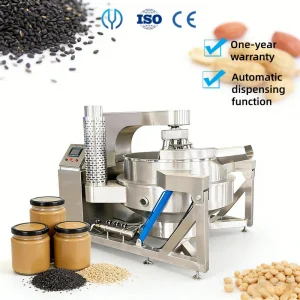
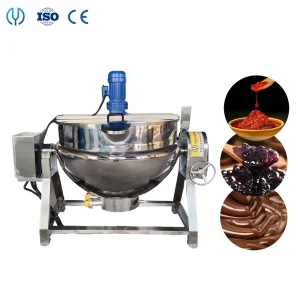
Cooking high-volume rice batches requires precise temperature curves. Standard boilers burn the bottom layer, generating off-flavors and destroying the starch profile. Feijin's Industrial Jacketed Cooking Kettles leverage pressurized steam or thermal oil jackets to distribute heat uniformly across the entire hemisphere of the kettle. This prevents localized hotspot scorching and allows for automated vinegar integration at exact temperature thresholds.
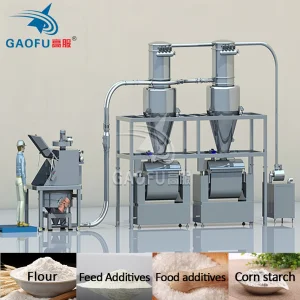
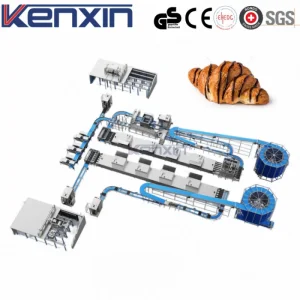
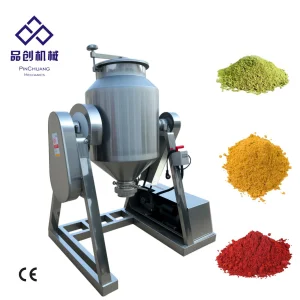
Industrial scale sushi plants run continuously. To avoid manual bottleneck stages, processing facilities require automated auxiliary lines. Our product matrix includes Automatic Powder Feeding Systems with online dust-free conveying, which allows for the continuous dosing of binding starches, seasonings, or flour. Integrating these systems with automated mixers ensures that raw ingredients are continuously processed without human handling, maximizing cleanliness.
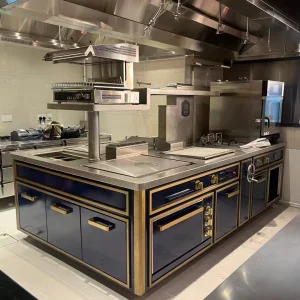
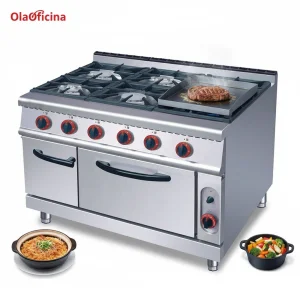
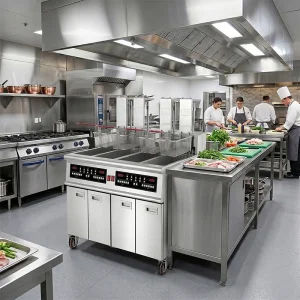
Shandong Linru Import & Export Trading Co., Ltd. is a professional enterprise integrating the production and sales of commercial kitchen equipment. With 15 years of experience in the field, we have grown from a single line of kitchen stoves to a diversified portfolio of high-quality branded products. From the very beginning, we have been committed to improving our product quality step by step, firmly believing that only by ensuring consistent quality can we truly earn our customers’ trust and recognition.
In the field of refrigeration equipment, we adhere to strict quality standards and rigorous requirements. Every product is built to meet national quality standards, customized to satisfy client needs, and crafted with attention to detail that reflects our company’s commitment to excellence.
Our heating products, including stoves, have obtained full-range CCC (China Compulsory Certification). In addition, our jacketed kettles are certified not only with CCC but also with the National Pressure Vessel Manufacturing License, ensuring customers can purchase with confidence and use with peace of mind.
With 15 years of experience in commercial kitchen equipment manufacturing, Feijin Import & Export is committed to continuous product refinement, rejecting low-cost, low-quality shortcuts to ensure every piece of equipment delivers long-term stability and reliability. We hold full-range CCC and National Pressure Vessel Manufacturing Licenses.
For refrigeration products, Feijin Import & Export combines high standards with customization — guaranteeing full compliance with national quality standards while tailoring technical parameters to match each client’s specific application and usage environment.
Feijin’s stainless-steel preparation equipment is built using high-grade 304 or 201 stainless steel, with meticulous attention to load-bearing design, craftsmanship, and finishing details, ensuring both durability and aesthetic excellence.
With 15 years of experience in commercial kitchen equipment manufacturing, Feijin Import & Export is committed to continuous product refinement, rejecting low-cost, low-quality shortcuts to ensure every piece of equipment delivers long-term stability and reliability.
Operating a high-capacity sushi business requires more than just a single rolling machine. The entire flow from ingredient processing to final cooling and packing must be balanced. Shandong Linru provides a complete suite of macro industrial kitchen components designed to form a seamless production line:
Using our Automatic Powder Feeding Systems, dry ingredients, starch, and seasoning powders are fed through dust-free conveying loops with online sieving. This ensures raw material purity before the mixing phase, cutting down processing floor dust emissions by 98%.
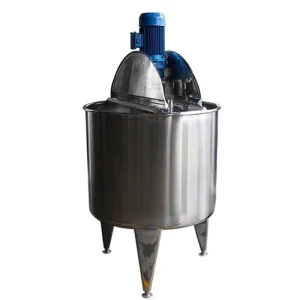
Our 100L-1000L Food Grade Stainless Steel 304 Mixing Tanks with custom-designed speed-adjustable agitators ensure that heavy liquids, liquid seasonings, and vinegar solutions are emulsified uniformly before being dispersed into the cooked rice.
Using our certified Jacketed Kettles with Mixers, the thermal pasteurization of sushi vinegar and cooking of specialized sauces are managed with precise mechanical sweep agitators, eliminating hot spot burning and maintaining product color and texture.
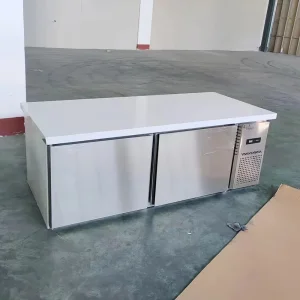
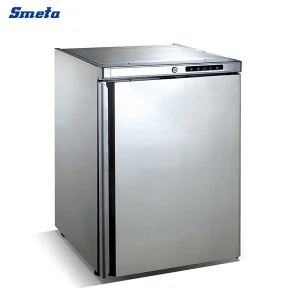
Maintaining the cold chain is essential for fish and cooked rice. Our Commercial Refrigerated Prep Worktables and small counter chiller-freezers feature digital control processors that maintain constant cold zone temperatures, complying with global HACCP protocols.
The roadmap for industrial food preparation machinery is heavily focused on sustainability, energy efficiency, and digital connectivity. As an industry-leading OEM/ODM manufacturer, Shandong Linru's R&D is committed to delivering solutions that anticipate future regulatory changes:
 Linru Kitchen Equipment