Commercial Refrigeration & Food Preservation Whitepaper
An authoritative engineering guide on display chiller efficiency, thermal dynamics, global procurement standards, and supply chain strategies.
15+
Years Industry Experience
100%
CCC & Pressure Vessel Compliant
304
Premium Stainless Steel Grade
1. Global Commercial & Industrial Refrigeration Landscape
The modern cold chain is the backbone of the global food, beverage, and retail sectors. As consumer demand for fresh, ready-to-eat products increases, the need for advanced display chiller technologies rises proportionally. From local convenience stores in Tokyo to hypermarket chains in Paris and cold-chain hubs in Chicago, display chillers are no longer simple cooling boxes. They are precision-engineered dynamic thermodynamic barriers designed to preserve food safety, maintain organoleptic qualities, and maximize visual merchandising appeal.
Historically, commercial refrigeration relied on simplistic compressor-on-condenser loops. Today, the global commercial refrigeration landscape demands integration of thermal acoustics, variable speed compressors, and sophisticated airflow management. High-performance display chillers must prevent hot-spot formation while minimizing convective heat transfer losses when the sliding or hinged glass doors are repeatedly opened. In open-deck configurations, the stability of the air curtain determines the efficiency of the entire unit.
2. Decoding Global B2B Procurement Demands for Display Chillers
B2B procurement professionals must navigate a complex grid of operational parameters when sourcing display chillers from China factories. Sourcing the "cheapest" unit frequently results in astronomical energy bills, premature compressor failure, and compliance penalties. Sourcing teams prioritize key performance indices (KPIs) to ensure long-term ROI:
- Coefficient of Performance (COP) & Energy Consumption Index (ECI): With commercial electricity rates fluctuating globally, a chiller's energy efficiency is a primary driver. Units featuring modern DC inverter compressors and EC (Electronically Commutated) fan motors achieve up to 35% higher thermodynamic efficiency than standard AC alternatives.
- Climate Class Ratings: Display chillers must maintain internal temperatures (+2°C to +8°C for beverage/dairy, and -1°C to +5°C for fresh meat) under specific external ambient conditions. Premium manufacturers validate their chillers against Climate Class 3 (25°C, 60% RH), Class 4 (30°C, 55% RH), or Class 6 (27°C, 70% RH). Choosing the wrong climate class causes compressor short-cycling and structural condensation.
- Structural Metallurgy: The use of premium 304 and 201 grade stainless steel is critical. Lower-tier suppliers substitute chrome-iron alloys that rust within months in humid kitchen environments. High-grade AISI 304 guarantees chemical resistance to commercial sanitizing agents and long-term structural integrity.
- Refrigerant Future-Proofing: Strict environmental regulations, including the European F-Gas Regulation and the US EPA AIM Act, are phasing out high-GWP (Global Warming Potential) refrigerants like R404A. Procurement teams now mandate eco-friendly alternatives such as R290 (propane) or R744 (CO2), requiring redesigned explosion-proof electrical systems and specialized heat exchangers.
Smart Temperature Control
Integrated digital controllers with digital readouts and sensor arrays monitor evaporation rates, maintaining temperature ranges within ±0.5°C.
Optimized Airflow
Advanced aerodynamic air-curtain dynamics minimize ambient heat infiltration, reducing compressor workload and overall energy consumption.
High-Density Insulation
Cyclopentane-blown polyurethane foam insulation (minimum 55mm thickness) forms a high-density thermal barrier, preventing energy leakage.
3. Macro Industry Solutions & Vertical Deployments
Industrial food refrigeration requires a systemic approach rather than piecemeal product purchasing. Leading Chinese manufacturers deliver integrated macro refrigeration configurations tailored to diverse commercial spaces:
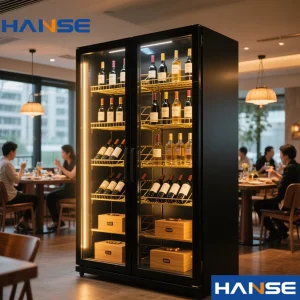
- Supermarkets & Hypermarkets: Utilizing remote-condenser display chiller racks. By positioning the condensing units outdoors, supermarkets eliminate waste heat and compressor noise from the retail floor, lowering indoor HVAC energy demands.
- Convenience Stores (C-Stores): Space-saving, self-contained (plug-in) chillers with transparent glass doors designed for rapid product turnover. Microchannel condensers are utilized here to maximize heat dissipation in a compact footprint.
- Commercial Bakeries & Pastry Cafes: High-humidity display cabinets. Pastries and cakes dry out in standard low-humidity chillers. Specialized systems utilize dual-evaporator configurations that maintain relative humidity between 70% and 85%, keeping products fresh.
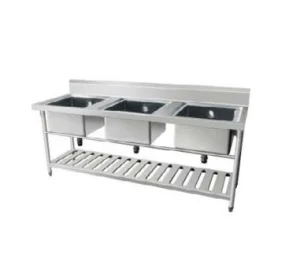
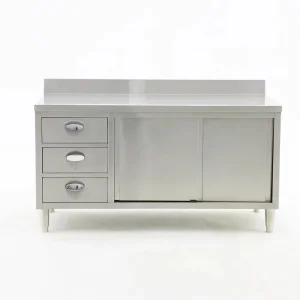
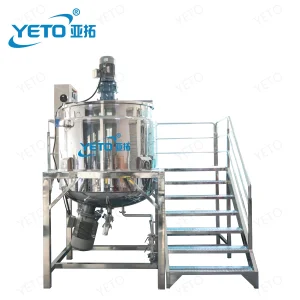
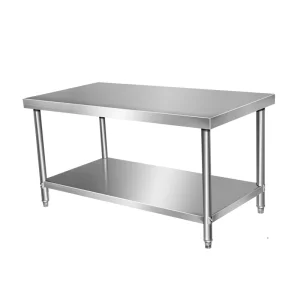
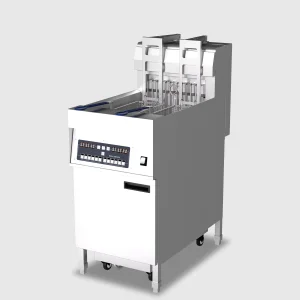
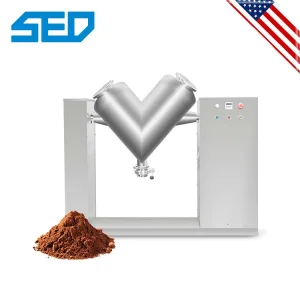
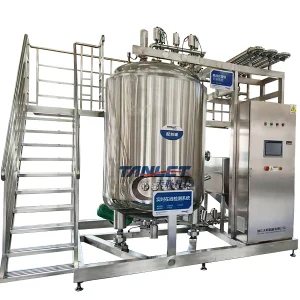
- Cold Chain Processing Facilities: Blast freezing units and continuous preparation stations. High-capacity prep lines require robust integration between industrial mixing machines, blast chillers, and commercial worktables.
Shandong Linru & Feijin Manufacturing Excellence
Shandong Linru Import & Export Trading Co., Ltd. is a professional enterprise integrating the production and sales of commercial kitchen equipment. With 15 years of experience in the field, we have grown from a single line of kitchen stoves to a diversified portfolio of high-quality branded products. From the very beginning, we have been committed to improving our product quality step by step, firmly believing that only by ensuring consistent quality can we truly earn our customers’ trust and recognition.
In the field of refrigeration equipment, we adhere to strict quality standards and rigorous requirements. Every product is built to meet national quality standards, customized to satisfy client needs, and crafted with attention to detail that reflects our company’s commitment to excellence.
Our heating products, including stoves, have obtained full-range CCC (China Compulsory Certification). In addition, our jacketed kettles are certified not only with CCC but also with the National Pressure Vessel Manufacturing License, ensuring customers can purchase with confidence and use with peace of mind.

Comprehensive Compliance Certifications
With 15 years of experience in commercial kitchen equipment manufacturing, Feijin Import & Export is committed to continuous product refinement, rejecting low-cost, low-quality shortcuts to ensure every piece of equipment delivers long-term stability and reliability.
Customized Product Solutions
For refrigeration products, Feijin Import & Export combines high standards with customization — guaranteeing full compliance with national quality standards while tailoring technical parameters to match each client’s specific application and usage environment.
Premium Stainless-Steel Materials
Feijin’s stainless-steel preparation equipment is built using high-grade 304 or 201 stainless steel, with meticulous attention to load-bearing design, craftsmanship, and finishing details, ensuring both durability and aesthetic excellence.
15 Years of Craftsmanship — No Compromise
Feijin Import & Export remains dedicated to continuous quality upgrades, rejecting inferior materials to guarantee that every system provides durable, dependable operation under harsh kitchen environments.
4. Technical Roadmap & Future Outlook
The display chiller sector is undergoing rapid technological transformation. Driven by global decarbonization initiatives and IoT expansion, the industry is transitioning along a clear technological roadmap:
- Vacuum Glazing Technology (VIG): Standard double-pane tempered glass is being replaced by vacuum-insulated glass panels. VIG eliminates convective heat transfer between the glass sheets, reducing condensation and slashing chiller thermal energy loss by up to 50%.
- Smart IoT Integration & Predictive Defrosting: Traditional defrost cycles operate on fixed timers, wasting energy by heating evaporator coils unnecessarily. Next-generation display chillers utilize smart optical sensors and predictive algorithms to trigger defrost cycles only when frost accumulation actually impedes airflow.
- Natural Refrigerant Transition: R290 (Propane) has become the standard for plug-in commercial units under 150g charge limits. Manufacturers are designing double-loop and micro-charge R290 systems to comply with safety standards while maintaining high efficiency.
5. Localization Support & Global Supply Chain Integrity
Establishing overseas operations requires robust localization and supply chain planning. Sourcing from China's premier factories is highly effective when supported by field service infrastructure:
- Local Regulatory Compliance: Equipment must carry local compliance marks (CE for the EU, UL/ETL for North America, SAA for Australia) to pass municipal health and safety inspections.
- Spare Parts & Critical Component Logistics: Premium suppliers maintain regional warehousing partnerships to ensure rapid dispatch of critical parts (compressors, digital controllers, fan motors, door gaskets), minimizing client downtime.
- Engineering Support Networks: Partnering with local HVAC technicians ensures installation, commissioning, and warranty services are executed according to regional guidelines, safeguarding the equipment's lifespan.
Frequently Asked Questions (FAQ)
Expert answers to common procurement, engineering, and regulatory questions regarding display chillers.
1. What is the difference between SUS 304 and SUS 201 stainless steel in display chillers?
SUS 304 contains a higher nickel content (8-10.5%), providing superior corrosion resistance, making it suitable for high-humidity, acidic, or salty environments. SUS 201 replaces part of the nickel with manganese, offering high mechanical strength at a lower cost, ideal for dry structure components and external frames.
2. How does climate class affect commercial display chiller performance?
Climate class designates the ambient temperature and humidity limit a chiller can handle. A Class 3 rated unit in a Class 4 environment (30°C, 55% RH) will struggle to maintain target temperatures, causing continuous compressor operation, high energy bills, and shortened system lifespan.
3. Why are R290 display chillers preferred over R404A models?
R290 (Propane) has a GWP of 3, compared to R404A's GWP of 3922. R290 features excellent thermodynamic properties, allowing smaller charge sizes and up to 10-15% lower energy consumption, while meeting global environmental regulations.
4. What maintenance is required for commercial display chillers?
Monthly cleaning of the condenser coil is essential to prevent airflow blockages that strain the compressor. Regular inspections of door gaskets and clearing the drain line are also required to prevent water leaks and frost buildup.
5. Can display chillers from China be customized for voltage and frequency?
Yes, professional factories customize electrical configurations (e.g., 220V/50Hz, 110V/60Hz, or 220V/60Hz) to match the electrical grid standards of the destination country, ensuring safe and efficient operation.
 Linru Kitchen Equipment