Engineered for high durability and strict hygiene standards, our preliminary selection of preparation machinery addresses the foundational processing requirements of modern commercial kitchens, snack factories, and packaging plants across Namibia.
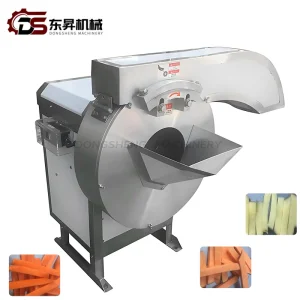
High-speed stick cutting system designed for hard and soft vegetables, providing consistent dimensions critical for commercial drying or frying lines in Namibia.
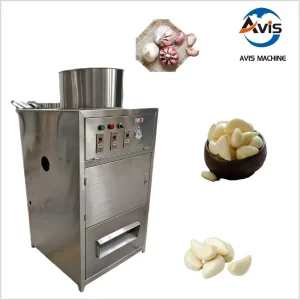
Automated garlic peeling, cleaning, and preparation module optimized to process high-volumes while maintaining minimal bruising of the cloves.
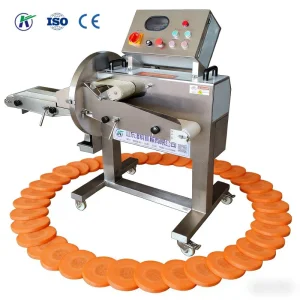
Heavy-duty dual-purpose cutting system capable of alternating between high-fiber root vegetables and cured meats for integrated food assembly plants.
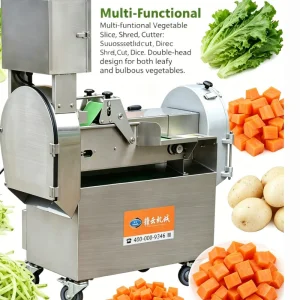
Compact, high-throughput SUS304 table-top preparation system featuring interchangeable blade discs for customized dicing, slicing, and grating.
Namibia's agricultural sector stands at a critical juncture. Blessed with extensive land resources and strategic trade corridors (such as the Trans-Kalahari and Trans-Caprivi Highways connecting Walvis Bay to landlocked SADC nations), the nation is aggressively shifting from a primary exporter of raw agricultural products to a localized hub for industrial agro-processing. Under the national framework of the Harambee Prosperity Plan II (HPP II) and the Fifth National Development Plan (NDP5), value-addition of locally grown crops has been prioritized as a national security and economic growth strategy.
However, processors in Namibia face distinct challenges: extreme water scarcity, variable crop yields from semi-arid cultivation zones, fluctuating power grids, and rigorous compliance standards required to export to SACU (Southern African Customs Union) and EU markets. Addressing these variables requires specialized food processing machinery that optimizes resource efficiency—particularly through minimized water wastage and modular energy consumption—while maintaining structural durability to withstand dry, sandy environments typical of regions like Oshana, Omusati, Kavango East, and the coastal belt.
By integrating automated washing, peeling, and cutting systems, Namibian agro-businesses can reduce post-harvest losses from 35% down to under 5%. Value addition on local staples such as mahangu (pearl millet), cassava, sweet potatoes, onions, pumpkins, and indigenous melons transforms raw produce into shelf-stable, export-grade retail products, ensuring high return on investments (ROI).
Agro-processing on a global scale is driven by high automation, machine-learning-assisted optical sorting, and extreme hygiene compliance (HACCP). Modern manufacturing demands that vegetable preparation machinery operates with minimal human touch-points to eliminate microbiological contamination risks. We design our equipment to align with these global paradigms, adapting the mechanical frameworks to fit the localized grid conditions and operating parameters of Southern Africa.
Constructed entirely of premium Grade 304 or 316 Stainless Steel. Seamless weld lines and smooth curvatures prevent bacterial aggregation and facilitate rapid washdowns.
Equipped with specialized heavy-duty motors and Variable Frequency Drives (VFDs) calibrated to handle voltage fluctuations common in remote processing areas.
Emergency stop protocols, dual-switch interlocking magnetic safety lids, and IP67 waterproof electrical controls minimize workplace injury risks.
While standard machines operate on leafy greens and soft vegetables, the local raw materials of Namibia require high torque and structural resilience. For instance, processing dense root crops like cassava (tapioca) or butternut squash requires heavy-duty washers and peelers with thick abrasive rollers to strip coarse skins efficiently. Likewise, processing local indigenous melons (such as the *tsamma* melon) requires robust slicing mechanisms that do not clog under high seed density.
To demonstrate our comprehensive capability across various food lines, below are key components of our processing catalog engineered for integrated operations, including beverage prep and coastal seafood cleaning setups:
Crucial for Namibian coastal fish plants in Walvis Bay, utilizing micro-bubbles to gently cleanse delicate raw fish and marine products without tissue damage.
Automated extraction and filtration modules designed to produce premium shelf-stable juices and concentrated jams from native citrus and melons.
Custom jacketed mixing tanks for precise temperature-controlled sugar dissolution, vital for beverage and preserves preparation.
Industrial processing unit for rapid meat skewer assembly, highly applicable to Namibia's large-scale *Kapana* and meat production lines.
Selecting the correct machinery requires analyzing throughput parameters, electrical phases, and mechanical configurations. Below is a detailed view of our standard industrial specifications, matching the operational demands of small-scale commercial kitchens up to large-scale centralized food factories in regions like Windhoek and Walvis Bay.
| Equipment Type | Material Spec | Processing Capacity | Electrical Requirements | Core Application Scenario |
|---|---|---|---|---|
| Industrial Slicers & Dicers | SUS304 Stainless Steel | 500 - 1500 kg/h | 380V, 50Hz, 3-Phase (Customizable) | Commercial catering, dehydrated onion rings, school nutrition programs |
| Abrasive Roll Peeling Machines | Heavy-Duty Composite Rollers | 800 - 2000 kg/h | 380V, 50Hz, 3-Phase | Cassava, tapioca, and sweet potato peeling lines in Northern Green Schemes |
| Jacketed Boiling Kettles | Double-Layer SUS304 / Pressure Vessel | 100L - 1000L Capacity | Steam/Electric Induction Heating | Sauce cooking, jam boiling, and pre-cooking meat prep factories |
| High-Speed Bowl Cutters | Hardened Alloy Blades | 50L - 200L Bowl Vol. | 380V, 50Hz, High-Torque Motor | Meatball prep, emulsification, fine paste, ginger/garlic blending |
Our equipment is not just built for general food preparation; we configure layouts to excel within the specific agricultural value chains present across various regions in Namibia.
With the development of local cassava plantations, peeling and washing pose significant bottleneck issues due to the root's irregular shapes and dirt-caked skins. Our heavy-duty washing and peeling systems utilize high-pressure water sprays coupled with rough-grit abrasive rollers. This ensures that the outer toxic peel is fully removed while retaining maximum starch-rich inner flesh, preparing the tubers for drying, milling, or fermentation.
In urban centers like Windhoek, institutional catering and school nutrition programs require rapid preparation of carrots, cabbages, pumpkins, and potatoes. Our commercial preparation machines slice and dice tons of fresh produce daily. The uniform cuts guarantee consistent cooking times in our steam jacketed kettles, saving hundreds of labor hours and minimizing raw waste.
Walvis Bay and Lüderitz host processing facilities for fish and aquaculture. Cleanliness and salt-spray corrosion resistance are non-negotiable. Using high-grade SUS304 structure wash-down cabinets, our bubble-washing machinery removes sand and biological contaminants from raw fish, preparation tables, and packaging surfaces, maintaining strict compliance with NSI (Namibian Standards Institution) export regulations.
The Hardap irrigation schemes generate massive yields of onions and carrots during peak seasons. To prevent localized market saturation and price drops, our high-volume slicing machines process bulk onions for drying, freezing, or pickling. Dehydrated onion flakes serve as high-demand ingredients for Southern African seasoning and spice manufacturing.
Operating for over 15 years, Feijin (Shandong Linru Import & Export Trading Co., Ltd.) has evolved from a specialized kitchen stove manufacturing line into a global provider of diversified commercial kitchen, refrigeration, and agro-processing equipment. We do not take shortcuts. We believe that consistent product quality is the only foundation for earning client trust.
For Namibian clients, purchasing industrial equipment from abroad requires meticulous logistics planning. We coordinate all custom clearance protocols through the Port of Walvis Bay. Whether your plant is located in Windhoek, Swakopmund, Ondangwa, or Rundu, we provide sea freight tracking, customs documentation support, and localized freight coordination via our regional logistic partners.
All heating and electrical systems are built to meet both CCC requirements and national pressure vessel standards. We customize all motors to 220V/50Hz single-phase or 380V-415V/50Hz three-phase configurations to align with the Namibian grid system, preventing equipment failure and ensuring seamless integration with SANS/SABS codes.
Discover our primary mechanical collection. Every unit is engineered for long operational run-times, clean sanitization, and minimal upkeep cost under industrial processing conditions.
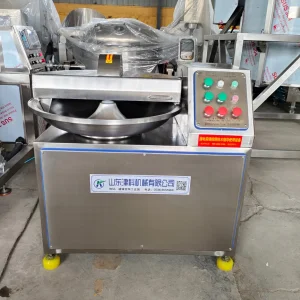
Fast chopping speed with adjustable knife arrays, ideal for preparing ginger, garlic, and fresh chilies into fine condiments.
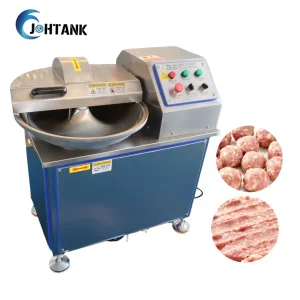
High-shear blade rotation inside a rotating bowl. Perfect for mixing pastes, vegetables, and cured meats into uniform mixtures.
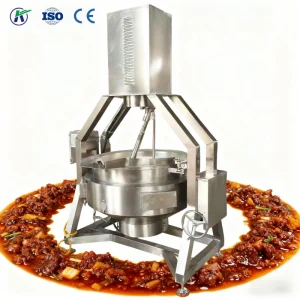
Double-walled thermal jacket ensuring even heating. Available in tilting configurations to easily empty thick jams or stews.
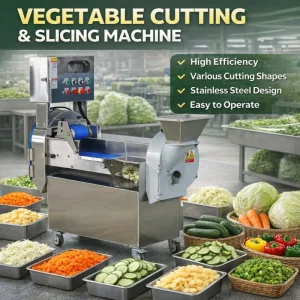
Optimized for continuous slicing of bulb and stalk vegetables. Features easy-to-clean chambers to satisfy HACCP standards.
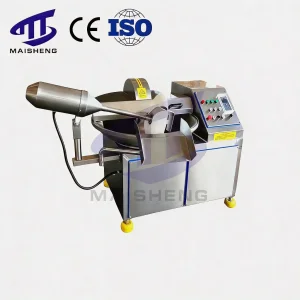
Heavy industrial-grade bowl chopper configured with an isolated control panel for variable speed tuning of blade orbits.
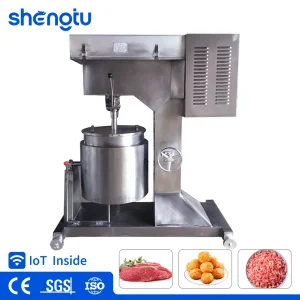
Dual-shaft rotation paddles that mix proteins and vegetable starches to prepare processed sausages, patties, and meatballs.
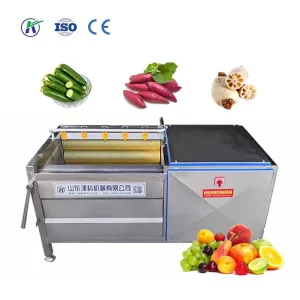
Multifunctional brush-roller washer configured for cassava, sweet potatoes, and root tubers. Heavy duty waste discharge filter included.
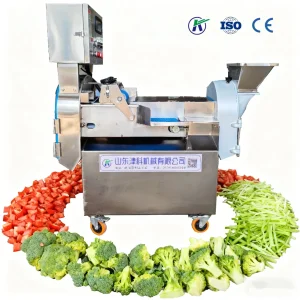
Versatile high-output cutter utilizing multi-axis slicing blades. Fast changeovers to clean and configure for different crops.
The future of Namibian agro-processing lies in off-grid capability and water conservation. High energy costs from central grids motivate agricultural projects to seek decentralized solutions. Feijin is currently developing next-generation vegetable washing and cutting stations engineered for direct coupling with solar photovoltaic (PV) arrays. By utilizing high-efficiency DC brush-less motors, processing plants can operate during daylight hours directly on solar power without requiring expensive chemical battery backup systems.
Furthermore, future upgrades will introduce integrated closed-loop water recirculation systems. By combining sand filters with UV sterilizing lamps, our bubble washing systems can clean agricultural produce using up to 80% less freshwater. This enables farmers in dry, inland areas of Namibia to wash and package carrots and onions directly at the field gate, increasing the market value of their crop while keeping water resource depletion minimal.
Key information regarding import procedures, electrical options, and technical support in Namibia.
We coordinate sea freight directly to the Port of Walvis Bay. Depending on custom configuration and ocean routes, the typical shipping time is 35 to 45 days. We prepare all necessary shipping documentations (Bill of Lading, Commercial Invoice, Packing List, and Certificates of Conformity) to ensure smooth customs clearance through NamRA (Namibia Revenue Agency).
Yes. Namibia utilizes a standard voltage of 220V/240V AC for single-phase circuits and 380V/400V AC at 50Hz for three-phase commercial lines. During manufacturing, we configure and test all electric motors and control boards to operate stably within these exact ranges.
We supply a complimentary kit of basic wear-and-tear components (such as cutter blades, rubber drive belts, and fuses) with the initial shipment. For larger replacement components, we utilize express international couriers (DHL, FedEx) to deliver parts to Windhoek and major towns within 5 to 7 business days. Detailed remote maintenance video guides are also provided.
Yes. We provide bespoke engineering services. Depending on your crop's density, size, skin hardness, and throughput targets, we can customize the abrasive rollers, adjust dicing disk configurations, and scale the drive motors' horsepower to match your production goals.
 Linru Kitchen Equipment