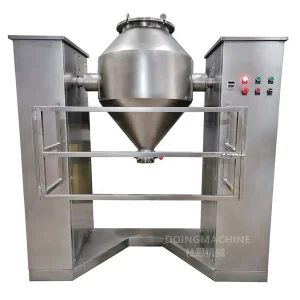
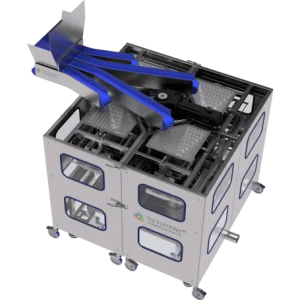
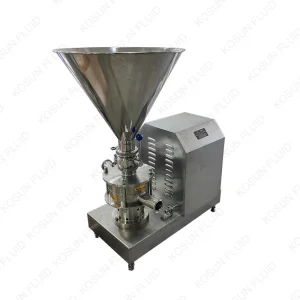
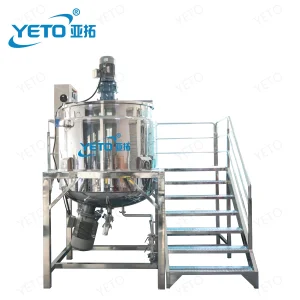
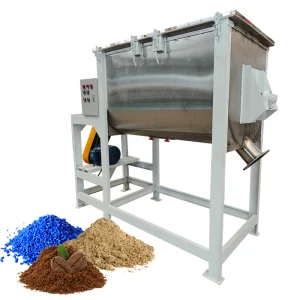
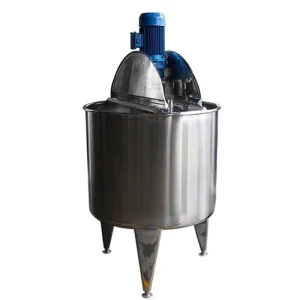
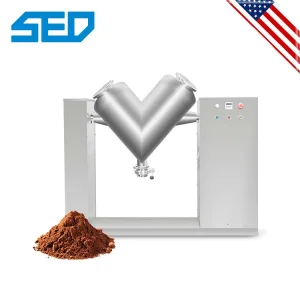
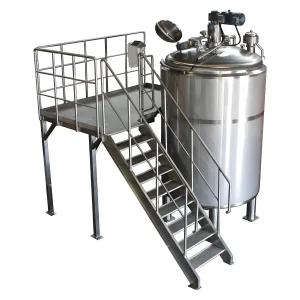
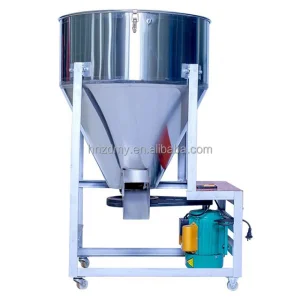
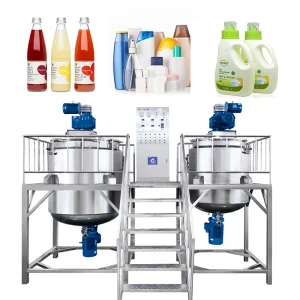
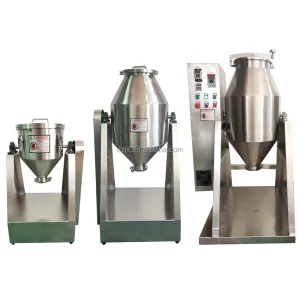
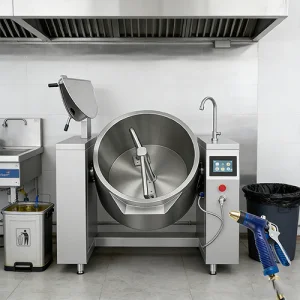
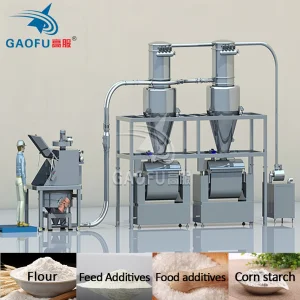
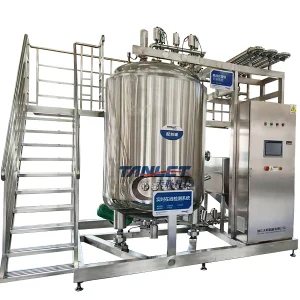
Premium sanitary equipment engineered to handle diverse viscosities, dry powders, and emulsified liquid formulations.
Paraguay, historically recognized as a dominant global force in agricultural exports—specifically as one of the world's leading exporters of soybeans, beef, and maize—is undergoing a rapid industrial revolution. The national strategy is shifting from exporting raw commodities to establishing domestic processing plants that produce value-added goods. From refined soybean oil and texturized proteins to processed dairy, specialized yerba mate formulations, and animal poultry feed, the country’s industrial landscape demands heavy-duty, highly sanitary food mixing machines.
To support this transition, food processing plants in Asunción, Ciudad del Este, and Encarnación require mixing solutions that minimize batch cycle times while maintaining absolute compliance with Mercosur and international health standards. Standard kitchen-grade mixers are insufficient; processing facilities require robust industrial-grade ribbon blenders, high-shear emulsifiers, and planetary mixing tanks capable of continuous duty cycles.
Processing plants in Paraguay handle materials varying from low-viscosity milk formulations to highly viscous syrups, abrasive grain seeds, and ultra-fine food powders like starch and cocoa.
Strict Mercosur sanitary frameworks demand clean-in-place (CIP) compatibility, zero-dead-space designs, and polished 304 or 316 stainless-steel contact surfaces.
With Paraguay’s access to abundant hydroelectric power from the Itaipu and Yacyreta dams, local factories are prioritizing heavy machinery with optimized electric motors and high-torque gearboxes to maximize energy performance.
Analyzing the shift toward smart automation, dust-free powder transfer, and high-efficiency shear kinetics.
The global industrial food mixing equipment sector is moving rapidly towards automation, dust-free containment, and hybrid mixing capabilities. In modern food manufacturing, the standard ribbon blender has evolved; today, it is integrated with automated vacuum-loading systems and smart PLC controls that monitor moisture levels, temperature, and impeller resistance in real time. This minimizes human error, prevents cross-contamination, and guarantees batch consistency.
Furthermore, the demand for meat alternatives, high-fat spreads, and micro-encapsulated ingredients has driven innovation in high-shear emulsifiers and inline homogenizers. These machines utilize precise stator-rotor alignments to break down droplet sizes to the sub-micron level, which stabilizes emulsion matrices without requiring excessive chemical stabilizers. When purchasing equipment globally, manufacturing companies focus heavily on sanitary certifications, energy efficiency ratings, and structural load limits.
Why do standard mixers fail in modern food processing? It comes down to shaft seals and dead angles. Top-tier global manufacturers employ air-purged mechanical shaft seals that prevent fine powder ingress, preventing microbial growth at the junction where the shaft exits the mixing trough. Additionally, fully welded ribbon flights without cracks or crevices prevent material accumulation, allowing rapid sanitation cycles and clean validation.
15 years of engineering commercial kitchen and industrial-grade stainless steel equipment with no compromise on quality.

Shandong Linru Import & Export Trading Co., Ltd. (also operating under Feijin Import & Export) is a professional enterprise integrating the production and sales of commercial kitchen and industrial food processing equipment. With 15 years of deep experience, the company has grown from a single line of kitchen stoves to a diversified portfolio of high-quality branded products, including complex food mixing vessels, heating kettles, and refrigeration equipment.
From the beginning, we have been committed to improving our product quality step by step, firmly believing that only by ensuring consistent quality can we truly earn our customers' trust and recognition. In the field of refrigeration and mixing equipment, we adhere to strict quality standards and rigorous requirements. Every product is built to meet national quality standards, customized to satisfy client needs, and crafted with attention to detail that reflects our company’s commitment to excellence.
Our heating products, including industrial stoves and jacketed kettles, have obtained full-range CCC (China Compulsory Certification). In addition, our jacketed kettles are certified not only with CCC but also with the National Pressure Vessel Manufacturing License, ensuring customers can purchase with confidence and use with peace of mind. We reject low-cost, low-quality shortcuts to ensure every piece of equipment delivers long-term stability and reliability.
How specialized mixing equipment solves regional processing challenges.
Paraguay's iconic yerba mate industry requires precise blending systems to mix dry leaves (canchada), stems, and flavoring herbs. Due to the dusty nature of dry leaves, factories require dust-free ribbon blenders. The equipment must prevent particle degradation while achieving a homogeneous blend, ensuring the flavor profile remains consistent without turning the leaves into fine powder.
As a major soy producer, domestic refining and processing of soy-based products is expanding. High-shear inline emulsifying mixers are critical for manufacturing mayonnaise, salad dressings, and soy-based spreads. They shear and disperse oil droplets, water, and thickeners like xanthan gum into a smooth, stable emulsion that does not separate over time.
Paraguay’s booming poultry and livestock sectors rely heavily on animal feed production. Large-scale grain seed mixers and ribbon blenders are required to mix corn, wheat bran, vitamins, and minerals. The mixers must endure continuous abrasive friction, necessitating thick-walled stainless steel construction and robust gear drives.
Utilizing local tropical fruits, processing factories require jacketed cooking kettles with integrated scrape-surface agitators. These mixers prevent the high-sugar fruit pulp from burning on the heated vessel walls during pasteurization and concentration processes.
For food processing businesses in Paraguay, importing mixing machines from premium Chinese factories offers a distinct competitive advantage in cost-performance ratio, customization, and engineering speed.
Chinese manufacturers utilize mature supply chains, providing direct access to high-grade certified 304 and 316 stainless steel at lower raw costs. Additionally, advanced manufacturing techniques—such as robotic laser welding and automated sheet metal bending—ensure consistent build quality, which is difficult to replicate at low volumes. This technological advantage, combined with lower overheads, allows Chinese factories to offer custom-engineered mixers at a fraction of the cost of European equivalents, without compromising on component quality (such as utilizing Siemens motors, Schneider electrics, and NSK bearings).
Chinese factories can design, manufacture, and test a customized 1000L mixing tank within weeks, whereas Western suppliers often demand several months of lead time.
Experienced Chinese exporters pack heavy machinery in reinforced sea-worthy wooden crates, ensuring safe transit through Atlantic shipping lanes directly to the landlocked river ports of Asunción or Villeta.
Comprehensive engineering diagrams, wiring schematics, and operator manuals are provided in English and Spanish, simplifying local safety compliance certifications.
Browse our complete catalog of industrial mixers, ribbon blenders, emulsifying vessels, and automatic powder feeding systems.
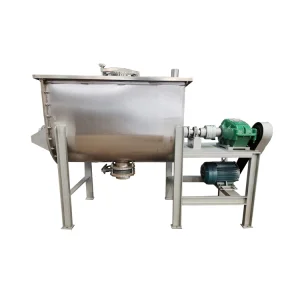
A comprehensive framework for food engineers and procurement managers in Paraguay.
Selecting the correct mixing configuration is determined by the fluid behavior under shear force. For low-viscosity fluids (such as milk, juice, or light oils), axial-flow impellers operating at high RPM are ideal because they generate macro-movement and rapid turnover. However, as fluid viscosity exceeds 10,000 cPs (such as mayonnaise, tomato paste, or concentrated syrups), standard impellers stall or experience bypass flow. In these scenarios, planetary mixers or anchor agitators equipped with Teflon scrapers are required. The scraper continuously wipes the vessel wall, preventing localized overheating and improving heat transfer rates by up to 40%.
When incorporating hydrocolloids or thickeners (e.g., Xanthan Gum, Guar Gum, or starches) into liquid matrices, standard mixing tanks often create unhydrated agglomerates, commonly referred to as "fish eyes." To prevent this, process engineers utilize inline high-shear mixers. The powder is introduced directly into the liquid stream just before it enters a high-velocity stator-rotor assembly. The mechanical and hydraulic shear forces break down the powder agglomerates in a single pass, ensuring complete hydration and minimizing raw material waste.
For standard food applications, AISI 304 stainless steel is the industry benchmark. However, for products containing high salt content or high acidity (such as brines, mustard, or acidified sauces), AISI 316L must be specified. The addition of molybdenum in 316L stainless steel provides superior resistance to pitting corrosion caused by chlorides. Additionally, contact surfaces must be polished to a roughness average (Ra) of less than 0.4 microns to prevent bacterial attachment and ensure CIP validation passes chemical swab inspections.
Expert answers to common engineering, logistics, and operational questions for Paraguayan food processing plants.
 Linru Kitchen Equipment