Ireland's food and beverage processing sector represents a global powerhouse, renowned for high-value exports in dairy ingredients, infant nutrition formulas, craft baking, prepared culinary dishes, and premium spirit blending. Operating in this landscape requires adhering to some of the strictest sanitary frameworks in the world, managed closely by the Food Safety Authority of Ireland (FSAI) and the National Standards Authority of Ireland (NSAI).
Modern manufacturing plants in Dublin, Cork, Limerick, and Galway are progressively replacing legacy equipment with advanced, high-performance mixing systems. This transition is motivated by two key variables: securing strict cross-contamination control and achieving the high levels of batch repeatability required for export-grade products. Standardized equipment is no longer sufficient; processors require heavy-duty mixing systems optimized for energy consumption, sanitary ease-of-cleaning (CIP/SIP compatibility), and compliance with European CE and EHEDG standards.

Feijin and Shandong Linru Import & Export Trading Co., Ltd. operate a integrated, ISO 9001-certified fabrication facility, bringing 15 years of sanitary engineering experience directly to food processors in Ireland.
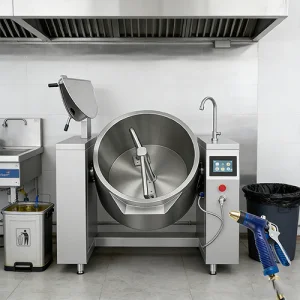
Feijin commercial mixing and thermal blending equipment is manufactured to comply with national and international quality codes. Our heating and jacketed cooking kettles carry China Compulsory Certification (CCC) alongside the National Pressure Vessel Manufacturing License, giving Irish operations complete mechanical and thermal operating safety validation.
We source certified food-grade SS304 and SS316L stainless steel. Surface finishes are subjected to rigorous mechanical polishing processes down to Ra < 0.4 μm for liquid emulsifiers, eliminating microscopic pockets where bacteria or biofilms could accumulate and ensuring efficient Clean-in-Place cycles.
We avoid low-cost manufacturing shortcuts. Every single component, from the heavy-duty ribbon blades to the dual-channel mechanical seals, is constructed to withstand prolonged stress, chemical washdowns, and continuous industrial production runs without structural fatigue.
Selecting the appropriate fluid and solids blending technology depends on viscosity dynamics, solid-liquid shear requirements, and sanitation standards. Use our comparison matrix to assess performance metrics against Irish market applications.
| Equipment Category | Primary Dynamics | Suitable Viscosity Range | Irish Market Target Applications | Sanitary Design Features |
|---|---|---|---|---|
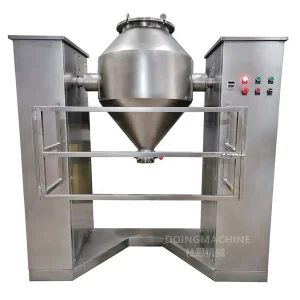
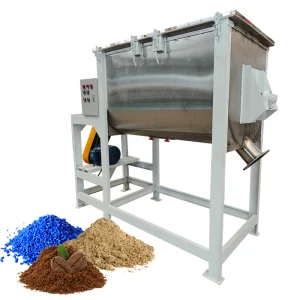
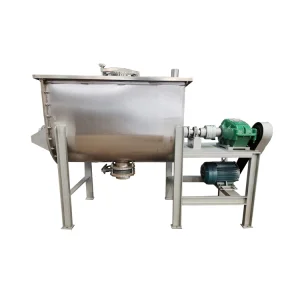
| Ribbon Blenders | Low-shear, high-capacity dry powder blending | Dry Bulk Powders (Solid-Solid) | Infant formula base, dry baking ingredients, spice mixes | Discharge slide valves, dust-tight cover seals, sanitary shaft packing |
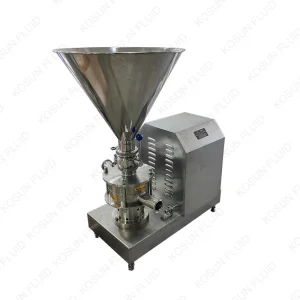
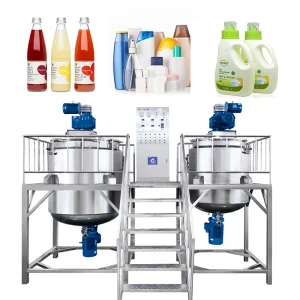
| High-Shear Emulsifiers | High mechanical shear (up to 100,000 s⁻¹) | Low to Medium (Fluid Emulsions) | Mayonnaise production, liquid egg products, sauces, dressings | Stator-rotor precision tooling, double mechanical seal, CIP inlet |
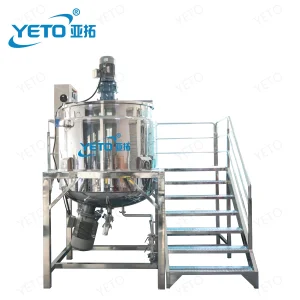
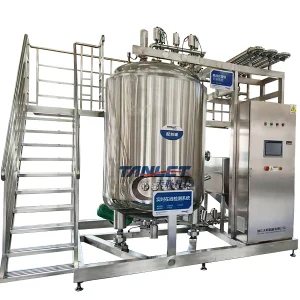
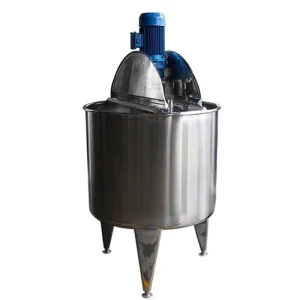
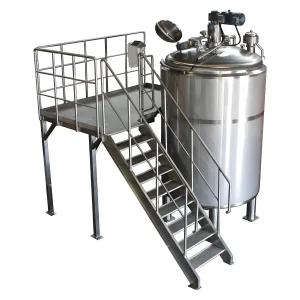
| Agitated Jacketed Tanks | Continuous slow agitation with steam/oil jacket | Medium to High Viscosity fluids | Artisan preserves, commercial jams, thick soup preparation | Teflon wall scrapers, dimple jackets for steam/cooling, flip-top design |
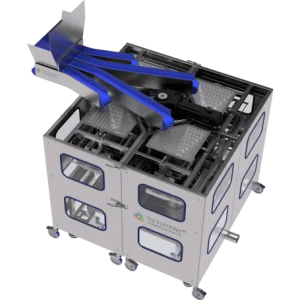
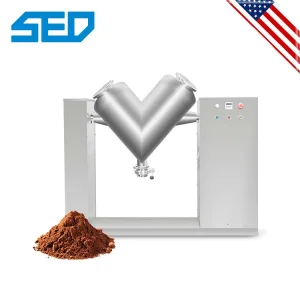
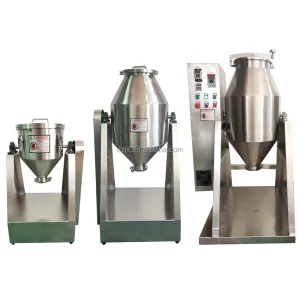
| Trajectory & V-Mixers | Free-fall diffusion, zero mechanical shear | Fragile powders and micro-ingredients | Nutraceutical tablets, dry beverage formulations, enzymes | Fully enclosed asymmetric vessels, no internal moving parts, rapid clean |
Industrial mixing in modern processing plants is more than basic rotation; it is a thermal-fluid mechanical science. Mixing machines must manage shear stress, radial force distribution, mass transfer rates, and viscous flow dynamics to achieve true homogeneity without altering the physical properties of sensitive raw materials.
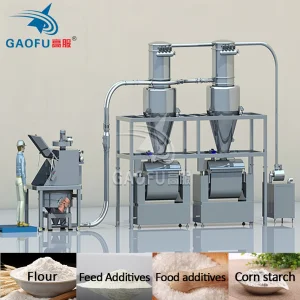
For dry solids (such as infant milk powder and grain blends), Ribbon Blenders utilize counter-directional ribbons. The outer ribbon moves materials inwards from the sides, while the inner ribbon displaces material outwards. This axial fluidization mechanism achieves a target Coefficient of Variation (CV) < 5% in short, energy-efficient cycle times.
In contrast, high-viscosity liquid blends, mayonnaise, and starch gums require high energy inputs. Our inline emulsifiers and high-shear mixers break down droplets and powder aggregates to the micronic level. The product passes through a high-precision stator-rotor interface where fluid shear rates exceed 10,000 s⁻¹, preventing separation and extending shelf-life.
For operations handling dry starch, flour, and organic sugar dust, we offer ATEX-rated components to mitigate dust-explosion risks in European plants.
Equipped with IP69K-rated washdown drive systems, sealing rings, and heavy-duty structural frames, our equipment withstands caustic sanitation chemicals.
We bridge the geographical gap between fabrication facilities in China and processing lines in Ireland through dedicated technical export pipelines.
We maintain inventory of mechanical seals, scraper blades, and heating elements, coordinating express delivery directly to Irish shipping hubs.
All machines are supplied with comprehensive electrical schematics, assembly videos, operational manuals, and dedicated 24/7 video-call installation guides.
Our engineers customize the physical footprints, inlet ports, discharge valves, and motor parameters to integrate into existing production lines.

Our mixers integrate with PLC platforms (Siemens S7, Allen-Bradley) for recipe management, torque curves, and temperature logs, linking to factory MES systems.
Equipped with high-efficiency IE3/IE4 motors and Variable Frequency Drives (VFD), optimizing electricity consumption relative to product viscosity.
Integrating vacuum feeding and pneumatic conveyor units with our blenders eliminates manually handling powders, preventing respiratory risks.
 Linru Kitchen Equipment