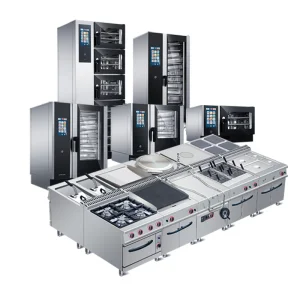
In the highly competitive commercial foodservice and industrial food processing sectors, performance margins are measured in seconds and fractions of a millimeter. Shandong Linru Import & Export Trading Co., Ltd. (Feijin Import & Export) has spent over 15 years engineering, refining, and delivering heavy-duty kitchen equipment built for these demands. Originating as a specialized line manufacturer of industrial kitchen stoves, the enterprise has expanded systematically into a global powerhouse supplying heavy-duty mixers, preparation systems, cold chain refrigeration containers, and localized cooking solutions.
Commercial grade blending is no longer defined merely by raw motor wattage. Today's modern food factories, high-volume restaurants, and cosmetic processing centers require smart torque adjustment, acoustic containment, and high-integrity metallurgical build components. By engineering blenders that withstand the thermal stresses of continuous operation, our systems have established a reputation for reliability across global distribution networks.
Industrial food processing demands absolute continuity. A failure in a blending mechanism can stop an entire packaging line, causing significant financial loss. Feijin Import & Export approaches product development through integrated macro solutions, recognizing that a commercial blender must exist harmoniously within a broader technological ecosystem.
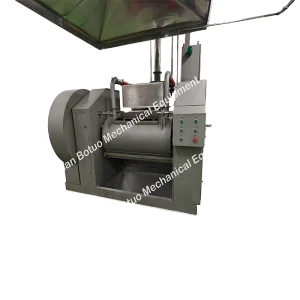
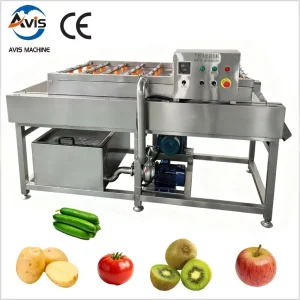
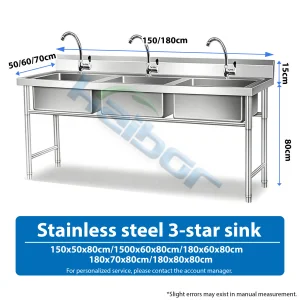
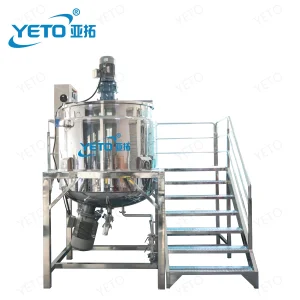
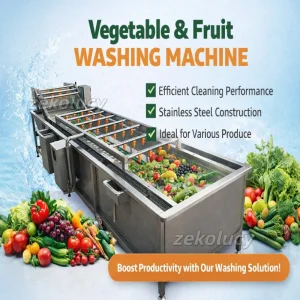
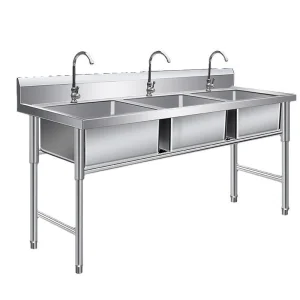
From vegetable pre-washing systems to custom 3-compartment preparation sinks and rapid-chill container refrigeration units, our engineers design layouts that maximize throughput. For instance, in processing potatoes, carrots, or cassava, high-capacity peeling and washing machines prepare the root crops before they enter heavy-duty mixing and blending homogenizers. Our 1000L high-shear cosmetic and food emulsifying mixers demonstrate the scale at which our manufacturing operations operate, offering continuous homogenization of liquids, creams, and dense organic pastes.
The global market for commercial blending systems has experienced a paradigm shift. Buyers in North America, Western Europe, and East Asia are transitioning away from high-noise, brush-motor appliances toward smarter, quieter, and more energy-efficient induction and brushless DC (BLDC) platforms. High-density urban kitchens require low decibel levels to ensure a comfortable dining environment, driving the demand for specialized sound enclosures and vibration-absorption bases.
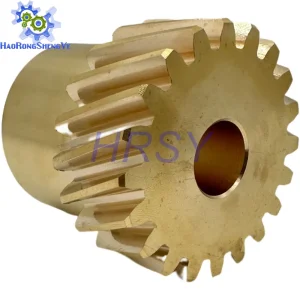
Concurrently, industrial sectors demand rugged mechanical components. Our production of Customized Helical Brass Gear Wheels serves as a direct answer to the failure rates commonly observed in standard commercial blenders. By utilizing high-grade helical brass gears instead of plastic or soft-metal alternatives, our blending systems maintain operational longevity even when processing frozen ingredients or high-viscosity food materials under sustained torque loads.
Specially engineered container geometries direct ingredients back down into the blade array, eliminating static zones and ensuring smooth consistency.
Utilizing custom-engineered helical brass gears for maximum torque transfer, low wear, and acoustic mitigation during heavy-duty operations.
Double-wall sound dampening hoods reduce decibel emissions by up to 15dB, creating a better working environment in front-of-house operations.
A core differentiator of our manufacturing capability is the rigorous selection of materials. The difference between 304 and 201 stainless steel is critical in high-moisture commercial kitchens. While 201 steel offers structural rigidity at a lower price point, 304 stainless steel features a minimum of 18% chromium and 8% nickel, providing superior resistance against organic acids and chlorine-based sanitizers.
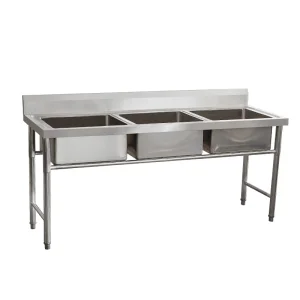
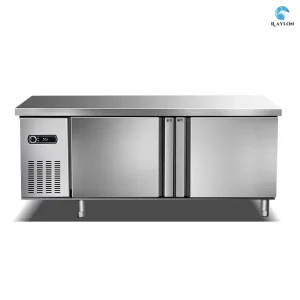
At Feijin, our standard preparation tables, three-compartment sinks, and high-capacity steaming units are constructed with commercial-grade 304 stainless steel. This same attention to material selection applies to our blending shafts and blade assemblies. We use hardened carbon-bearing stainless steel alloys that maintain their edge sharp and resist pitting corrosion over years of intensive daily use.
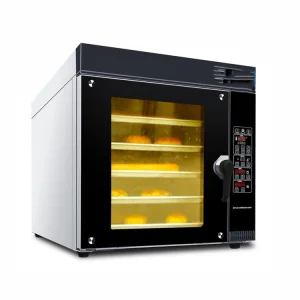
Exporting high-performance commercial kitchen equipment to diverse international markets requires strict compliance with localized safety and engineering standards. All our heating equipment, including specialized cookers and multi-deck convection ovens, has obtained full China Compulsory Certification (CCC) ratings.
Furthermore, our jacketed steam kettles and pressurized cooking apparatuses carry the National Pressure Vessel Manufacturing License. This certification guarantees that our high-pressure components undergo rigorous non-destructive testing (NDT), hydrostatic checks, and structural verification before they leave the factory floor.
To support our global distributors and OEM/ODM clients, Shandong Linru provides comprehensive engineering documentation. This includes material test reports (MTRs), electrical schematic diagrams matching CE and UL standards, and structural load ratings. This compliance infrastructure minimizes customs friction and ensures smooth local municipal health inspections for end users.
Our equipment is designed to operate reliably across a wide range of environments. Below are three representative application scenarios showing how our hardware integrates into different operational contexts:
For beverage franchises processing hundreds of ice-dense smoothies daily, blade structural integrity is critical. Our blenders feature direct-drive motors coupled with custom brass helical gears, ensuring smooth operation under high starting torque. Our double-wall acoustic vaults allow for front-of-house operation without disrupting the customer experience.
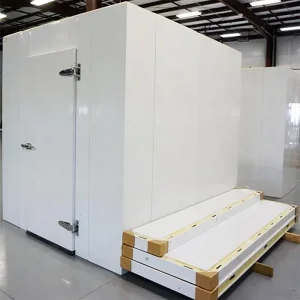
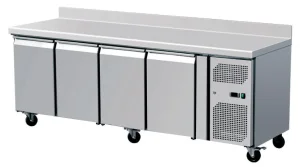
Large scale operations processing school lunches or hospital meals rely on our multi-stage preparation systems. Root vegetables are cleaned in our rotary drum washing machines, moved to 304 stainless steel prep stations, and blended into purees using our high-capacity mixing tanks. Cold chain preservation is handled by our 20FT containerized quick-freezer units to maintain freshness.
For cosmetic manufacturers producing creams, lotions, and suspensions, standard kitchen gear is insufficient. Our Yeto 1000L high-shear homogenizers operate under precise vacuum pressures, reducing particle size to the sub-micron level. The entire liquid contact assembly is made of sanitary-grade 316L/304 stainless steel, preventing contamination.
Our R&D pipeline is focused on three primary goals: smart sensing, energy optimization, and cleaning automation. As energy costs change globally, our upcoming line of commercial blenders will utilize brushless DC motors that reduce power draw by 30% while maintaining equivalent torque outputs.
We are also developing integrated sensors that measure ingredient viscosity in real time. This technology adjusts motor speed dynamically, ensuring consistent blend textures and preventing motor burnout from operator error. Additionally, we are working to integrate Clean-in-Place (CIP) cycles into our large-capacity mixing lines to reduce down-time and chemical cleaner usage.
 Linru Kitchen Equipment