Explore our premium machinery range designed to align with strict export criteria and ensure uninterrupted kitchen workflow efficiency.
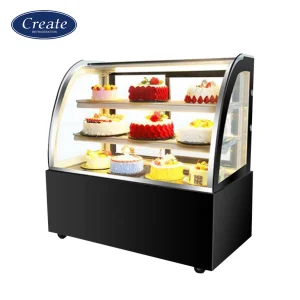
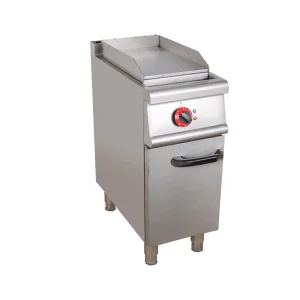
In the high-intensity environment of global commercial catering, hospitality, and institutional food service, maintaining optimal food temperatures at the point of service is a critical operational parameter. Underneath the aesthetics of a carving station or buffet setup lies a sophisticated matrix of thermodynamic engineering. The heating lamp station serves as the final, critical safeguard in the hot-holding chain, directly influencing food safety, sensory quality, and customer satisfaction.
As a leading authority in food service machinery, Shandong Linru Import & Export Trading Co., Ltd. (also recognized globally under the brand Shandong Binzhou Feijin Import & Export Trading Co., Ltd.) presents this comprehensive whitepaper. Drawing upon 15 years of manufacturing excellence and a deep understanding of export markets, we analyze the technological vectors, manufacturing paradigms, and quality assurances that govern high-end thermal food preservation equipment today.
"For 15 years, Feijin Import & Export has committed to refining commercial kitchen solutions, eschewing short-sighted, low-cost compromises. Our mandate is clear: absolute thermal stability, unyielding compliance, and long-term operating durability."
The core technology behind modern commercial food warming has shifted from simple ambient temperature elevation to highly directed, energy-efficient heat transfer. Understanding these technical shifts is crucial for procurement divisions selecting equipment designed to withstand next-generation energy constraints and performance parameters:
Direct thermal energy projection prevents ambient heat loss. Wavelengths are tuned to optimize water molecule excitation without causing food surface scorching.
Seamlessly scales from single-head carving warmers to extended multi-pan linear configurations, catering to high-volume commercial kitchens.
Shielded electrical lines and high-temperature silicone wiring insulation eliminate high-voltage leakage risks, meeting standard commercial safety demands.
In high-capacity hospitality and corporate dining sectors, maintaining food presentation quality is as vital as structural safety. Heating lamp stations form a core link in operations, solving issues like thermal decay, product waste, and strict regulatory standards.
Whether deployed in high-occupancy cruise ships, premium airport lounges, or fast-casual chains, a commercial heating lamp must operate reliably in variable ambient temperatures. Our design teams utilize rigorous thermal modeling to assess airflow and thermal transfer mechanics. This helps prevent dry air zones that degrade proteins, ensuring carved meats, breaded poultry, and delicate pastries retain their original moisture and presentation value over prolonged holding durations.
The manufacturing ecosystem of Shandong, China, provides unmatched competitive advantages in raw material sourcing and process automation. Feijin utilizes advanced manufacturing platforms to produce heating lamp stations that balance cost-effectiveness with high structural quality.
By using automated fiber-laser cutting tables, high-tolerance CNC press brakes, and robotic welding stations, we maintain tight structural tolerances across all chassis assemblies. Our vertical supply chain integration allows us to source premium 304 food-grade and 201 structural-grade stainless steel directly from verified national mills. This removes structural vulnerabilities common in smaller manufacturing operations, ensuring every unit is rigid, resistant to stress-corrosion cracking, and capable of operating continuously in humid commercial kitchen environments.
Enterprise-level procurement teams demand suppliers that offer more than simple equipment manufacturing. High-volume procurement requires a complete operational framework designed to reduce Total Cost of Ownership (TCO) while ensuring safety and logistics reliability:
Operating across international boundaries requires absolute compliance with local industrial standards. Feijin’s product engineering is built around a compliance-first philosophy, ensuring smooth integration into any target market.
Our complete heating range, including commercial heating lamps, is fully certified under the China Compulsory Certification (CCC) system. Additionally, our industrial jacketed kettles and pressurized thermal hardware hold the National Pressure Vessel Manufacturing License. This certification matrix demonstrates our capacity to manufacture safe, high-quality, high-pressure, and high-temperature commercial appliances. When importing our equipment, buyers can be confident that all internal wiring, ceramic sockets, and terminal blocks meet international safety standards, reducing localized product approval delays.
As the commercial food service sector adopts smarter automation systems, we are updating our equipment to keep pace. Our R&D team is focused on implementing IoT monitoring modules that log operational temperatures in real-time, helping kitchens verify HACCP food safety compliance continuously.
We are also developing high-durability coating technologies, such as advanced PVD (Physical Vapor Deposition) and high-density powder coatings. These finishes enhance wear resistance on heating frames while offering a range of aesthetic choices to match modern front-of-house service designs. This allows hospitality operators to choose finishes that complement their interior aesthetics without compromising structural durability.
Complete your facility layout with our premium food processing, storage, and preparation hardware.
 Linru Kitchen Equipment