In the modern industrial food sector, scalability and safety are not merely regulatory hurdles; they are fundamental prerequisites for global market access. High-efficiency meat processing requires integrated, robust thermal-management architectures and heavy-duty mechanical solutions that operate without downtime. Whether optimizing a centralized slaughterhouse, a high-volume meat packing plant, or a localized specialty processing kitchen, the choice of machinery dictates your ultimate yield, microbiological safety, and operational longevity.
As a premier manufacturer and supplier, Shandong Linru Import & Export Trading Co., Ltd. (Feijin Import & Export) leverages 15 years of technical expertise. We engineer and deliver commercial kitchen systems and processing solutions designed specifically for severe operating environments. Grounded in structural integrity and international compliance, our engineering framework ensures that every design choice addresses real-world, high-capacity food processing needs.
Enterprise buyers, cold-chain logistics directors, and commercial kitchen designers face a rapidly shifting procurement landscape. Sourcing managers are no longer looking at individual components; instead, they require cohesive systems that minimize the Total Cost of Ownership (TCO). Procurement decisions for meat processing tools now revolve around several critical performance markers:
Strict compliance with HACCP and FDA guidelines requires surfaces that resist bacterial colonization. Using non-porous AISI 304 or 201 stainless steel with polished sanitary welds prevents Listeria and Salmonella build-up in corners and seams.
Industrial food processing equipment is subjected to intensive washdowns using corrosive chemical sanitizers. Heavy-gauge metal plating, IP69K-rated electrical enclosures, and premium motors are essential to survive high-pressure cleanings.
Machinery must seamlessly interface with upstream slaughter lines and downstream vacuum packagers. Custom electrical profiles (such as 380V/50Hz/3-Phase or 460V/60Hz) ensure immediate local installation and smooth commissioning.
Modern commercial food preparation spans multiple temperature zones, physical operations, and processing methods. To manage these complex processes, facilities require specialized, integrated equipment loops rather than stand-alone units. Our engineered solutions address these critical requirements across key stages:
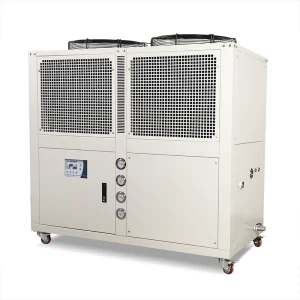
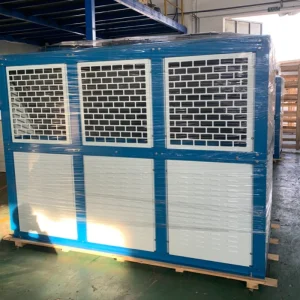
Maintaining strict temperature control is vital in meat processing to suppress pathogen growth and extend shelf life. This requires advanced industrial cooling setups. For example, our 3-phase, air- and water-cooled condensing units provide the cooling capacity needed to keep large walk-in freezers and processing rooms at stable sub-zero temperatures.
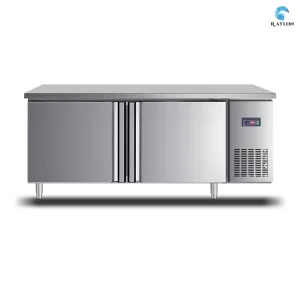
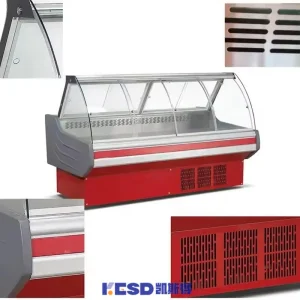
In retail and supermarket layouts, fresh meat display chillers must feature balanced airflow and precise humidity control. This prevents surface dehydration of premium cuts while keeping food within the safe temperature zone (0°C to 4°C). When integrated with undercounter prep refrigerators, these systems create a continuous cold chain that preserves meat quality from raw preparation all the way to final display.
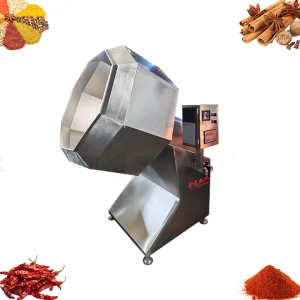
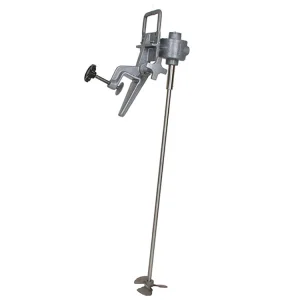
To transition from manual processing to automated high-volume output, facilities require specialized heavy-duty machinery. Mixing seasoning and curing agents into ground meat must be done uniformly to ensure consistent flavor and texture. This is achieved through octagonal food mixers and pneumatic agitators. These mixers run on pneumatic air systems, allowing for safe liquid blending and product mixing even in humid environments.
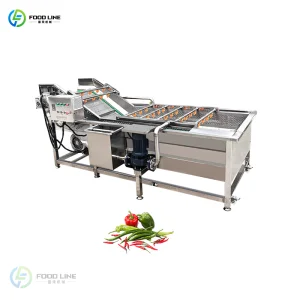
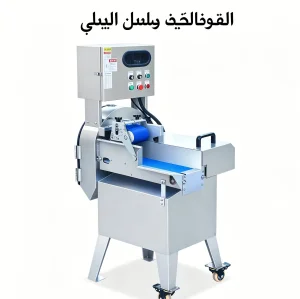
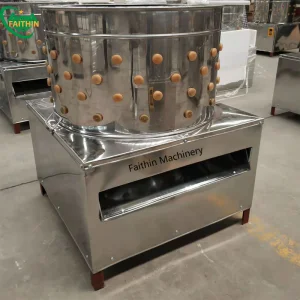
Furthermore, raw materials must be quickly and cleanly processed into final shapes. Specialized equipment, like high-throughput vegetable and root cutters, handles auxiliary ingredients efficiently. On the primary meat and poultry line, automated slaughter equipment, such as poultry plucking machines, handles delicate tasks with high throughput, maintaining hygiene and speed.
High-quality food processing equipment relies on precise engineering and strict material science. The choice of metal alloys, surface finishes, and mechanical components determines how long a machine will last and how easily it can be cleaned.
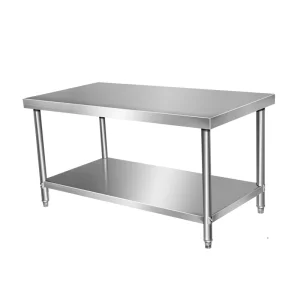
For direct food-contact surfaces (such as preparation worktables, mixing drums, and cutting blades), we use high-grade AISI 304 stainless steel. This alloy features high chromium and nickel content, providing excellent protection against pitting and acid corrosion. For support structures, outer panels, and non-contact frames, AISI 201 stainless steel offers structural strength at a competitive cost.
Our refrigeration units utilize eco-friendly refrigerants and high-efficiency compressors to maximize cooling performance. Features like smart hot-gas defrosting, inner-grooved copper tubing, and optimized condenser fans ensure rapid heat transfer. This keeps energy consumption low even under high external temperatures.
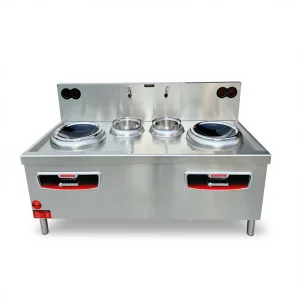
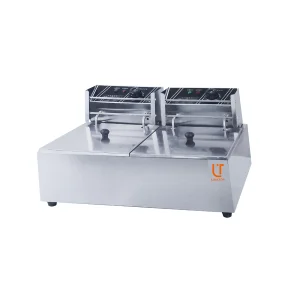
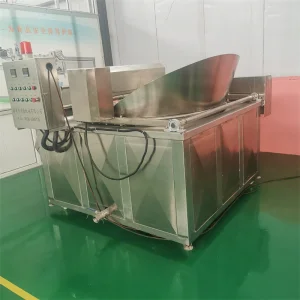
Safety is built into every mechanical movement. Our pneumatic agitators, double induction stoves, and automatic fryers feature overload protection, emergency stop valves, and isolated electrical setups. This minimizes operational risks and keeps processing lines running smoothly.
Compliance is the cornerstone of trust. Food equipment must meet strict regional standards before it can be integrated into food production lines. Shandong Linru Import & Export Trading Co., Ltd. (Feijin Import & Export) has built its reputation on compliance, quality control, and rigorous engineering testing.
With over 15 years of dedicated manufacturing experience, Feijin has expanded from a single production line of commercial kitchen stoves into a comprehensive provider of commercial refrigeration, thermal, mixing, and cutting systems. We reject low-cost, low-quality shortcuts. Instead, we focus on consistent manufacturing quality to build lasting partnerships with our global clients.
In refrigeration and food prep systems, we adhere to strict international standards. Our commercial heating equipment has earned full-range CCC (China Compulsory Certification). Furthermore, our jacketed steam kettles and specialized boilers hold the National Pressure Vessel Manufacturing License alongside full CE compliance. This guarantees that every pressure valve, weld seam, and thermal component can operate safely under high pressure.

The food processing industry is evolving toward smart, automated, and sustainable operations. Manufacturers are integrating IoT sensors, automated cleaning cycles, and energy-saving designs to meet these future demands:
Modern processing plants utilize smart sensors to monitor temperature, vibration, and motor load in real time. This data helps schedule maintenance before equipment issues occur, preventing unexpected downtime and extending machine life.
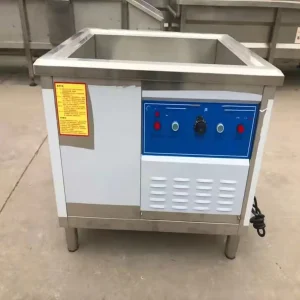
High-efficiency induction cooking, variable-speed refrigeration compressors, and water-recycling commercial dishwashers significantly reduce energy and water consumption. This lowers operating costs while supporting global sustainability standards.
Future equipment layouts prioritize sanitary designs that support automated CIP cleaning. Smooth surfaces and self-draining components reduce the need for manual cleaning, saving labor costs and keeping sanitation levels high.
 Linru Kitchen Equipment