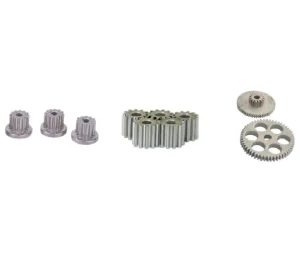
Hot-Selling Rotary Dryer Kiln Girth Gear for Mining

Customization: Available
After-sales Service: 24 Hours Online
Warranty: 12 Months

Product Description

  • Overview
  • Product Description
  • Features
  • Product Parameters
  • Company Gallery
Basic Info.
Model NO.
Girth Gear
Weight
Max 120 Mt Single Piece
Module Range
10 Module to 70 Module
Certificate
ISO 9001:2008
Gear Cutting Machines
16m CNC Hobbing Machine
Standards/Certificates
Uni En ISO Aws ASTM Asme DIN
Applications
Applied in The Cement and Minerals Industries
Transport Package
Ball Mill Girth Gear
Specification
Ball Mill Girth Gear
Production Capacity
3000PCS/Year
Product Description
Hot-Selling Rotary Dryer Kiln Girth Gear for Mining

Girth Gears: Rotary kiln Girth Gear, ball mill Girth Gear
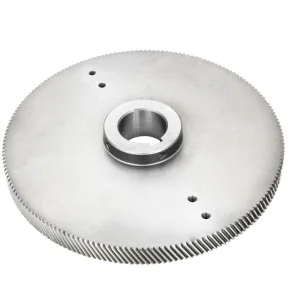
Girth Gears offered find extensive application in different industry sectors including in sponge iron plants, steel & cement industry, mining industry, wind mills as well as in other industry sectors. These are made available in module range of 10 Module to 70 Module and in minimum diameters of 100 mm to 15000 mm. Further, these comprise maximum weight of 70 MT single pieces. Here the range of hardened & ground gear boxes/gears comprise Worm gear boxes, Helical / Double helical gears/gearboxes, Helical-Bevel gearboxes, Planetary Gearboxes and others.

Gear Cutting Machines Include:
  • Ø16m CNC Hobbing Machine
  • Ø12m Gear Cutting Machine
  • Ø10m Hobbing Machine
  • Ø4m CNC High Speed Hobbing Machine
  • Ø1.6m Horizontal CHC Hobbing Machine
  • Ø5m CNC Profile Gear Grinding Machine
  • Ø2.8m CNC Profile Gear Grinding Machine
  • Ø1.25m CNC Profile Gear Grinding Machine
  • Ø1m CNC Profile Gear Grinding Machine
  • Ø0.8m CNC Profile Gear Grinding Machine
Automatic Positioner Parameters
  • Module Range: 10 Module to 70 Module.
  • Diameter: Min 100 mm to 16000 mm.
  • Weight: Max 120 MT single piece.
Hardened & Ground Gear Boxes/Gears:
  • Worm gear boxes
  • Helical / Double helical gears/gearboxes
  • Helical-Bevel gearboxes
  • Planetary Gearboxes
  • Hardened & Ground Helical-bevel gears & Spiral-bevels gears/gearboxes
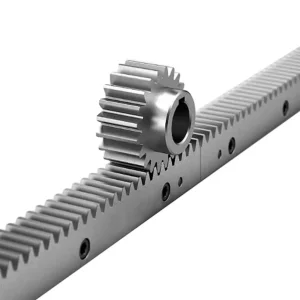
  • Rack & Pinions
Ratings & Lubrication
  • Min 3 hp to Max 1400 hp
  • Splash / Forced lubrication type

With more than 1000 girth gears sold over the world, we are a leading supplier in the cement and mineral industry. As a member of AGMA (American Gear Manufacturers Association), we actively take part in defining the standard for gear rating calculations and service factors.

Three Different Girth Gear Designs
  1. Fabricated steel: Forged ring / Rolled plate
  2. Cast steel
  3. Ductile (Nodular) cast iron

Fabricated gears have become more common and are constructed with forged steel gear rim materials and electro-welded body structures. The rings are manufactured from a whole block of high resistance alloy steel. After the rough machining of the ring, we carry out hardening and tempering heat treatment in order to improve the mechanical characteristic and therefore its relevant performance.

Advantages of Fabricated Girth Gears
  • The forged material structure excludes the risk of inclusions.
  • Structure defects like gas holes, micro shrinkage, pin holes, hot tears, sand and slag inclusions are avoided.
  • Repair welding of the body structure and grinding of toothed areas is not required.
  • The fabricated manufacturing procedure excludes the need for patterns and risers.
  • Rim material has higher hardness and higher strength than the material used for the underlying structure (i.e. web, gussets).
  • These features reduce the lead time and costs. Fabricated manufacturing ensures a fast delivery, which is especially beneficial in an emergency situation.
Features
External Teeth Specifications
  • Maximum diameter: 16000 mm
  • Toothed face width: 1700 mm
  • Maximum module: 45 by hob
  • Maximum module: 65 gear finishing cutter
Internal Teeth Specifications
  • Maximum Diameter: 6500 mm
  • Maximum module: 25.4
  • Toothed face width: 400 mm
Forging Material Process Steps
  • Forging & Final rolling
  • Furnace cooling
  • Control on production & Water quenching
  • Hardness testing & Rough machining
  • Ultrasonic testing, dimensional inspection & Final inspection certification
Standards & Certificates

UNI EN ISO, AWS, ASTM, ASME, DIN

Applications

Our girth gears are applied in the cement and minerals industries:

  • Various types of horizontal mills
  • Rotary dryers & Rotary kilns
  • Any other large gear ring application
Pinions and Custom Designs

We have invested in significant resources and achieved many innovations with pinions. The right combination of material, hardness and finishing between pinion and gear is crucial for a long lifetime of the installed equipment. We design and manufacture pinions to match every customer's need.

Pinion Design Options
  • Bored, solid on shaft / integral, or self aligned
  • Spur, helical or double helical
  • Forged alloyed steel (through hardened, case hardened or quenched and tempered)
  • Carburized, induction, or nitrided finishing
  • Tooth flank modification (profile correction, lead correction)
  • Designs / ratios according to ISO-DIN-A.G.M.A. using FEM/FEA simulation software
Pinion Applications
  • Ball mills & ROD mills
  • Semi Autogeneous Grind (SAG) mills
  • Rotary kilns / coolers / dryers
Advantages
  • One Source manufacturer
  • Original Equipment Manufacture (OEM) Technical Drawings support
  • Gearing technical expertise for kilns and grinding mills
  • State of the art manufacturing facilities and high quality control
  • Global sales and service support
Rotary Kiln Girth Gears Capacity
  • Sponge Iron Plants: 50TPD, 100TPD, 300TPD, 350TPD, 500TPD, 1000TPD
  • Cement plants as per customer requirements
  • Gears for phosphate mines, Alumina plants, kaolin-bentonite
  • Gear Cutting Capacity: 100mm diameter to 16000mm diameter, 10 Module to 70 Module

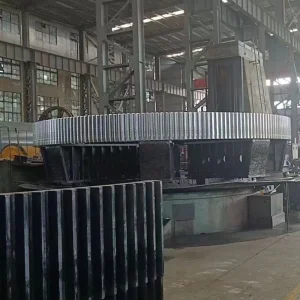
The Kiln girth gears are available mainly in bi-part, four parts, 8 parts or multi segments as per the requirement and suitability with the application of gear. In the field of grinding mill components, we supply mill heads, feed inlets, grinding rollers, cement kiln riding rings, casting gears, shaft blocks, and mill shells of welding structures and fabrications.
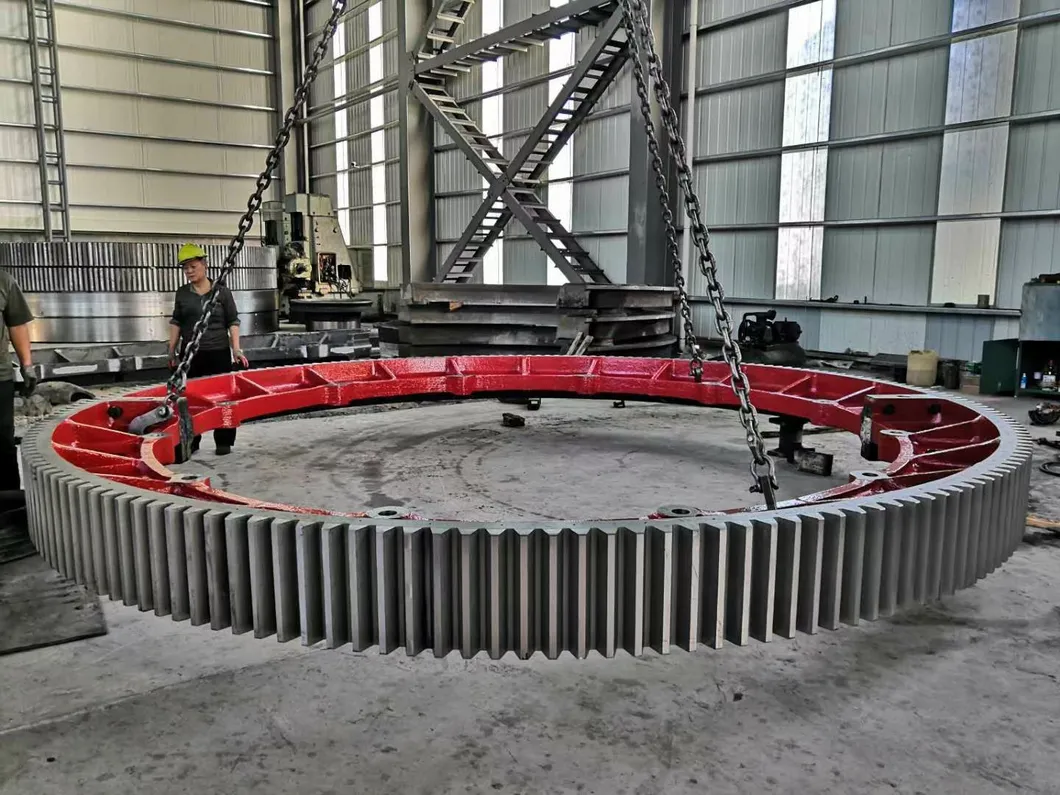
Hot-Selling Rotary Dryer Kiln Girth Gear for Mining
Quality Assurance Documents

The following reports are to be submitted to Quality Assurance:

  • a. Chemistry report & b. Physical report
  • c. Heat treatment documents (Standard Q/HM 973.2-2007 Specification for Steel Castings for Grinding Mills)
  • d. Ultrasonic inspection report & e. Magnetic particle inspection report (before and after repairs)
  • f. Dimensional report & g. Weld repair maps
  • h. Weld procedures, Procedure qualification record & i. Welder qualification
  • j. Nondestructive testing inspector qualification
Product Parameters
Item Structural Features Processing Measure Test Content
Girth Gear (1) GS42CrMo4 Alloy Steel (corporate proprietary standards) HB 220~240
(2) semi-structured, Y-Spoke
(3) Helical
(4) reasonable sealing and alignment structure of alloy steel
(1) outer steel refining (R-H argon and vacuum treatment)
(2) proprietary cold mold hanging sand technology to ensure casting dense teeth
(3) normalizing to ensure tooth surface hardness
(4) after rough hobbing, release time, repair joint surface, then fine roll
(5) proprietary homemade hob fine hobbing
(1) castings mechanical properties and chemical composition
(2) roughing after testing
(3) semi-finishing, finishing after ultrasonic and magnetic particle inspection
(4) tooth surface magnetic particle inspection, hardness test
(5) tooth tolerance check
(6) factory assembly load test to check size accuracy
Gear Manufacture Process Details
No. Process Processing Measure Processing Equipment Program of Tests Inspection Equipment
1 Prepare 1. Material: high quality cast steel
2. Casting process simulation for solidification quality
3. Smelting process control for chemical composition
4. Heat treatment for mechanical properties
- - -
2 Modelling 1. Control sand quality (strength, water content)
2. Sand tamping, polishing, paint brush twice
3. Riser and cold iron placement
4. Cavity cleaning and baking
Sand mixer 1. Check sand quality
2. Check cavity size
3. Check baking time
-
3 Smelting Casting 1. Low S.P pig iron and raw materials selection
2. Smelting to meet internal purity standards
3. Ladle argon blowing & R-H vacuum circulation degassing for oxygen reduction and uniform temp
4. Control temperature & speed
50t furnace, R-H vacuum degassing equipment 1. Materials control
2. Temperature and boiling time records
3. Direct reading spectrometer testing
4. Argon blowing & vacuum parameters check
5. Start temp & pouring time check
Direct reading spectrometer, physical & chemical equipment
4 Cleaning & Heat Treatment 1. Strict mold heat preservation time
2. Sand falling, shot blasting, cutting and risers removal
3. Blank heat treatment to refine original structure
50t Sand falling machine, 8.5×12m heat treatment furnace 1. Temperature records check
2. Sample testing with same furnace castings
3. Blank surface, geometry, and allowance checks
Physical & chemical equipment
5 Rough Machining 1. Reserve allowance for rough machining
2. Artificial aging treatment
Vertical lathe, 8.5×12m heat treatment furnace 1. Size check
2. Visual & ultrasonic defect inspection
Ultrasonic testing equipment
Technical Requirements of Large Gear Rings
  • Pretreated before normalizing surface hardening (hardness HB210 ~ 250); mechanical performance: ultimate strength Rb ≥ 690MPa, yield stress Rs ≥ 490MPa, elongation D5 ≥ 11%, reduction of area W ≥ 25%, impact toughness Ak ≥ 30J; teeth induction hardened (hardness HRC50 ~ 55), effective hardened layer depth 3 ~ 5mm.
  • Overall ultrasonic flaw detection must meet GB7233-87 standard requirements; tooth and fillet magnetic particle inspection must meet GB/T9444-88 standards.
  • Casting is not rounded R5 ~ R10.
  • Tooth chamfer at both ends and 1 45b.
  • Two and a half ring gear tooth width coupling along the edge of a whole ring made with high strength bolts.
Manufacturing Process Breakdown

2.1 Roughing Blank: Steel casting blank is produced in a heavy forging plant in accordance with GB11352-89 standard. It undergoes smelting, casting, cleaning, dressing, and inspection under JB/T6402-92 standards before processing.
2.2 Rough Machining: Marking, aligning, connection, and machining both inside and outside the circle, face milling, and drilling.
2.3 Flaw Detection: Overall ultrasonic flaw detection meeting GB7233-87 standards.
2.4 Normalizing Pretreatment: Semi-ring pairs normalizing and tempering treatment for structure refinement.
2.5 Machining: Joining two halves with high-strength bolts to process teeth, upper and lower ends.
2.6 Stress Relief: The overall ring is annealed to eliminate processing stresses.
2.7 Surface Hardening: Alveolar tooth surface induction hardening (HRC50 ~ 55, depth 3 ~ 5mm).
2.8 Final Inspection: Quenching frequency, hardness checks, deformation correction (outer diameter ≤ 3mm), magnetic particle inspection (GB/T9444-88), and final technical review.
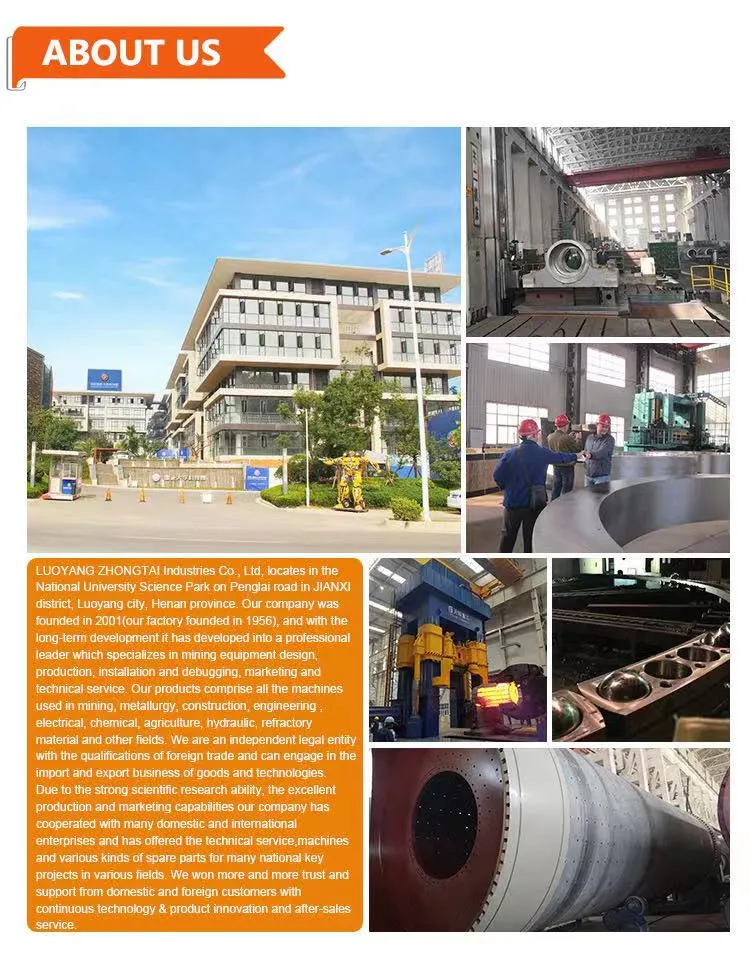
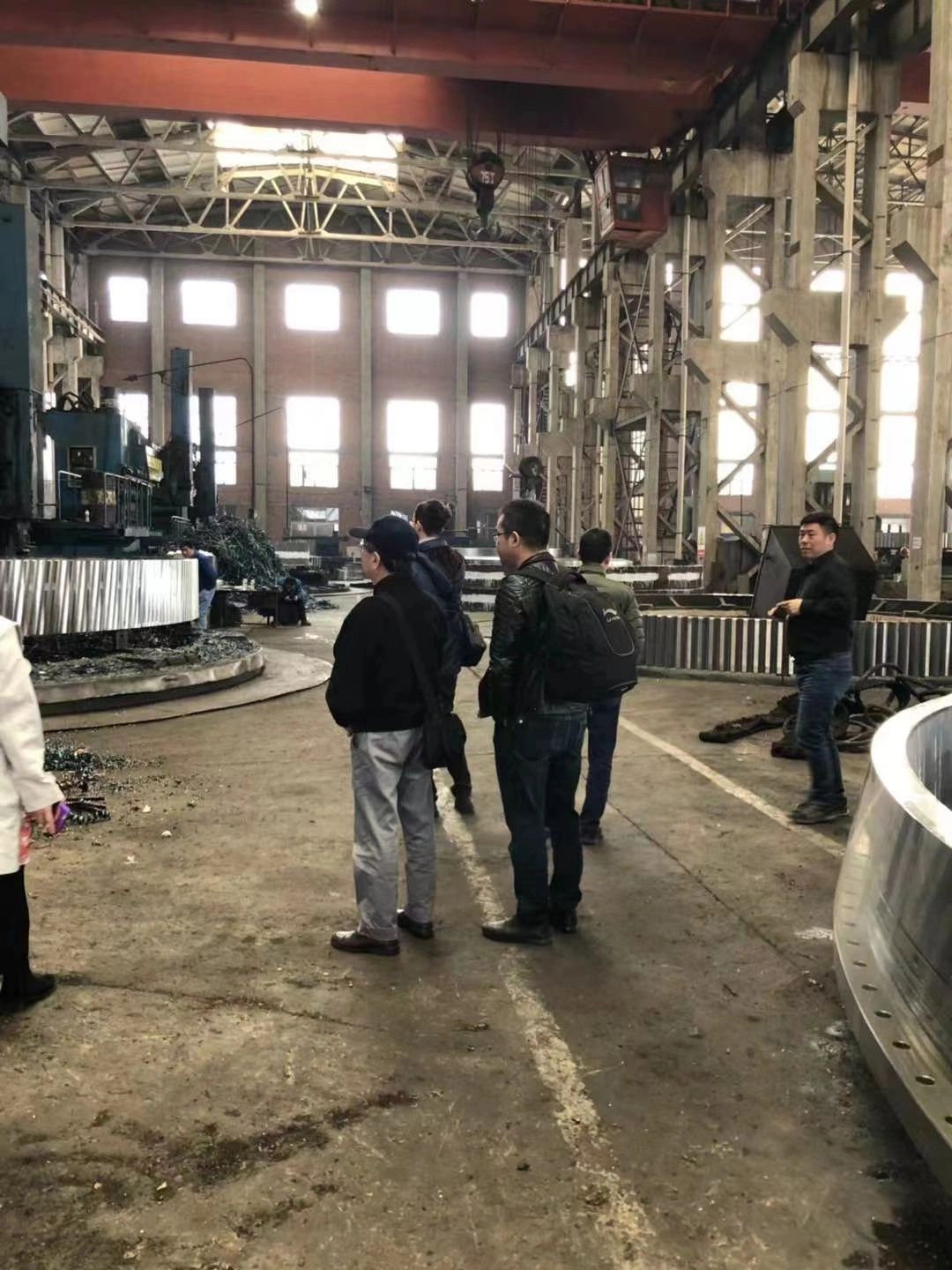
Company Gallery
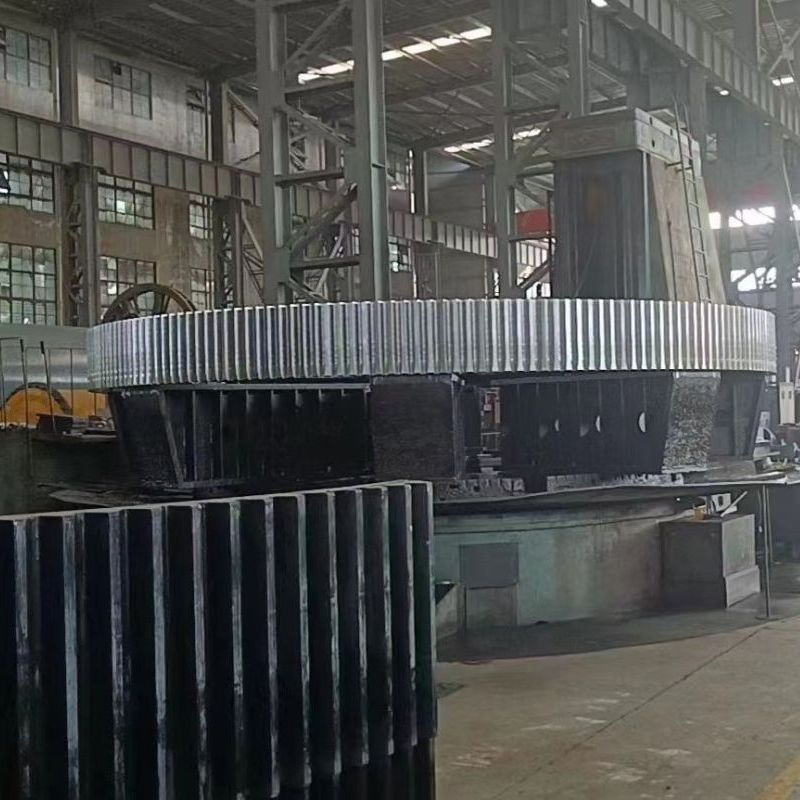
Girth Gear Manufacturing Gallery 1
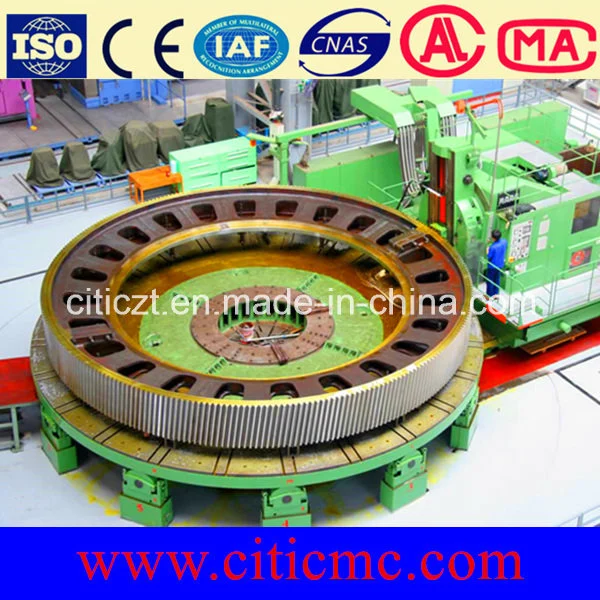
Girth Gear Manufacturing Gallery 2
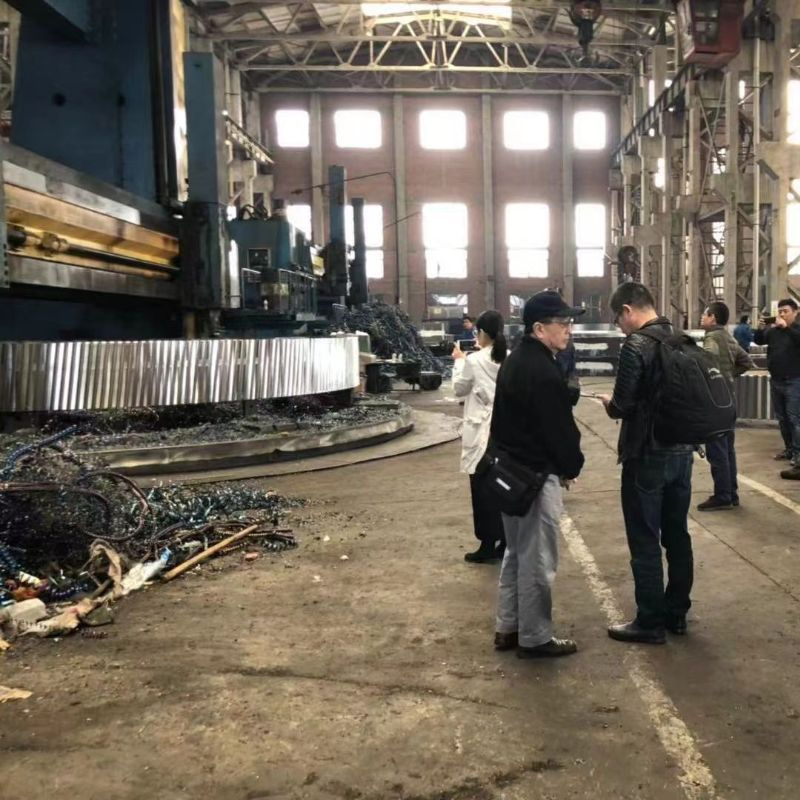
Girth Gear Manufacturing Gallery 3
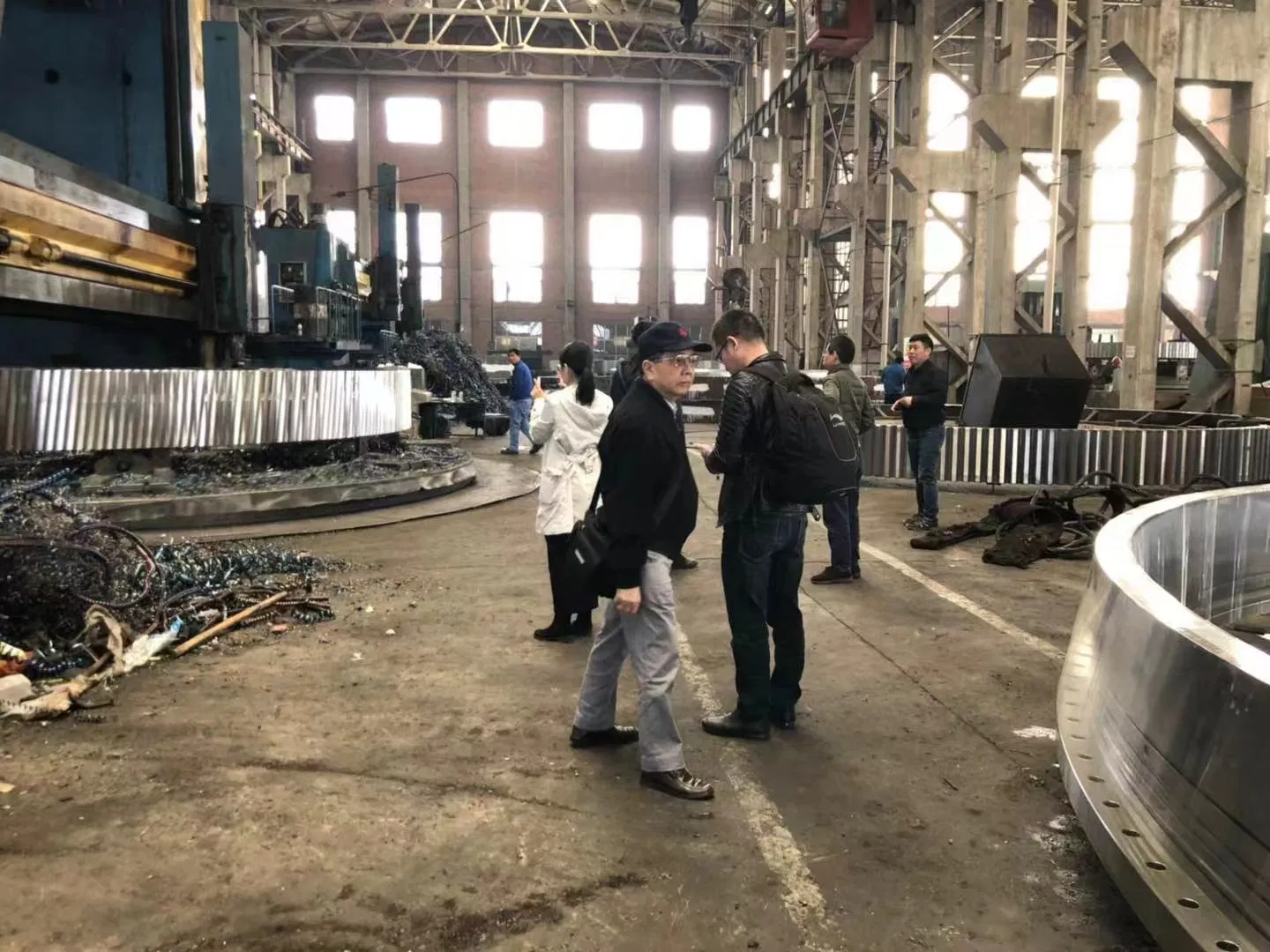
Girth Gear Manufacturing Gallery 4
Frequently Asked Questions (FAQ)
Q1: What sizes and weight capacities can you handle for girth gears?
We manufacture girth gears in a module range of 10 to 70, with minimum diameters of 100 mm up to a maximum of 16,000 mm. We can handle single-piece weights of up to 120 MT.
Q2: What materials and designs are available for the girth gears?
Our girth gears are available in three distinct designs: Fabricated steel (utilizing forged rings or rolled plates), Cast steel, and Ductile (Nodular) cast iron.
Q3: What are the main benefits of fabricated girth gears?
Fabricated gears feature forged steel rims that eliminate structural defects like gas holes, micro-shrinkage, hot tears, and slag inclusions. This removes the need for repair welding and significantly reduces manufacturing lead times and costs, ensuring fast delivery.
Q4: What quality assurance testing and documents are provided?
We supply full QA documentation, including chemistry reports, physical tests, heat treatment documents, ultrasonic inspection reports, magnetic particle inspection reports, dimensional reports, weld repair maps, and welder qualifications.
Q5: Which industries and applications use these girth gears and pinions?
They are widely used in the cement and mining industries for rotary dryers, rotary kilns, ball mills, rod mills, semi-autogenous grind (SAG) mills, coolers, and other large gear ring applications.

Related Products