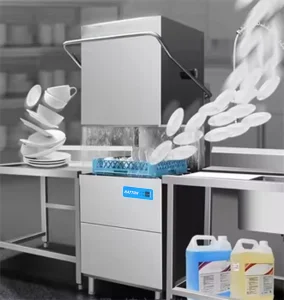
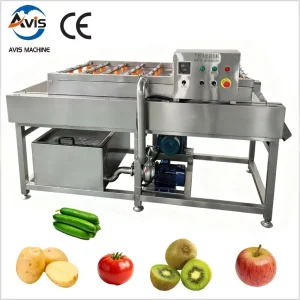
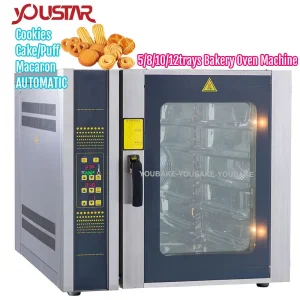
Explore our flagship commercial solutions, ranging from heavy-duty sanitization modules to automated drying and baking systems engineered to international standards.
In modern industrial, medical, and food service sectors, sanitation equipment forms the bedrock of operational safety, compliance, and efficiency. Once viewed as basic utility items, stainless steel commercial sinks and station equipment have undergone deep transformations. Driven by globally stricter sanitary frameworks, such as NSF/ANSI standards and European CE requirements, current utilities are designed around complex criteria: microbiological containment, fluid dynamics for optimal drainage, ergonomic structural designs, and absolute material resistance.
Globally, the demand for utility sinks is expanding beyond traditional dishwashing zones. Today, they serve critical tasks in medical modular cleanrooms, chemical preparation facilities, and heavy-duty manufacturing lines. The rise of centralized prep kitchens and automated food assembly plants has elevated the humble utility basin to a highly engineered unit. This evolution requires high-strength alloys capable of resisting pitting, corrosion, and continuous mechanical stress while remaining easily sterilizable.
The fundamental distinction between domestic equipment and heavy-duty utility sinks lies in their ability to withstand aggressive wear. While residential units focus on aesthetics and thin walls (often 20 to 22 gauge), commercial sinks demand 14 to 18 gauge SUS304 or SUS316 stainless steel. This prevents bending under the weight of deep water loads and resists deformation from heavy pots or industrial parts. Structural integrity is further reinforced by heavy-duty welding processes, double-folded safety edges, and sturdy leg channels that distribute weight load effectively.
To identify the best supplier, procurement officers must understand the material science behind industrial sinks. At Shandong Linru Import & Export Trading Co., Ltd. (Feijin Import & Export), we design our product lines using a strict selection criteria based on metallurgical characteristics and mechanical stresses.
Understanding alloy chemistry prevents premature equipment failure:
A utility sink is only as reliable as its seams. Our state-of-the-art Chinese manufacturing facilities employ advanced TIG (Tungsten Inert Gas) welding combined with automated robotic arm polishing. This removes micro-porosities where bacteria could gather, ensuring a smooth, hygienic radius of R10 to R15 in the sink bowl corners. The integration of sound-dampening coatings and thick rubber underpads further reduces noise in busy workspaces.
Our core capabilities built over 15 years of manufacturing excellence, catering to international buyers with strict quality requirements.
The current global economic landscape highlights the critical importance of supply chain resilience. Over the last three decades, China has built a highly integrated manufacturing ecosystem for commercial kitchen equipment. This concentration of raw material processors, specialized components makers, and logistics infrastructure enables brands like Shandong Linru to manufacture high-precision products with short lead times.
Rather than relying on outsourced parts, our factories are situated close to steel processing hubs and logistics channels. This proximity ensures access to high-grade sheet metal, advanced casting machinery, and premium hardware. It also insulates our clients from raw material fluctuations and long production delays. When purchasing from us, buyers benefit from a streamlined process, from structural design to final custom ocean packaging.
By using CNC laser cutters and high-capacity press brakes, we achieve tolerances within fractions of a millimeter. This level of precision is critical when building modular cleanrooms and integrated sink systems, where a tiny misalignment can compromise sterile environments. It also simplifies installation, reducing setup costs for regional contractors.
Different industries require specialized configurations. Choosing the right sink requires assessing these operational environments:
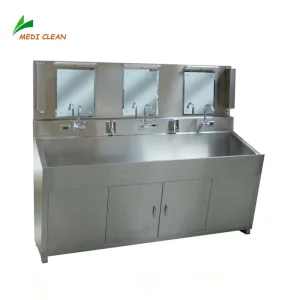
In operating theatres and cleanrooms, contamination control is vital. Sinks like our Stainless Steel Three Compartment Operating Theatre Sink in Modular Clean Room feature hands-free sensors, mechanical knee valves, and deep splash guards to prevent water droplets from contaminating sterile zones. The interior joints are seamlessly welded to prevent biological buildup, and built-in sterilizers ensure high safety standards.
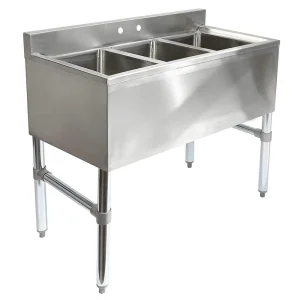
In busy bars, restaurants, and hotels, efficiency is key. Solutions like the 3 Compartment NSF Stainless Steel Commercial Bar Sink 3 Sink allow staff to wash, rinse, and sanitize glassware at pace. These sinks feature built-in drainboards, integrated waste bins, and sound-insulated bowls, helping staff maintain speed and cleanliness during busy shifts.
Large-scale bakeries and food factories require sinks that can handle hot ingredients, heavy utensils, and high-pressure cleaning cycles. Our stainless steel products resist thermal shock and strong cleaning agents, ensuring reliable performance in demanding environments like dough preparation lines and high-temperature ovens.
The commercial sink market is evolving with the integration of smart technologies. As water regulations tighten and ESG metrics become key performance indicators, utility sinks are shifting from passive basins to active smart systems.
Tomorrow's utility sinks will feature flow management systems that automatically adjust water volume based on the items being washed. Flow-sensing nozzles and automated water tempering valves reduce consumption by up to 40% while maintaining required sanitizing pressures. Solar-assisted and battery-backed touchless taps are also becoming standard across smart buildings.
Micro-surface technology is introducing hydrophobic and antimicrobial coatings that repel grease, scale, and pathogens. Applied through physical vapor deposition (PVD), these coatings make surfaces scratch-resistant and prevent biofilm formation, cutting chemical use and maintenance times.
Quality claims must be backed by official testing and certifications. At Shandong Linru, we subject our products to rigorous quality controls to ensure peace of mind for our buyers.
Our heating products, including industrial ovens and specialized stoves, hold full CCC (China Compulsory Certification). Our jacketed kettles and pressurized sanitizing boilers carry the National Pressure Vessel Manufacturing License, verifying their safety under high pressure. For stainless steel sinks, we strictly adhere to NSF standards, verifying metal purity and structural strength before shipping.
Feijin Quality Commitment:
"We reject low-cost shortcuts that compromise equipment lifespan. By maintaining trace-verified steel sourcing and rigorous weld testing, we guarantee our utility sinks will perform reliably in demanding workspaces."
Find quick answers to common questions about material choices, custom production, and international logistics.
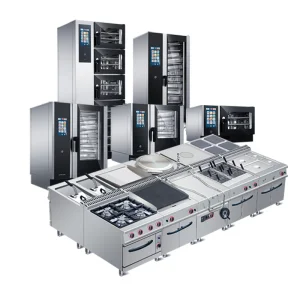
Complete your layout with our specialized commercial products. Every item is engineered for durability, safety, and hygiene in professional environments.
 Linru Kitchen Equipment