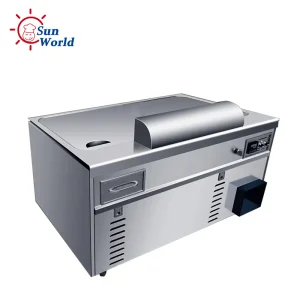
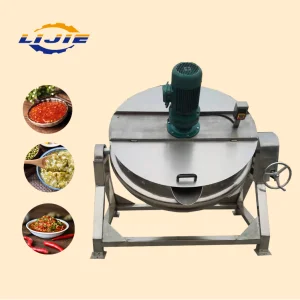
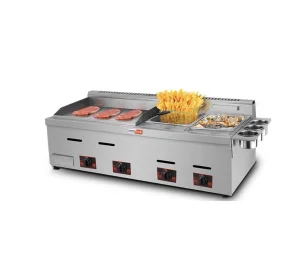
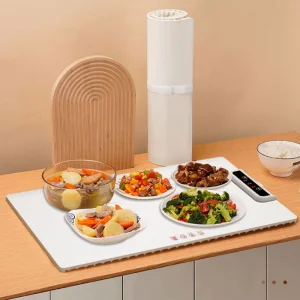
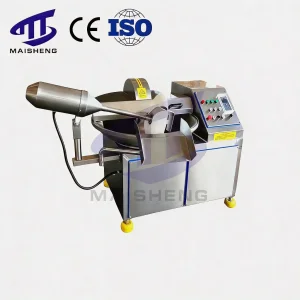
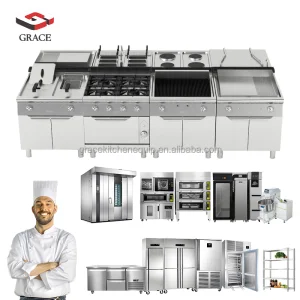
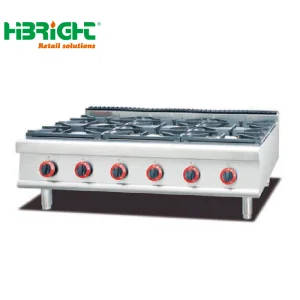
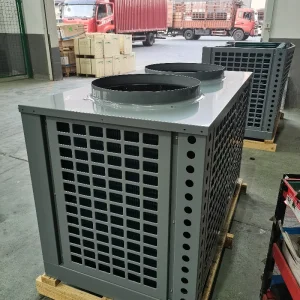
Explore our core selection of commercial kitchen components designed for maximum thermo-efficiency
Analyzing supply chains, thermodynamic standards, and regulatory landscapes shaping the industry.
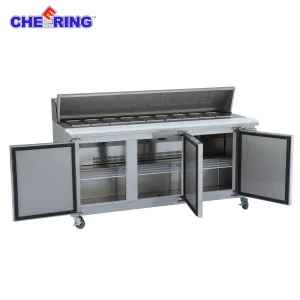
The global commercial refrigeration industry is undergoing a critical transition phase. Historically viewed as basic holding cabinets, modern refrigerated countertop prep tables and prep stations have evolved into highly complex thermal management systems. According to recent industrial data, the demand for refrigerated countertop prep surfaces is projected to expand significantly, driven by the rapid growth of quick-service food operations, cloud kitchens, and convenience-store format footprints. As urbanization rises, food establishments operate in increasingly condensed spatial environments, making the footprint-to-volume ratio of kitchen equipment a primary architectural priority.
From a technological standpoint, the global market demands compliance with stringent environmental protocols, specifically relating to energy usage and refrigerant gases. The transition from high global warming potential (GWP) hydrofluorocarbons (HFCs) like R404A to natural hydrocarbon refrigerants like R290 (Propane) has forced manufacturers to redesign evaporator coils, expansion valves, and compressor configurations. Furthermore, energy efficiency directives in the European Union (Ecodesign Directive) and North America (ENERGY STAR requirements and DOE standards) mandate that refrigerated surfaces minimize heat intrusion while optimizing convective airflow across food pan wells.
At the center of this transformation is the integration of advanced metallurgy. Top-tier manufacturers must utilize food-grade AISI 304 or AISI 201 stainless steel to resist oxidation and structural deformation under heavy prep loads. High-density polyurethane insulation, typically injected at a minimum thickness of 50mm to 60mm, forms the core of modern prep table walls. This high-density barrier prevents thermal bridging, ensuring that the cold storage cavity maintains stable target temperatures (typically between 0.5°C and 5°C) even when ambient kitchen temperatures exceed 38°C.
Years Industry Experience
Eco-Friendly Refrigerant
Certified Standards
Customization Support
How we evaluate and engineer commercial refrigeration systems for structural integrity and reliability.
Shandong Linru Import & Export Trading Co., Ltd. (also known as Feijin Import & Export) represents a premium class of manufacturing that integrates production and direct global distribution of commercial kitchen equipment. Over 15 years, the organization has scaled its capabilities from localized kitchen stove production to a multi-faceted portfolio of complex commercial heating, cooling, and prep solutions.
Our operational philosophy dictates that low-cost, low-quality shortcuts are detrimental to long-term commercial food service installations. In the specialized field of refrigeration equipment, we operate under rigorous quality control standards. Every product is engineered to meet domestic and international safety standards, with customized configurations tailored specifically to the operator's microclimate and workload constraints.

EEAT Fact Check: Commercial prep systems fail most frequently due to condenser blockage or structural sagging under load. Feijin addresses this by utilizing reinforced structural frames, heavy-duty telescopic drawer slides, and front-breathing ventilation designs that eliminate the need for clearance space on the sides and back of the units.
An objective, engineering-focused overview of the leading global entities producing countertop refrigeration systems.
Specialization: Direct-to-enterprise customization, high-durability prep tables, walk-in monoblock systems, and heavy-duty stainless steel worktops. Recognized for outstanding flexibility, robust structural engineering, and competitive direct factory pricing.
Specialization: Hydrocarbon-based forced-air systems. Widely known for high capacity, high airflow volume, and heavy duty builds in commercial foodservice prep tables.
Specialization: Self-cleaning condenser technology. Focuses on minimizing downtime and reducing maintenance intervention requirements for busy commercial kitchens.
Specialization: High precision control and advanced thermal insulation. Recognized for sushi prep displays and premium build quality for temperature-critical operations.
Specialization: Dynamic forced-air circulation systems. Specializes in maintaining consistent temperatures across countertop deep well pans.
Specialization: Custom modular kitchen integration. Noted for drop-in well components, high-end customization, and high thermal recovery rates.
Specialization: European-market targeted energy efficient countertop prep zones. Built to meet stringent European climate class guidelines.
Specialization: Front-breathing, compact countertop models. Designed specifically for tight back-bar installations and undercounter space optimizations.
Specialization: OEM production and eco-refrigeration components. Focuses on carbon footprint reductions and smart digital monitoring platforms.
Specialization: Highly precise laboratory-grade refrigeration systems. Applicable for top-tier culinary scientific applications and premium back-bar preservation.
Exploring the technology that drives durability, temperature stability, and insulation integrity.
The core structural design of a refrigerated countertop relies heavily on thermodynamics. Unlike conventional refrigerators, a countertop prep table must maintain food pans open to the atmosphere (in many applications) while keeping the food below the critical bacterial growth limit of 4°C. This requires specialized mechanical systems designed to withstand continuous heat infiltration from the top, while cold air is forced along the bottom of the food pans. The thermodynamic efficiency of these systems depends on three engineering pillars:
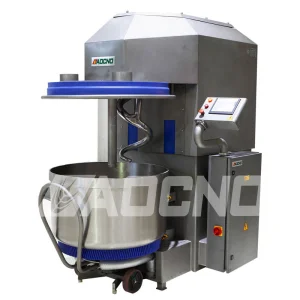
Modern insulation uses cyclo-isopentane as a blowing agent, creating a closed-cell structural matrix with high thermal resistance (R-value). The polyurethane foam is pressure-injected into the double-wall structure of the table, bonding the interior aluminum liner or stainless steel shell to the exterior metalwork. This strengthens the overall countertop, enabling it to support heavy cooking ranges, dough mixers, or griddles without structural deflection.
In compact kitchens, refrigeration components are often placed close together. To prevent compressor overheating and subsequent failure, advanced units utilize front-breathing layouts. In this configuration, the intake and exhaust of ambient air occur exclusively through the front grill. This eliminates the need for side clearance, allowing operators to slide the prep table flush against back walls and adjacent equipment. Modern units also feature auto-defrost cycles driven by hot gas bypass systems rather than electric heaters, saving significant energy.
Traditional single-speed compressors turn on and off abruptly, causing temperature fluctuations and higher energy consumption. Modern high-efficiency systems use variable-speed (inverter) compressors that adjust speed based on real-time heat load. Paired with digital proportional-integral-derivative (PID) controllers, the system continuously adjusts to maintain setpoint accuracy down to ±0.5°C, ensuring food safety and reducing energy usage.
Adapting refrigeration configurations to target specific regional microclimates and operation styles.
Application context is crucial for selecting prep station equipment. The performance of a refrigerated countertop changes based on ambient humidity, altitude, and kitchen workflow. Below are typical use cases and their engineering considerations:
In coastal cities or humid locations (ambient relative humidity >75%), standard prep tables can develop condensation around the lid and food pans. To prevent this, units designed for tropical climates include built-in perimeter frame heaters. These low-wattage elements raise the outer edge temperature just enough to prevent moisture condensation, keeping the prep area clean and hygienic.
Fast-food kitchens require frequent opening of ingredient drawer compartments. In these setups, standard static cooling is insufficient. QSR-focused systems feature forced-air curtain technology. Cold air is continuously blown across the top of the food pans, creating a barrier that blocks warm ambient kitchen air, keeping ingredients fresh during peak rushes.
For mobile applications, structural stability and power efficiency are key. Vibration-resistant compressor mounts prevent damage during transit. The electronics must also handle input voltage variances, especially when running on generator power, making robust electrical components essential.
Integrating refrigeration, preparation, and thermal management into a unified commercial workflow.
A kitchen is a dynamic thermodynamic environment: stoves, fryers, and jacketed kettles generate high heat loads, while prep tables and walk-in coolers pull heat out to keep ingredients fresh. Designing an efficient kitchen requires balancing these conflicting temperature zones. Our commercial kitchen consulting projects use a modular approach, where each piece of equipment serves a specific role in space and utility planning.
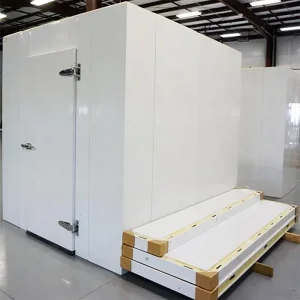
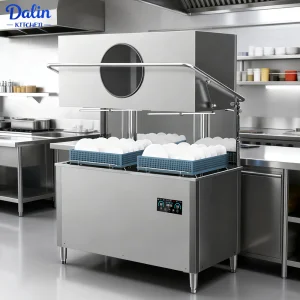
For example, placing a high-temperature gas range or griddle directly next to a standard countertop prep freezer can increase energy usage and cause compressor wear. To address this, we recommend installing thermal isolation barriers, or using dynamic air-curtain prep stations. For cooking operations, using energy-efficient hood-type automated dishwashers helps control local humidity, preventing moisture buildup on adjacent refrigeration units. Combining custom-sized cold prep tables with modular monoblock walk-in coolers creates an efficient cold-chain workflow, minimizing food waste and keeping utilities costs manageable.
Addressing the technical, operational, and maintenance inquiries of commercial kitchen operators.
R290 (Propane) is a natural hydrocarbon refrigerant with a Global Warming Potential (GWP) of 3, compared to R404A, which has a GWP of 3922. R290 is more thermally efficient, allowing for smaller refrigerant charges and faster heat transfer. This translates to lower energy costs, but requires specialized spark-free components to ensure safety.
AISI 304 contains 18% chromium and 8% nickel, providing superior resistance to organic acids and salts present in food. While AISI 201 is strong and cost-effective, its lower nickel content makes it more susceptible to pitting and corrosion over time under acidic conditions.
For standard environments, condenser coils should be cleaned monthly. In high-flour kitchens, like bakeries or pizzerias, cleaning should be done every two weeks. Dust and grease buildup insulates the condenser, raising compressor temperatures and increasing the risk of failure.
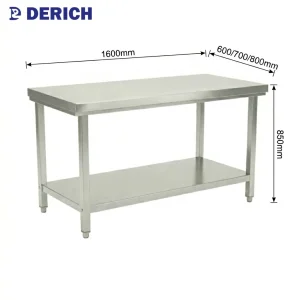
Yes, provided the manufacturer has designed the unit with reinforced top structures. Standard models may sag over time under heavy loads, causing misaligned doors and poor door seals. For heavy equipment setups, choose reinforced worktables with thicker gauge steel tops.
Explore our complete commercial machinery line, including heat processing, mechanical prep, and custom solutions
 Linru Kitchen Equipment