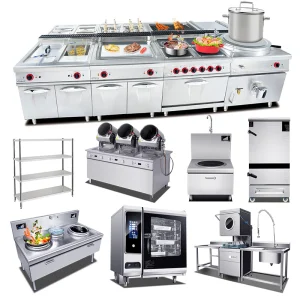
Explore our flagship heavy-duty systems engineered for flight kitchens, hotel banquets, central factories, and high-volume commercial catering.
The commercial foodservice landscape is undergoing a systemic transition toward centralized production, automation, and uncompromising compliance metrics. Modern bulk cooking equipment is no longer evaluated merely on heat delivery; rather, it is analyzed as a critical component in thermal efficiency, regulatory alignment, and long-term asset depreciation.
As a premier engineering partner, Shandong Linru Import & Export Trading Co., Ltd. (integrating production via our dedicated brand division, Feijin Import & Export Trading Co., Ltd.) brings 15 years of precision engineering experience to the global market. Our evolution from a single product line of commercial kitchen stoves to a comprehensive, multi-category portfolio represents a commitment to high-grade material sciences, thermal optimization, and structural reliability.
We strictly reject cost-cutting alternatives that compromise metallurgical density or electrical component lifespans. By maintaining rigorous in-house manufacturing controls, our commercial food preparation, heating, and cooling apparatuses fulfill the demanding requirements of global hospitality conglomerates, defense departments, industrial baking facilities, and logistics centers.

Delivering turnkey thermal designs custom-tailored to resolve the high-stress demands of corporate, civil, and industrial food production facilities.
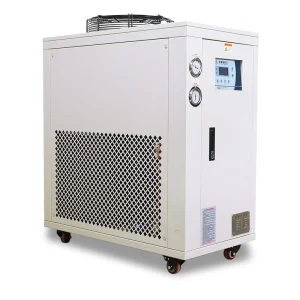
Engineering integrated thermal-to-refrigeration pathways. Our custom boiler arrays, conveyorized boiling systems, and industrial condensing systems operate in sync to optimize food preservation, minimize microbial propagation, and maintain uniform nutritional consistency across massive production volumes.
Addressing energy waste in large-scale operations through precise thermal designs. We construct induction heating elements with over 90% direct-to-pan energy transfer and custom convection structures that balance internal airflow dynamics, reducing fuel consumption and operational costs by up to 35%.
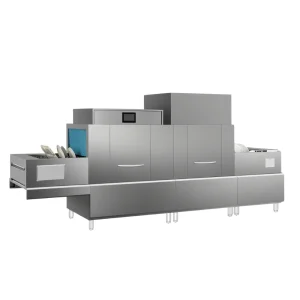
Continuous-loop wash engineering. Our automated drying conveyor dishwashing machines are constructed to handle continuous high-throughput cleaning cycles, deploying pressurized multi-zone rinse arrays to ensure total sanitation that exceeds NSF and European hygiene standards.
Navigating pressure vessel manufacturing rules, material science validations, and rigorous testing requirements across global jurisdictions.
High-volume steam jacketed kettles, pressurized steam cookers, and industrial boilers present substantial safety risks if not properly engineered. Our heating lines maintain full-range China Compulsory Certification (CCC).
Furthermore, our industrial pressure-cooking equipment is manufactured under the strictly audited National Pressure Vessel Manufacturing License. This guarantees that every weld, structural seam, safety relief valve, and hydrostatic test conforms to national safety standards, protecting your facility and staff.
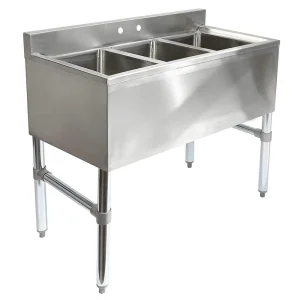
We employ premium materials to prevent pitting corrosion, structural deformation, and chemical leaching. Our heavy-duty cooking ranges, food warmer cabinets, and preparation sinks utilize premium-grade 304 stainless steel (composed of 18% chromium and 8% nickel) or 201 stainless steel depending on usage requirements.
We optimize our sheet metal structures through Finite Element Analysis (FEA) to confirm load-bearing integrity and prevent weld decay under sustained heat loads.
Analyzing how custom OEM equipment operates within different geographical zones and specialized commercial requirements.
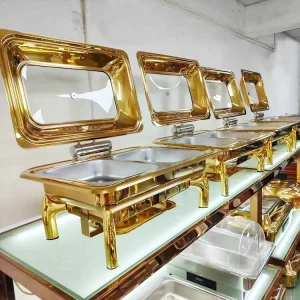
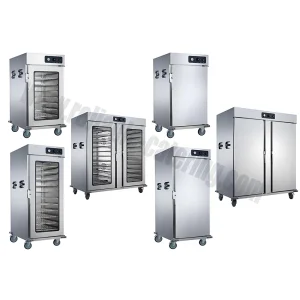
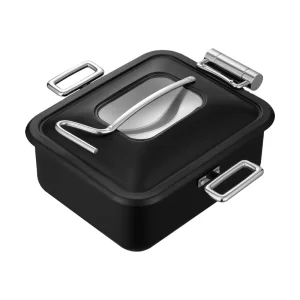
In high-capacity hospitality and banqueting contexts, particularly in the Middle East, visual presentation must match performance. Our Arabic Gold Buffet Stoves and Luxury Food Warmers combine high-grade 304 stainless steel chassis construction with heavy-duty titanium gold vacuum plating, preventing discoloration under constant heating cycles while maintaining food-safe temperatures.
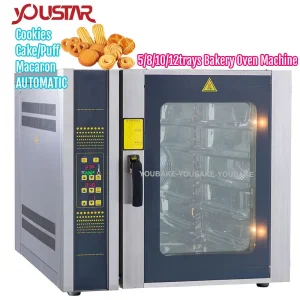
Modern wholesale bakeries require continuous batch uniformity. Our heavy-duty convection bakery ovens operate using balanced fan arrays that generate laminar airflow over multi-tier baking decks. Dual electric and gas options accommodate varying regional energy tariffs, while double-glazed, high-density tempered glass prevents heat loss and reduces energy consumption.
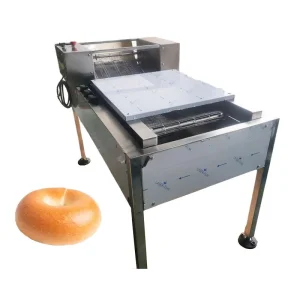
Designed for high-throughput processes, such as continuous bagel boiling and washing operations. Our Industrial Conveyor Boiling Bagel Kettles coordinate boiling water immersion with precise conveyor progression, utilizing integrated water-sugar mixing tanks and high-rate heating arrays to deliver consistent product skin gelatinization at scale.
The future of industrial-scale cooking is defined by the integration of digital monitoring, advanced metallurgy, and green energy technologies. As regulatory agencies implement more stringent carbon emission and safety requirements, food production facilities must transition to smarter systems.
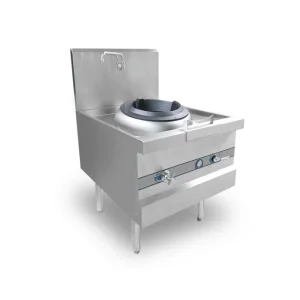
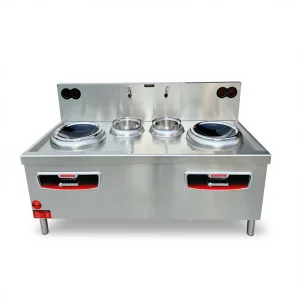
By moving away from standard atmospheric gas burner systems, our dual-temperature commercial induction stoves utilize high-frequency magnetic fields. This technology generates heat directly within the cooking vessel, yielding an energy efficiency rate of up to 93% and reducing heat radiation into the kitchen space.
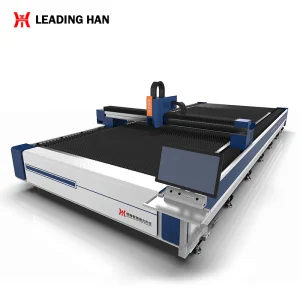
Utilizing high-power fiber laser cutting machines (ranging from 1500W to 3000W), our manufacturing facilities process heavy metal sheeting with high precision. This ensures airtight seal joints, clean welds, and structural stability across all customized food warmers, prep sinks, and tables.
Our upcoming designs incorporate heat exchangers that redirect exhaust steam from jacketed kettles and conveyorized dishwashers to preheat incoming water supplies, cutting boiler energy inputs by up to 20%.
Direct answers to common technical, compliance, and material engineering questions asked by commercial buyers.
Jacketed steam kettles operate under elevated pressure levels to reach the temperatures required for high-volume cooking. Without a pressure vessel license, equipment may lack adequate steel thickness, certified welds, and pressure-relief valves. This increases the risk of structural failure and poses safety hazards in commercial environments.
SUS304 contains a minimum of 18% chromium and 8% nickel, providing high resistance to corrosion and oxidation from food acids, salts, and moisture. SUS201 replaces part of the nickel with manganese, offering a more cost-effective solution with higher mechanical strength, though it is slightly less corrosion-resistant in wet or saline conditions.
Yes. We design and customize our heating and refrigeration systems, including electric convection ovens and double induction stoves, to align with regional power grids (e.g., 220V/50Hz single-phase, 380V/60Hz three-phase, or 460V configurations).
Every customized cold storage condensing unit undergoes rigorous pressure testing, electronic leak detection, vacuum decay validation, and operational parameter checks. This process ensures refrigerant containment, thermal transfer efficiency, and system reliability prior to shipping.
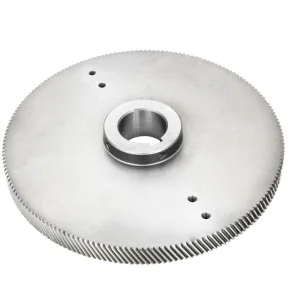
High-precision mechanics, thermal controllers, and cooling components designed for modern food logistics and continuous processing lines.
 Linru Kitchen Equipment