Commercial Gas & Electric Griddle Equipment

Heavy-Duty Solutions for the German Gastronomy and Industrial Foodservice Sectors

15+
Years Engineering Experience
100%
CE & DIN Compliance
96kW
Max Dual Fuel Power Solutions
45+
Global Export Markets

Germany’s Industrial Kitchen Equipment Market: An Overview

The commercial catering and industrial kitchen landscape in Germany is characterized by exceptionally high standards of efficiency, workplace safety, and energy conservation. Operating under strict European Union directives and Germany's national codes (such as DIN 18865-1 for food hygiene and layout design), German culinary establishments demand robust engineering. Whether in a large-scale corporate canteen (Kantine) in Munich, a bustling tourist biergarten in Frankfurt, or a high-traffic quick-service franchise in Berlin, the core cooking equipment must withstand punishing, continuous operational loads.

Gas and electric griddles represent the backbone of this ecosystem. Given the high cost of energy and gas safety protocols in Germany, there is a distinct evolution in purchasing patterns. Decision-makers are increasingly prioritizing high thermal efficiency, rapid recovery times, precise zone temperature controls, and structural integrity. Standard appliances no longer satisfy the expectations of modern food businesses. Instead, there is a strong demand for specialized high-performance appliances manufactured from premium stainless steel grades, capable of lowering long-term operating costs (TCO).

Key Market Trend: Germany's transition toward localized carbon-neutral commercial kitchen designs has triggered a significant shift towards smart, high-powered electric flat-tops and teppanyaki tables, which integrate seamlessly with modern ventilation and heat recovery systems.

Comparing Gas vs. Electric Griddle Technology under German Energy Regulations

When selecting between gas and electric options for German commercial kitchens, equipment suppliers and engineers analyze specific local factors:

1. Commercial Gas Griddles (LPG & Natural Gas)

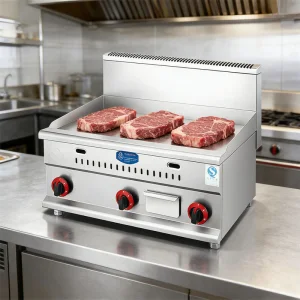
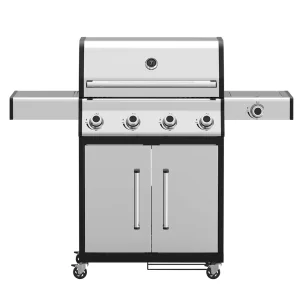
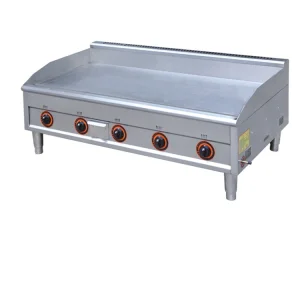
Gas cooking equipment remains a staple for establishments needing high peak heat loads. German installations require strict compliance with gas safety codes, utilizing high-efficiency burner chambers and heavy-duty thermocouples.

  • Energy Density: Fast initial heat-up rates make gas ideal for outdoor catering, biergartens, and high-volume bistros.
  • Safety Compliance: Equipment must feature flame failure safety valves and robust exhaust configurations in line with DVGW regulations.
  • Gas Customization: Dual-nozzle compatibility allowing switching between natural gas and liquid petroleum gas (LPG) is essential.

2. Commercial Electric Griddles

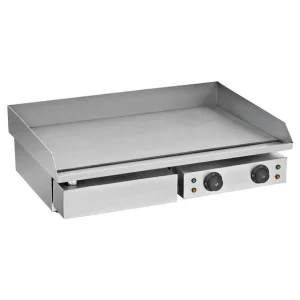
Electric griddles are highly preferred for indoor installations across Germany, driven by the clean-air requirements of cities and strict indoor building codes.

  • Thermal Control: Independent heating zones with precision thermostats prevent energy waste and allow cooking multiple food types simultaneously.
  • Induction and Heating Innovations: High-density heating elements embedded directly under heavy-duty composite griddle plates guarantee minimal heat loss.
  • Reduced Ventilation Loads: Less ambient heat emission significantly reduces the loads on complex extraction hoods, decreasing overall facility energy expenses.
Performance Metrics Gas Griddle Systems Electric Griddle Systems
Thermal Efficiency 50% - 60% standard Up to 90% (with induction)
Preheat Time (to 200°C) 8 - 12 Minutes 12 - 15 Minutes
Installation Complexity High (Requires gas piping, venting) Low (Plug-and-play/3-phase power)
Carbon Footprint (Germany) Higher local emissions Zero local emissions

German Gastronomy Application Scenarios & Customization Demands

To succeed in the German commercial kitchen market, equipment must be designed for specific use cases:

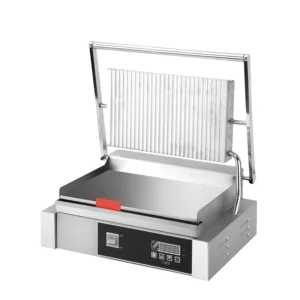
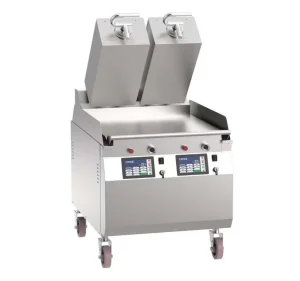
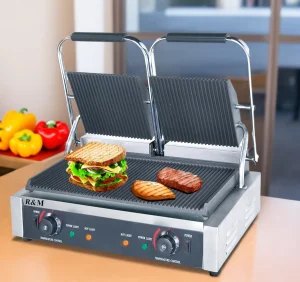
  • Fast Food & Burger Franchises: Require double-sided programmable contact grills (clamshell style) that can cook burgers in under 60 seconds with consistent temperature parameters. High-output, multi-zone griddles prevent temperature drop during consecutive operations.
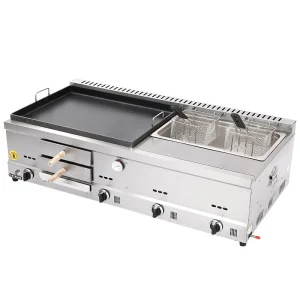
  • German Beer Gardens & Outdoor Catering: Require durable, weather-resistant mobile gas griddles combined with integrated fryers. These setups must utilize high-grade 304 stainless steel structures to handle varying weather conditions.
  • Teppanyaki & Modern Fusion Dining: Demand custom-built teppanyaki tables featuring localized hot zones surrounded by cool safety margins, allowing chefs to cook directly in front of guests.
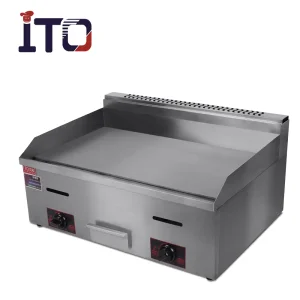
  • Hotel & Institutional Canteens: Rely on large-capacity, multi-functional heavy duty cooktops with thick griddle plates (typically 16mm to 20mm thickness) to guarantee optimal heat retention.

Manufacturing Excellence: The Chinese OEM/ODM Supply Chain Advantage

Purchasing high-performance commercial kitchen equipment directly from professional Chinese manufacturers like Shandong Linru Import & Export Trading Co., Ltd. (also operating as Feijin Import & Export) offers significant strategic benefits for German buyers.

Our manufacturing facilities combine advanced, automated laser cutting and welding with rigorous engineering. This enables us to offer:

  1. Cost-Efficient Engineering: Chinese manufacturing clusters provide access to premium materials and specialized processes at competitive rates, allowing distributors in Germany to secure healthy profit margins.
  2. Flexible Customization: We configure voltage ratings (such as 400V 3-phase setups for Germany), add specialized gas connection threads, and customize plate thicknesses and surface finishes (polished chrome, non-stick, or ribbed).
  3. Compliant Certification Protocols: Our product range includes models certified to meet CCC standards, and our pressure vessels carry national manufacturing licenses. We work closely with partners to ensure all export models comply with CE and relevant European directives.
  4. Comprehensive Turnkey Design: We go beyond supplying individual units to provide complete, integrated design packages for small and medium-scale commercial kitchens.
Feijin Factory Quality Control Check

Why Partner With Feijin

Learn how our manufacturing standards and custom solutions meet the requirements of European distributors.

Comprehensive Compliance

Our manufacturing processes are backed by rigorous certifications, including CCC and National Pressure Vessel Manufacturing Licenses, ensuring our products meet safety and reliability standards.

Customized Product Solutions

From tailoring technical parameters for specialized applications to configuring power requirements, we customize designs to match each client’s operational environment.

Premium Stainless Steel

Built using high-grade 304 or 201 stainless steel. We focus on load-bearing design, precision craftsmanship, and finishing details to ensure durability and ease of cleaning.

15 Years of Craftsmanship

Our production teams reject low-cost shortcuts, focusing on continuous product refinement and manufacturing quality to deliver reliable, long-term performance.

Strategic Kitchen Solutions & Turnkey Supply Operations

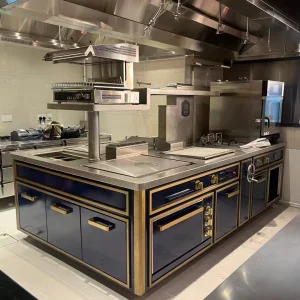
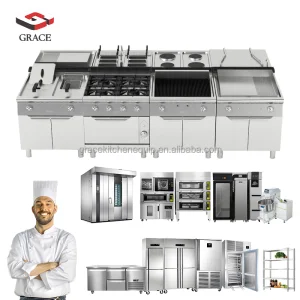
Managing commercial kitchen installations requires balancing storage, prep work, cooking speed, and clean-up workflows. Shandong Linru Import & Export Trading Co., Ltd. specializes in complete 30-square-meter one-stop kitchen solutions. These plans integrate cooling and heating workflows, allowing restaurant and hotel owners to maximize output while maintaining a compact physical footprint.

Selecting a griddle requires analyzing how it interfaces with other appliances. An efficient design places griddles near refrigeration worktables. This allows prepped ingredients to move directly from storage to the hot-plate without unnecessary delays, helping operators maintain speed during peak business hours.

Optimized Cooking Elements

Integrating cooking units like fryers, wok ranges, and griddles onto unified stainless steel bases reduces installation footprints. Standardizing height levels and grease-management trays makes it easier for staff to maintain clean prep areas, helping establishments comply with local food safety standards.

Dual-fuel systems offer operational flexibility. A gas range combined with electric ovens and a flat-top griddle allows kitchens to manage energy loads effectively while keeping key stations running during power outages or fuel shortages.

Coordinating Prep & Cooling Zones

An efficient kitchen requires placing refrigeration units close to the cooking line. Under-counter refrigerators and cold prep drawers store ingredients at safe temperatures directly beneath or next to the griddle plate, minimizing foot traffic and improving kitchen workflow.

We select materials and specify insulation to prevent thermal transfer between hot cooking plates and cold storage drawers, keeping energy consumption low.

Technical Q&A: Commercial Griddles for German Culinary Environments

1. What are the key differences between operating gas and electric griddles in German city centers?
Electric griddles are often preferred for indoor city-center installations because they simplify compliance with ventilation and indoor safety codes. They produce no combustion byproducts, reducing air-extraction requirements. Gas griddles are well-suited for high-volume venues, beer gardens, and outdoor catering where high-density heat and fast response times are critical.
2. How does plate thickness affect griddle performance in fast-paced kitchens?
Thicker griddle plates (between 16mm and 20mm) act as heat sinks, maintaining surface temperatures when cold ingredients are loaded onto the plate. This prevents temperature drops, reduces recovery times, and ensures consistent cooking. Thinner plates heat up faster but are prone to temperature drops under high volumes.
3. Can the electrical systems of Chinese-manufactured griddles be customized for German power grids?
Yes. We customize heating elements and control systems to meet local requirements, including configuring commercial electric models for 400V, 3-phase, 50Hz systems. This ensures smooth integration into German commercial electrical layouts without the need for additional voltage conversion.
4. What design features help our equipment meet European food hygiene standards?
We construct our griddles with continuous seamless welds, rounded internal corners, and high-grade 304 stainless steel surfaces. This eliminates food-trap crevices and ensures compatibility with standard commercial kitchen sanitizers, making it easier for staff to maintain clean prep areas.
5. What is the typical lead time for custom container orders shipped to Germany?
Typical manufacturing leads times for customized griddles and cooking suites range from 25 to 35 days, depending on configuration complexity. Ocean transit to major European ports like Hamburg or Rotterdam takes approximately 30 to 40 days, and we provide full documentation to facilitate smooth customs clearance.