Engineered for immediate integration into Japanese commercial kitchens, prioritizing water efficiency, low energy footprints, and ultra-high reliability.
SEO Insight & Market Dynamics: The Japanese food service industry stands at a critical technological juncture. Faced with the compounding challenges of acute labor shortages (人手不足 - Hitode Busoku), soaring utility costs, and the strict mandate for national HACCP integration under the Revised Food Sanitation Act, automation in kitchen operations is no longer optional—it is a core driver of business viability.
In major metropolitan hubs like Tokyo, Osaka, and Kyoto, real estate costs limit kitchen sizes, prompting operators to seek highly compact, powerful undercounter and hood-type dishwashers. Simultaneously, the massive influx of international tourism has put tremendous pressure on dish hygiene turnarounds. Manual washing is increasingly non-viable due to high labor turnover and strict sterility requirements. As a result, commercial automatic dishwashers have emerged as critical infrastructure for maintaining throughput, mitigating human error, and guaranteeing compliance with municipal sanitation requirements.
Japan's demographic landscape is driving a rapid shift toward automated commercial kitchens. According to the Teikoku Databank, over 80% of restaurants and hospitality providers in Japan report significant worker shortages. An automatic commercial dishwasher replaces 2 to 3 dedicated warewashing employees, allowing F&B operators to relocate scarce human resources to customer-facing duties, food preparation, and quality assurance. Automation is the primary defensive strategy against rising labor rates and sudden staff shortages.
Water tariffs in Japanese cities are heavily tiered; high commercial water usage triggers steep pricing curves. Our advanced commercial dishwashers utilize multi-stage water recirculation filtration systems. By reusing rinse water in the wash cycle, these machines reduce total fresh water consumption by up to 60-70% compared to traditional hand-washing protocols. This translates to measurable operational savings and contributes to carbon footprint reduction goals, a key focus for Japanese corporate ESG programs.
Since June 2021, HACCP compliance has been mandatory for all food manufacturing and culinary establishments across Japan. Standard manual washing fails to reliably meet the high sanitization temperatures required to eliminate pathogens like Norovirus, O-157 E. coli, and Salmonella. Our automatic systems guarantee sanitizing rinse cycles exceeding 82°C (180°F), strictly aligning with both domestic food hygiene standards and global clean-in-place (CIP) regulations.
Every commercial kitchen is defined by its throughput demand, spatial limits, and menu profiles. We offer customized commercial dishwasher solutions matching specific sectors across Japan:
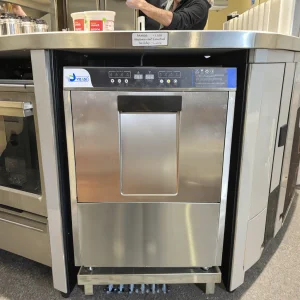
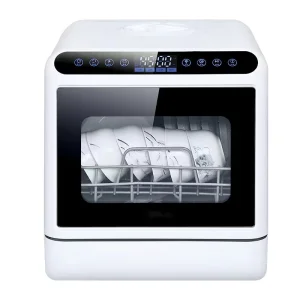
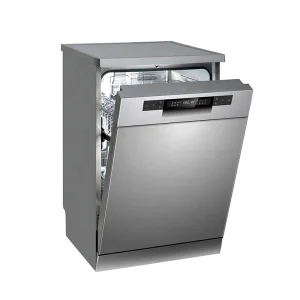
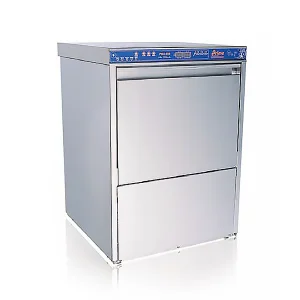
In dense dining districts such as Ginza, Shinjuku, and Umeda, space is at a premium. Our compact undercounter automatic dishwashers are designed to fit under standard Japanese stainless steel worktables (800mm-850mm height). These units operate quietly and deliver up to 30 racks per hour, using standard Japanese single-phase or three-phase 200V electrical connections.
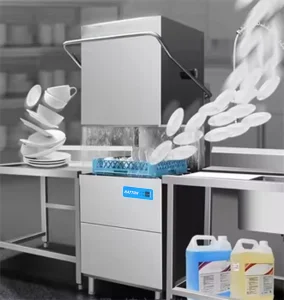
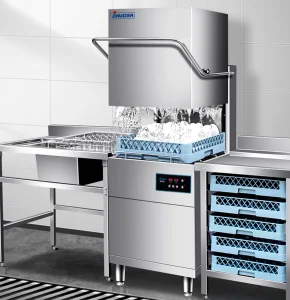
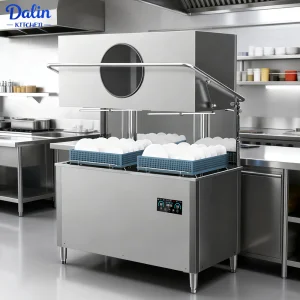
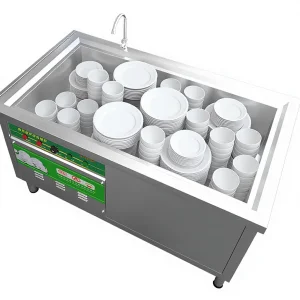
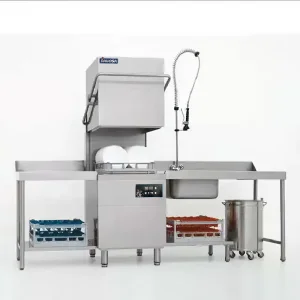
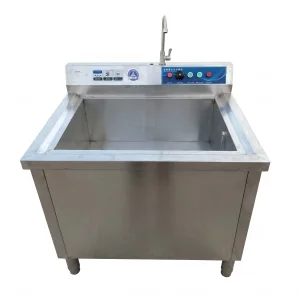
Traditional Japanese inns (Ryokans) and premium hotels use intricate ceramic tableware and delicate lacquerware. Our hood-type and ultrasonic dishwashers feature variable spray pressure configurations and custom wash programs, protecting delicate glazes and structural materials while removing stubborn proteins and oils.

JIS & PSE Technical Design Compliance
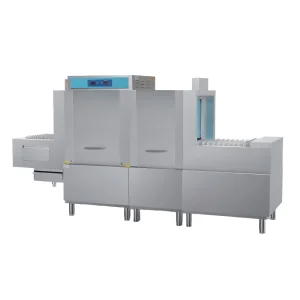
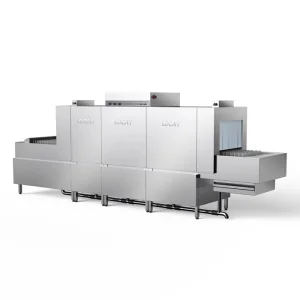
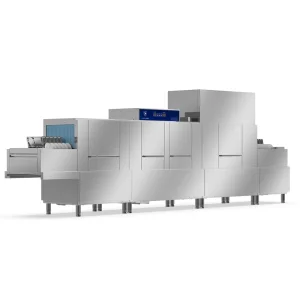
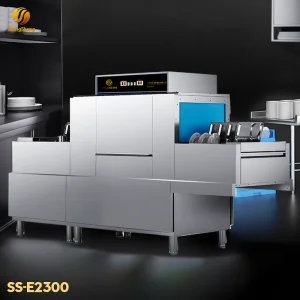
Institutional kitchens operating under Japanese Ministry of Education (MEXT) guidelines require high throughput and verifiable thermal sterilization. Our continuous automatic flight-type conveyor dishwashers feature multiple rinse modules and dry-zones, processing thousands of pieces of tableware per hour while monitoring wash temperatures for regulatory auditing.
Sanitation requirements in medical and care settings are critical. Our specialized sanitation lines combine high-temp rinsing with precise chemical dosing systems, ensuring sanitizing chemicals are entirely rinsed clean, leaving dishes sanitized and chemical-free.
Shandong Linru Import & Export Trading Co., Ltd. (Feijin Import & Export) represents high manufacturing standards in commercial kitchen appliances.
Original Profile Verification: Shandong Linru Import & Export Trading Co., Ltd. is a professional enterprise integrating the production and sales of commercial kitchen equipment. With 15 years of experience in the field, we have grown from a single line of kitchen stoves to a diversified portfolio of high-quality branded products. From the very beginning, we have been committed to improving our product quality step by step, firmly believing that only by ensuring consistent quality can we truly earn our customers’ trust and recognition. In the field of refrigeration equipment, we adhere to strict quality standards and rigorous requirements. Every product is built to meet national quality standards, customized to satisfy client needs, and crafted with attention to detail that reflects our company’s commitment to excellence. Our heating products, including stoves, have obtained full-range CCC (China Compulsory Certification). In addition, our jacketed kettles are certified not only with CCC but also with the National Pressure Vessel Manufacturing License, ensuring customers can purchase with confidence and use with peace of mind.
With 15 years of experience in commercial kitchen equipment manufacturing, Feijin Import & Export is committed to continuous product refinement, rejecting low-cost, low-quality shortcuts to ensure every piece of equipment delivers long-term stability and reliability.
For refrigeration products, Feijin Import & Export combines high standards with customization — guaranteeing full compliance with national quality standards while tailoring technical parameters to match each client’s specific application and usage environment.
Feijin’s stainless-steel preparation equipment is built using high-grade 304 or 201 stainless steel, with meticulous attention to load-bearing design, craftsmanship, and finishing details, ensuring both durability and aesthetic excellence.
With 15 years of experience in commercial kitchen equipment manufacturing, Feijin Import & Export is committed to continuous product refinement, rejecting low-cost, low-quality shortcuts to ensure every piece of equipment delivers long-term stability and reliability.
Optimized compact configurations and LCD control units designed for high-density space limits in major Japanese metros.
To successfully integrate foreign food service equipment into Japanese commercial spaces, technical alignment with local utilities is critical. Our R&D team customizes commercial dishwashers to address the unique engineering challenges of the Japanese grid and building standards:
Japan is unique in that it is split into two distinct frequency grids: Eastern Japan (including Tokyo, Kawasaki, Yokohama, and Sendai) operates at 50 Hz, while Western Japan (including Osaka, Nagoya, Kyoto, and Fukuoka) operates at 60 Hz. Standard export equipment designed for single-frequency grids can experience pump burnout or efficiency loss if not modified. We offer dual-compatible induction wash pumps and field-configurable control boards to ensure stable water pressure and consistent cycles, regardless of the installation region.
Most commercial buildings in Japan utilize 3-phase 200V (三相200V) for heavy kitchen equipment, while smaller dining spots and retail units rely on single-phase 200V or standard 100V lines. Our engineers customize the internal heating element configurations to match these specific voltages, optimizing chemical heating cycles and peak amperage loads during busy operation periods.
Japanese building codes require grease traps and backflow preventers. Our commercial automatic dishwashers feature standard built-in break tanks and booster pump systems that maintain consistent wash pressure even in municipal districts with low local water pressure. The drainage pumps are engineered to match standard Japanese kitchen floor traps (排水トラップ) to avoid structural modifications.
Different markets favor varying concentrations of liquid detergent and rinse aid. Our systems include programmable internal peristaltic dosing pumps. They can be calibrated to coordinate with leading Japanese industrial sanitation chemical suppliers (e.g., Ecolab Japan, Kao Professional Services, and Niitaka), minimizing residue risk and protecting dinnerware surfaces.
Essential technical information on importing, installing, and maintaining commercial dishwashers in compliance with Japanese safety codes.
Our units can be custom-wired to match Japan's unique grid needs. This includes 3-phase 200V at 50Hz for Tokyo/Eastern Japan or 60Hz for Osaka/Western Japan, as well as single-phase 200V and 100V. For water pressure, our dishwashers require dynamic water pressures between 0.15 MPa and 0.5 MPa. Integrated booster pumps can be added if local building supply pressure is below 0.15 MPa.
Under the Revised Food Sanitation Act, sanitization cycles must consistently reach temperatures that destroy pathogens. Our dishwashers utilize dual-boiler systems, heating the wash cycle water to 60-65°C and the final rinse sanitizing cycle to 82-85°C. This satisfies thermal sanitization standards without relying on excessive chemical sanitizers, which can leave residues on plates.
Japan's high relative humidity and coastal air speed up corrosion. Low-grade steel often rusts at the weld lines under constant heat and humidity. Shandong Linru (Feijin) uses heavy-duty, food-grade SUS304 stainless steel for internal chambers, wash arms, and outer cladding. This ensures resistance to chlorine-based cleaning chemicals, local water minerals, and rust.
Yes. We offer deep-pocket peg racks designed for high-rimmed bowls (such as ramen and udon bowls) and specialized tray racks for rectangular lacquerware or melamine bento boxes. Our flight-type conveyor models feature custom finger pegs to keep lightweight plastic and melamine items secure under high spray pressures.
Most restaurants in Tokyo and Osaka achieve complete cost recovery within 8 to 12 months. Savings are realized through: 1) Reduced washing labor (saving up to 15-20 man-hours daily); 2) Lower water utility bills via high-efficiency recirculation; and 3) Reduced dish breakage compared to manual washing handling.
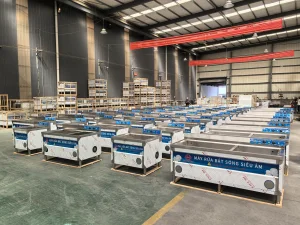
We supply a comprehensive warranty spare parts kit (including contactors, heating elements, drain valves, and wash arms) with every bulk container order. Additionally, we work with distribution partners in Tokyo and Osaka to ensure replacement parts are dispatched quickly, minimizing kitchen downtime.
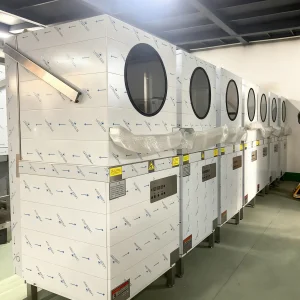
Heavy-duty conveyor flight-type, double-slot ultrasonic, and high-temp cleaning equipment for hotels, schools, and central food operations.
 Linru Kitchen Equipment