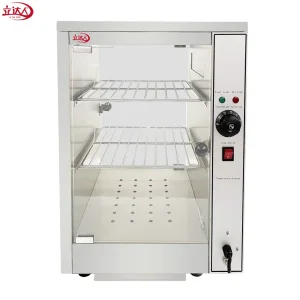
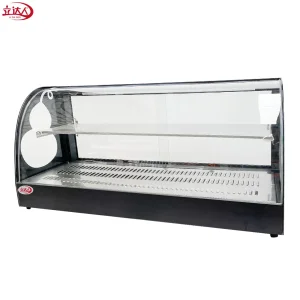
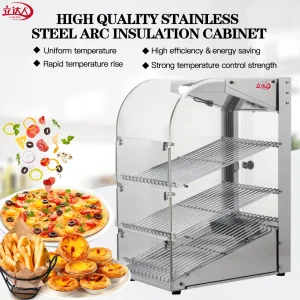
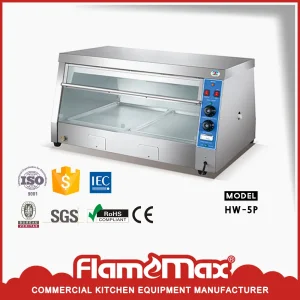
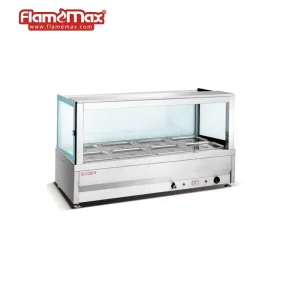
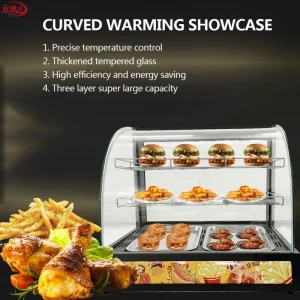
Engineered for high-traffic environments, ensuring temperature stability and modern aesthetic integration.
Analysis of market demands, sanitation parameters, and operational paradigms in South America’s largest economy.
The commercial food service landscape in Brazil is undergoing a profound transformation. Characterized by a rich cultural heritage in dining out and the prominent rise of "Self-Service por Quilo" (pay-by-weight buffet style) restaurants, the demand for high-end thermal preservation systems has surged. From metropolitan hubs like São Paulo and Rio de Janeiro to regional markets in Rio Grande do Sul and Minas Gerais, catering operations require advanced equipment capable of preserving culinary quality while adhering to strict local guidelines.
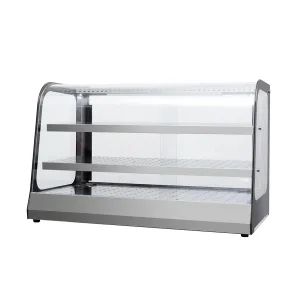
In Brazil, sanitary control is strictly regulated by the National Health Surveillance Agency (ANVISA) under RDC 216. This regulation dictates that hot food must be maintained above 60°C (140°F) to prevent microbial proliferation. Standard, outdated chafing units often fail to maintain uniform temperatures, leading to dry textures, heat loss, and compliance issues. Consequently, Brazilian restaurateurs and hotel procurement divisions are actively seeking imported buffet food warmer display units that integrate electronic temperature monitoring, dual-humidity sensors, and precision control loops.
Note for Brazilian Buyers: Balancing the energy tariffs in states like São Paulo requires using equipment featuring premium thermal insulation. Choosing Chinese imports with highly insulated walls and efficient heat elements provides a direct operational cost advantage.

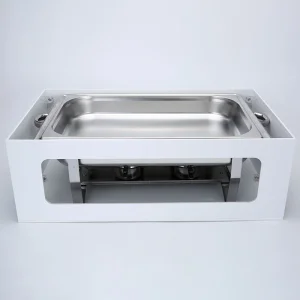
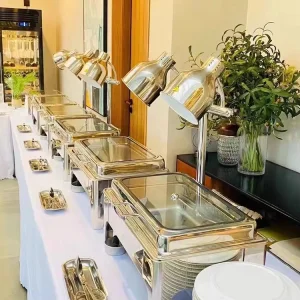
Furthermore, the hospitality sector in Brazil is experiencing a modernization wave. High-end resorts in Bahia, business hotels in the center of Porto Alegre, and industrial cafeterias in Curitiba are phasing out traditional flame-heated chafers. They are transitioning toward smart electric food warmers and integrated Bain Marie systems. These units not only optimize power consumption but also elevate the food display visual dynamics, translating directly to higher average tickets and increased customer satisfaction.
How technical advancements in thermal engineering are defining the future of commercial kitchen machinery.
Globally, the food service equipment industry is emphasizing sustainability, smart automation, and aesthetic presentation. Modern buffet display units are no longer simple metallic boxes with heating rods. Today, they are complex aerodynamic structures engineered to manage thermal convection, radiant heat loss, and moisture vapor saturation. Let us look at the primary drivers of this industrial evolution:
Advanced hot-holding units now employ microclimate controls that allow operators to dial in the exact relative humidity and dry-bulb temperature, preventing high-value proteins from shrinking or losing texture.
Double-glazed heated glass profiles paired with daylight-spectrum LED lighting are used to maximize color saturation. High-clarity structural glass acts as a psychological visual driver for consumers, increasing sales by up to 27%.
With escalating global carbon taxes and localized grid charges, manufacturers utilize insulation layers such as mineral wool and ceramic wool fibers to achieve a thermal containment coefficient of >92% efficiency.
To understand the technical trade-offs between dry and wet heating systems, review the comparison matrix below, which assists global procurement managers in selecting the ideal technology for their specific applications.
| Technology Type | Operational Principle | Ideal Culinary Application | Energy Efficiency Ratio | Maintenance Overhead |
|---|---|---|---|---|
| Wet Heat (Bain Marie) | Uses water vapor to softly conduct heat to the pan underside. | Delicate sauces, stews, grains (rice, feijoada), gravies. | Medium (requires energy to boil and maintain water vapor). | High (regular descaling, water level monitoring required). |
| Dry Convection Heat | Utilizes forced or static hot air currents. | Fried foods, pastries, baked goods, crispy proteins. | High (direct air thermal transmission). | Low (no water scaling, simple element cleaning). |
| Radiant Ceramic Elements | Infrared heat waves projecting downwards from top elements. | Direct surface caramelization preservation, carving stations. | Medium-High (localized heat zones). | Minimal (simple cleaning of glass/ceramic casing). |
Unlocking commercial value through integrated supply chain mechanics and strict regulatory compliance.
Shandong Linru Import & Export Trading Co., Ltd. is a professional enterprise integrating the production and sales of commercial kitchen equipment. With 15 years of experience in the field, we have grown from a single line of kitchen stoves to a diversified portfolio of high-quality branded products. From the very beginning, we have been committed to improving our product quality step by step, firmly believing that only by ensuring consistent quality can we truly earn our customers’ trust and recognition.
In the field of refrigeration equipment, we adhere to strict quality standards and rigorous requirements. Every product is built to meet national quality standards, customized to satisfy client needs, and crafted with attention to detail that reflects our company’s commitment to excellence. Our heating products, including stoves, have obtained full-range CCC (China Compulsory Certification). In addition, our jacketed kettles are certified not only with CCC but also with the National Pressure Vessel Manufacturing License, ensuring customers can purchase with confidence and use with peace of mind.
Our manufacturing facility leverages highly automated CNC laser cutting systems, automatic welding robots, and computer-guided polyurethane injection foaming. This technology ensures structural rigidity, consistent metal thickness (SUS 304 or SUS 201), and perfect alignment of curved glass sheets. This high degree of manufacturing precision is what makes our export catalog extremely competitive for international procurement specialists, especially when arranging long-distance container freight routes from Qingdao to major Brazilian terminals like Porto de Santos or Paranaguá.
Tailored configurations optimized for high performance across diverse food service operations.
Buffet systems in business districts like Avenida Paulista require continuous, heavy-duty hot holding of core staple foods. Bain Marie systems with precise water level management protect delicate rice and meat dishes from drying out during 4-hour service peaks.
Brazilian bakeries are famous for warm snacks (pão de queijo, coxinhas, pastries). Countertop glass warmers with integrated humidity trays are essential to showcase these products in high-contrast lighting while preventing crust sogginess.
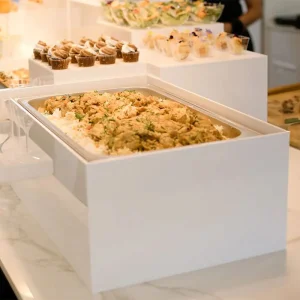
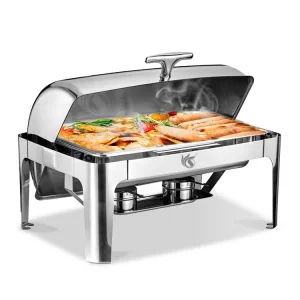
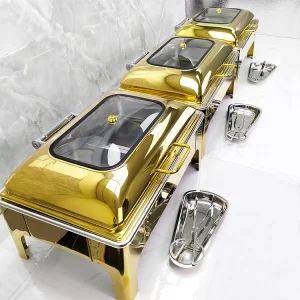
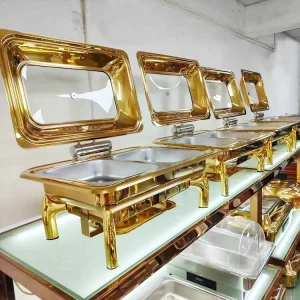
Luxury hotels in Rio de Janeiro, Salvador, and Florianópolis demand elegant visual presentations. Premium gold-hammered chafing dishes and hydraulic glass units fit seamless interior designs, giving breakfast displays a sophisticated touch.
A reference guide to verifying quality metrics, regional electrical demands, and logistics protocols.
Sourcing commercial hot-holding units from international suppliers requires careful evaluation of technical, electrical, and structural specifications. Below is the primary checklist designed for engineering and procurement leads to verify before final sign-off:
15 Years of Craftsmanship — No Compromise on Quality.
With 15 years of experience in commercial kitchen equipment manufacturing, Feijin Import & Export is committed to continuous product refinement, rejecting low-cost, low-quality shortcuts to ensure every piece of equipment delivers long-term stability and reliability.
For refrigeration products, Feijin Import & Export combines high standards with customization — guaranteeing full compliance with national quality standards while tailoring technical parameters to match each client’s specific application and usage environment.
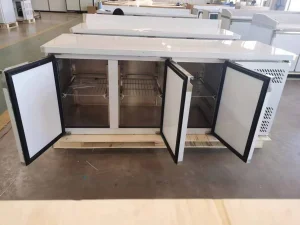
Feijin’s stainless-steel preparation equipment is built using high-grade 304 or 201 stainless steel, with meticulous attention to load-bearing design, craftsmanship, and finishing details, ensuring both durability and aesthetic excellence.
With 15 years of experience in commercial kitchen equipment manufacturing, Feijin Import & Export is committed to continuous product refinement, rejecting low-cost, low-quality shortcuts to ensure every piece of equipment delivers long-term stability and reliability.
Browse our verified product configurations, engineered for heavy duty service and high aesthetic compliance.
Answering crucial technical and compliance inquiries from commercial buyers in the Brazilian market.
Under ANVISA RDC 216 regulations, cooked food must be kept above 60°C continuously. Our commercial food warmer display units are engineered to preheat to the operational temperature of 65°C–75°C in approximately 15 to 22 minutes (depending on model capacity and ambient kitchen temperature), ensuring your kitchen is compliant prior to serving.
We customize electrical systems directly at the factory for either 127V/60Hz (typically requested for states like São Paulo and Rio) or 220V/60Hz (standard in central-western states and industrial regions). We ensure the proper wiring diameter, heating tube ratings, and NBR 14136 plug compliance for the target installation.
SUS 304 contains a higher percentage of chromium and nickel, providing excellent resistance against pitting and oxidation in environments with high relative humidity and salt air (maceió, Rio de Janeiro, Recife coastal areas). For budget-friendly interior settings, SUS 201 provides durable mechanics but requires proper drying and cleaning routines.
All our heating products, including heavy-duty steam units and kettles, hold full China Compulsory Certifications (CCC). Additionally, our pressurized equipment holds the National Pressure Vessel Manufacturing License. We conduct hydrostatic pressure testing, weld seam ultrasonic inspections, and rigorous leak checks before shipment.
Most shipments depart from the Port of Qingdao. Ocean transit times to the Port of Santos or Paranaguá usually range between 35 and 45 days. We provide complete sea freight export documentation, including certified bills of lading, custom packaging declarations, and detailed HS codes to streamline the Brazilian customs clearance process.
Are you looking to modernize your food service equipment fleet? Share your customization requirements, voltage specifications, and volume targets with our export division to receive a custom quote within 24 hours.
Send Inquiry Now Linru Kitchen Equipment