An in-depth whitepaper analysis of architectural trends, thermal management technologies, and sanitation compliance in the global commercial food service ecosystem.
In the contemporary hospitality and institutional dining landscape, the humble food serving counter has evolved from a static partition wall into an active, technologically advanced interface designed to optimize thermodynamic stability, food safety, and customer flow. Modern dining concepts demand a complex symbiosis of heat retention, precise refrigeration, energy efficiency, and high-aesthetic presentation. The global shift towards visual theater kitchens and open buffet lines has driven food service equipment manufacturers to integrate heavy-duty manufacturing techniques with smart electronics.
For decades, commercial servery systems relied heavily on centralized heating reservoirs (e.g., standard water-bath Bain Maries) which suffered from high scale accumulation, excessive power consumption, and slow temperature response cycles. Today, top-tier engineering companies like Shandong Linru Import & Export Trading Co., Ltd. (Feijin) are spearheading a transition toward dry well technology, induction warming, and smart multi-zone temperature controls. This transition ensures that delicate foodstuffs are kept within narrow hazard-free thermal boundaries, directly adhering to strict HACCP guidelines while minimizing operational carbon footprints.
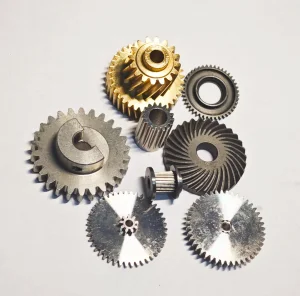
From an architectural standpoint, the integration of heavy-duty materials with precision engineering components is the defining benchmark of structural longevity. Serving counters are subjected to harsh physical environments—from corrosive food acids and moisture humidity to heavy impact stress from cast-iron cookware. Thus, the application of grade 304 stainless steel, engineered internal reinforcing frames, and advanced CNC laser-cut joints has become standard protocol for exporters serving high-value regions like Western Europe, North America, and the Middle East.
Deconstructing the technical requirements and compliance benchmarks that purchasing directors look for in international contract tenders.
Global procurement specialists seek serving systems equipped with individual thermodynamic zones. Hot-holding wells must prevent thermal bridging to adjacent cold wells, requiring high-density polyurethane insulation (minimum 40kg/m³) and isolated dry-running heating elements to reduce energy dispersion.
Institutional buyers, particularly in hospitality and cruise ship catering, prioritize modular architectures. Standard standardized templates allow components like drop-in pans, breath guards, tray slides, and electric heating controls to be easily swapped out for maintenance without stripping the entire structural assembly.
Compliance with NSF/ANSI Standard 2 and HACCP requires seamless welding on all exposed work surfaces. Marine edges, radius internal corners (minimum R10), and flat-top interfaces ensure easy cleaning, completely eliminating harboring spots for microbial biofilm accumulation.
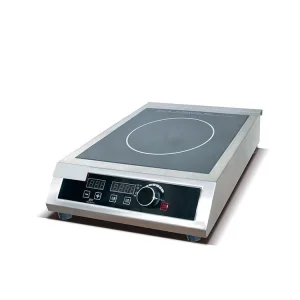
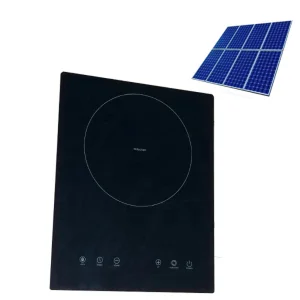
Furthermore, energy conservation is a primary driver in modern procurement. Transitioning from legacy gas burners to high-efficiency induction systems reduces ambient heat load in serving zones, resulting in lower HVAC cooling requirements. Equipment must run on versatile electrical specifications (e.g., 220V/50Hz for European markets, 110V/60Hz for Americas, and even 24V DC systems for specialized solar-powered off-grid environments), calling for robust, certified power modules with built-in surge protection.
Pioneering High-Precision Manufacturing & Quality Control Systems.
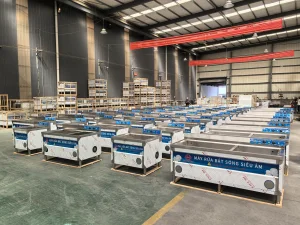
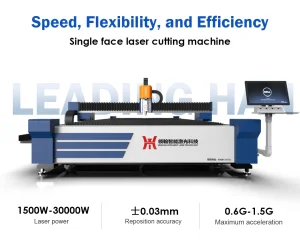
The strength of China’s commercial kitchen manufacturing sector lies in the combination of raw material availability, advanced machinery, and complete production clusters. Factories are no longer merely assembling parts; they are integrated, digitized centers utilizing automated metal fabricators, fiber laser cutters, and CNC bending machines. This allows for unmatched dimensional accuracy (deviations within ±0.1mm), assuring that multi-segment counters line up perfectly on site.
Companies like Shandong Linru Import & Export Trading Co., Ltd. capitalize on local steel production ecosystems to secure premium SUS304 and SUS201 stainless steel coils at stable rates, buffering global buyers from sudden pricing shocks. Furthermore, the integration of advanced laser cutting technology directly into the production line allows for rapid prototyping of custom design layouts, accelerating the journey from CAD schematics to container loading by up to 45% compared to regional manufacturers.

Analyzing the demanding operational settings that depend daily on heavy-duty servery lines.
Requires flawless aesthetic integration with interior finishes. High-grade brushed steel combined with under-counter induction modules provides a sleek look. The counters feature silent operation, hidden control panels, and adjustable sneeze guards to blend seamlessly into premium environments while maintaining perfect food hygiene.
In school campuses, military bases, and large-scale industrial factories, serving lines operate continuously under heavy physical wear. Structural durability is achieved with double-walled insulating cavities, heavy-duty guide rails, high load-bearing tray slides, and reinforced corner buffers to withstand impact from trays and carts.
Requires precision temperature control to prevent bacterial growth. Thermostatically controlled wells with integrated temperature logging meet state-level clinical standards. Seamless, easy-to-sanitize designs prevent fluid pooling and simplify daily deep-cleaning routines.
Combining 15 years of industrial heritage with state-of-the-art component manufacturing and quality control standards.
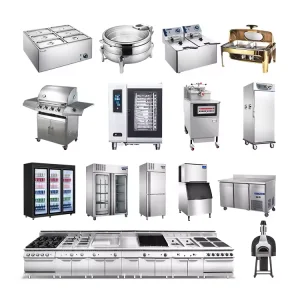
Shandong Linru Import & Export Trading Co., Ltd. is a professional enterprise integrating the production and sales of commercial kitchen equipment. With 15 years of experience in the field, we have grown from a single line of kitchen stoves to a diversified portfolio of high-quality branded products. From the very beginning, we have been committed to improving our product quality step by step, firmly believing that only by ensuring consistent quality can we truly earn our customers’ trust and recognition.
In the field of refrigeration equipment, we adhere to strict quality standards and rigorous requirements. Every product is built to meet national quality standards, customized to satisfy client needs, and crafted with attention to detail that reflects our company’s commitment to excellence. Our heating products, including stoves, have obtained full-range CCC (China Compulsory Certification). In addition, our jacketed kettles are certified not only with CCC but also with the National Pressure Vessel Manufacturing License, ensuring customers can purchase with confidence and use with peace of mind.
With 15 years of experience in commercial kitchen equipment manufacturing, Shandong Linru (Feijin) is committed to continuous product refinement, rejecting low-cost, low-quality shortcuts to ensure every piece of equipment delivers long-term stability and reliability.
For refrigeration products, Shandong Linru (Feijin) combines high standards with customization — guaranteeing full compliance with national quality standards while tailoring technical parameters to match each client’s specific application and usage environment.
Our stainless-steel preparation equipment is built using high-grade 304 or 201 stainless steel, with meticulous attention to load-bearing design, craftsmanship, and finishing details, ensuring both durability and aesthetic excellence.
With 15 years of experience in commercial kitchen equipment manufacturing, we are committed to continuous product refinement, rejecting low-cost, low-quality shortcuts to ensure every piece of equipment delivers long-term stability and reliability.
Direct technical answers addressing thermodynamics, electrical safety, certifications, and global custom orders.
 Linru Kitchen Equipment