The global food processing sector is undergoing an unprecedented paradigm shift driven by automation, strict hygienic mandates, and the search for operational efficiency. At the heart of this transformation is the Industrial Food Loader—a highly specialized category of automation machinery designed to handle, portion, transfer, and feed ingredients into various processing stages without human intervention. From heavy-duty bakery dough feeders to volumetric raw meat loaders and automated spice mixers, these systems form the backbone of modern high-yield production lines.
In 2024, the global market for food automation and loading machinery reached a valuation of approximately $12.5 billion, with projections indicating a compound annual growth rate (CAGR) of 7.4% through 2030. Key geographical demand centers include North America, Western Europe, and rapidly expanding manufacturing hubs within the Asia-Pacific region. Factors such as labor scarcity, rising wages, and strict food safety regulations (such as Hazard Analysis Critical Control Point, or HACCP, and the FDA’s FSMA guidelines) have forced processors to replace manual ingredient loading with sanitary, airtight automated conveyance solutions.
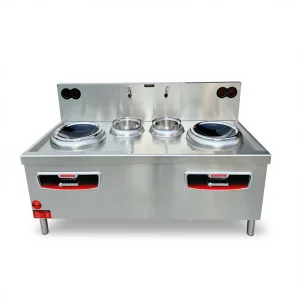
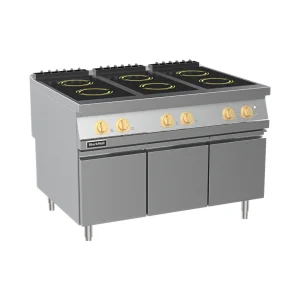
Furthermore, the integration of commercial kitchen hardware with industrial manufacturing lines highlights a growing trend: the scaling down of industrial technology for central commissaries, large-scale hotels, and cloud kitchen networks. Heavy-duty mixers, convection ovens, and high-efficiency induction stoves require robust feeding and prep equipment to sustain high-volume output. Industry leaders like Shandong Linru Import & Export Trading Co., Ltd. (also operating under the Feijin brand) have bridged the gap by providing customized, high-compliance machinery capable of operating seamlessly under intense commercial and industrial conditions.
Modern industrial food loaders are no longer simple mechanical lifts. They represent sophisticated integration of sanitary mechanical engineering, automation electronics, and material science. To achieve optimal performance and meet strict hygienic standards, global manufacturers focus on several crucial engineering pillars:
Material cross-contamination is the single biggest threat in food manufacturing. Leading factories utilize high-grade SUS 304 and SUS 316L stainless steel with surface roughness (Ra) values of less than 0.8 microns to discourage bacterial adhesion. Modern loader designs incorporate automated CIP spray ball systems, allowing entire conveyor tubes and hopper assemblies to be sanitized without disassembly, reducing downtime by up to 60%.
Ensuring precision in ingredient weight is vital for recipe consistency and cost management. Modern loading systems use PLC-driven load cells and servo-driven augers. This technology enables the dynamic calculation of flow rate based on ingredient density and viscosity, making the equipment suitable for both granular spices and highly viscous doughs.
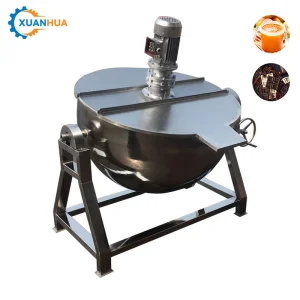
Operating pressurized loaders or thermal loading systems requires extreme manufacturing discipline. Industrial operators must seek factories certified with the National Pressure Vessel Manufacturing License (vital for jacketed kettles and steam loading systems) and comprehensive certifications such as CCC (China Compulsory Certification) and CE. These credentials verify that the equipment can withstand intense operating pressures and thermal cycling without structural failure.
Industrial food loading demands vary dramatically depending on the regional food culture, local labor supply, and the regulatory environment. Successful manufacturers develop specialized, localized variants to meet these specific requirements:
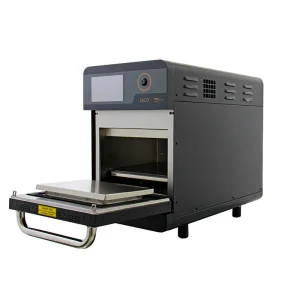
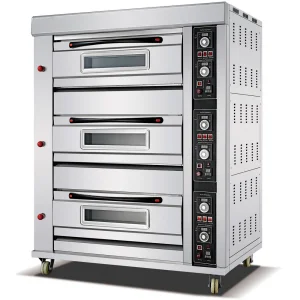
In the US and Canada, food loading systems are designed for high-capacity continuous runs. Key priorities include predictive maintenance, remote troubleshooting, and seamless PLC integration with third-party packaging machines. Heavy-duty multi-deck ovens and automated mixing suites require loaders that feed bulk quantities of raw flour, oils, and liquids with zero dust emission.
European Union directives place immense emphasis on food allergen isolation and operator ergonomics. Loaders sold in the EU must feature tool-less disassembly, allowing rapid sanitation cycles between product runs. Easy wash-down designs with IP69K rated electrical enclosures are standard requirement in this market.
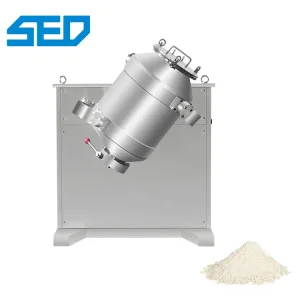
In China, Japan, Southeast Asia, and India, food loading equipment must manage a diverse array of food textures. This ranges from highly adhesive sticky rice to delicate proteins and complex sauces. Multi-directional powder mixers and smart automatic sausage and fried rice cooking machines require versatile loading systems that prevent ingredient segregation and preserve product texture.
For over 15 years, Shandong Linru Import & Export Trading Co., Ltd. (Feijin) has served as a global pioneer in the commercial kitchen and industrial food processing equipment sectors. What started as a single manufacturing line for kitchen stoves has expanded into a comprehensive, state-of-the-art enterprise catering to premium food processing facilities worldwide.
Our corporate ethos rejects cheap, low-quality shortcuts in favor of long-term operational stability. This commitment is reflected across our entire range of commercial equipment—including high-power induction stoves, multi-deck convection ovens, commercial sinks, and advanced refrigeration platforms like walk-in coolers. We firmly believe that consistent quality is the only foundation for building trust with global customers.
Feijin’s heating products, including heavy-duty stoves and automated cooking stations, have earned full-range CCC (China Compulsory Certification) approval. Furthermore, our jacketed steam kettles and pressurized loading cylinders hold the National Pressure Vessel Manufacturing License, providing peace of mind to our safety-conscious corporate buyers.
In the refrigeration and food storage sector, we combine high standards with comprehensive customization. Whether you require walk-in coolers with monoblock condensing units or heavy-duty preparation stations, Feijin tailors technical parameters to suit your exact facility layouts and workflow requirements.
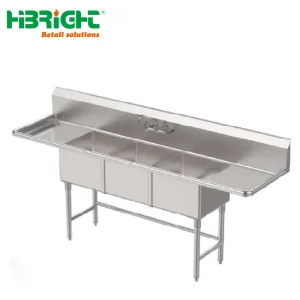
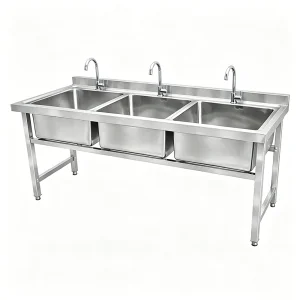
We use premium SUS 304 or SUS 201 stainless steel in our commercial kitchen sinks, prep tables, and buffet stations. With careful attention to load-bearing frame design, seam welding, and surface finishing, we build our machinery to withstand decades of intensive sanitation protocols.

When sourcing industrial food loaders or setting up integrated food preparation lines, procurement managers should evaluate potential partners against this verification framework:
 Linru Kitchen Equipment