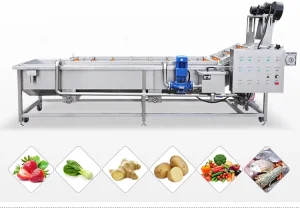
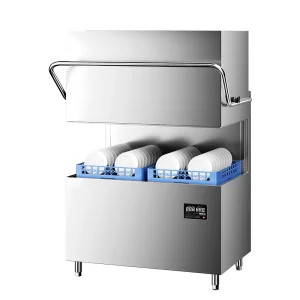
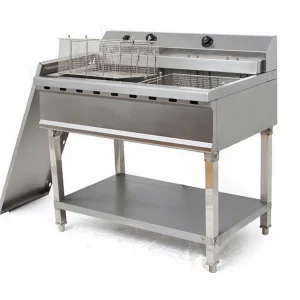
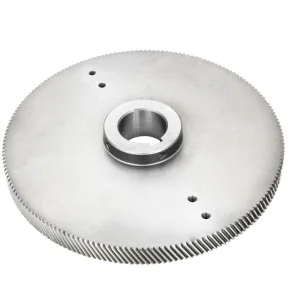
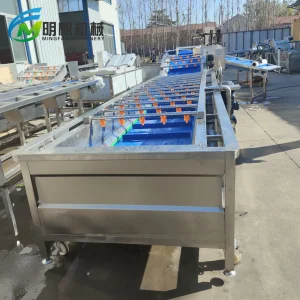
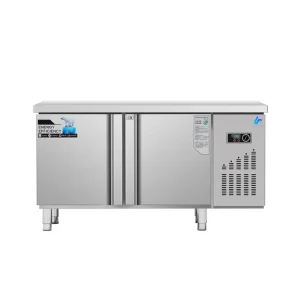
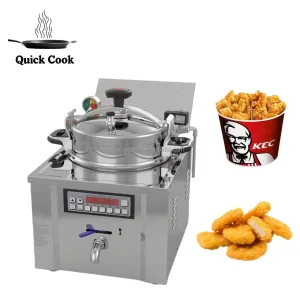
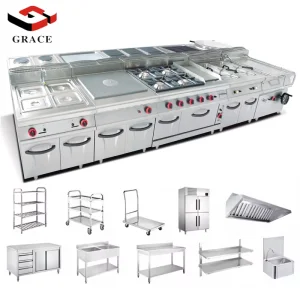
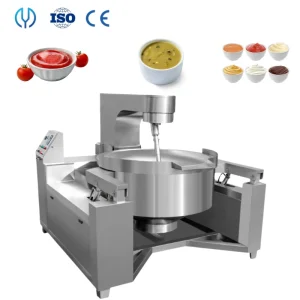
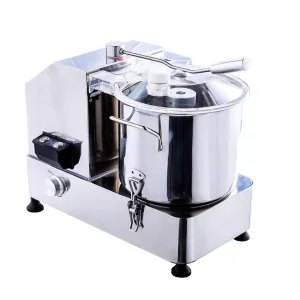
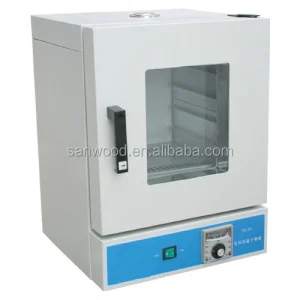
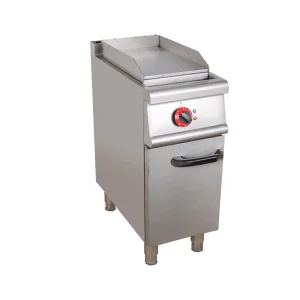
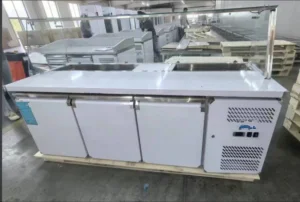
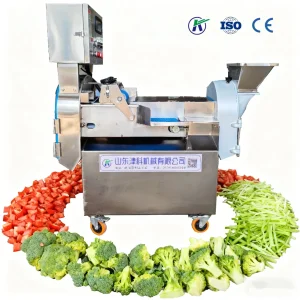
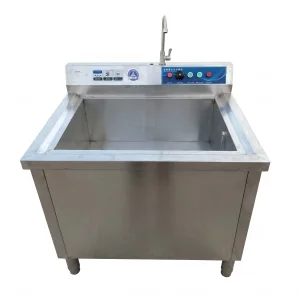
Explore our core commercial refrigeration, heating, and food processing systems designed for seamless operational integration.
In the global food service, hospitality, and industrial baking sectors, the humble baking sheet acts as the foundational interface between thermal energy and raw dough. A fraction of a millimeter in gauge thickness, an uneven distribution of heat, or a premature breakdown of non-stick coating can make the difference between profit and loss. As a leading manufacturer of commercial kitchen systems and premium stainless-steel prep platforms, Shandong Linru Import & Export Trading Co., Ltd. (operating with its production powerhouse Shandong Binzhou Feijin Import & Export Trading Co., Ltd.) presents this comprehensive industrial whitepaper on commercial baking sheet design, sourcing parameters, and the structural advantages of China's modern manufacturing supply chains.
With over 15 years of industry experience in high-precision commercial food equipment production, we understand that professional kitchens do not merely need "pans"; they require robust, thermally stable substrate systems that withstand high-frequency, back-to-back thermal cycling without warping, degrading, or compromising food safety.
"Sourcing commercial bakeware requires navigating complex metallurgical configurations, non-stick polymer physics, and regulatory environments. This document serves as a blueprint for procurement officers, culinary directors, and industrial bakery engineers."
The global bakery market continues to expand, driven by a post-pandemic resurgence in Quick Service Restaurants (QSRs), convenience store baked-goods lines, and artisanal sourdough trends in metropolitan centers. Consequently, the demand for standardized commercial baking sheets (primarily half-sheet and full-sheet formats) has grown exponentially.
Currently, international buyers prioritize low total cost of ownership (TCO) over cheap initial pricing. This means bakeware must endure hundreds of wash-and-bake cycles. Industry statistics indicate that factories employing substandard stamping processes and low-purity aluminum alloys report up to a 30% pan failure rate (warping and coating peeling) within the first six months. By contrast, advanced manufacturing processes using precision-engineered aluminized steel or heavy-gauge 3003-series aluminum alloys yield pans that remain functionally flat over multiple years of intensive operation.
Choosing the correct metallurgical profile determines heat transfer efficiency, structural rigidity, and longevity.
The industry standard for high-volume commercial baking. Combines the high structural strength and low thermal expansion of carbon steel with the rapid heat transfer and corrosion resistance of an aluminum-silicon alloy coating. Ideal for rack ovens.
Highly conductive and lightweight, allowing for quick adjustments in baking temperature profiles. Extensively used in pastry and cookie shops where bottom crust browning must be meticulously controlled without burning the center.
To prevent the natural twisting that occurs when sheets transition from room temperature to a 230°C (450°F) oven, a heavy-duty galvanized steel wire is encapsulated inside the rolled edge, securing the perimeter geometry.
Selecting the appropriate release surface is critical to the throughput speed of industrial baking lines. Silicone Glaze (PFA/PTFE-free) provides an excellent chemical-free release that is highly favored for high-sugar doughs, though it typically requires recoating after 300 to 500 bakes. Conversely, Multi-Layer PTFE Coatings offer exceptional durability, often lasting over 1,000 cycles under proper care conditions. The engineering challenge is ensuring that these coatings adhere to the metallic substrate without risk of microscopic flaking—a challenge solved by modern electrostatic powder coating systems and high-temperature curing ovens.
How baking configurations adapt to specific regional demands and culinary operations worldwide.
Requires heavy 12 to 18-gauge aluminum half-sheets. Used primarily for roasting proteins, preparing breakfast biscuits, and high-frequency cookie programs. Standardized dimensions allow them to fit seamlessly into universal speed racks.
Prefers perforated aluminum trays or silicone-coated baking sheets tailored to 600x400mm Euro-norm sizing. Perforations allow moisture to escape, ensuring crisp bottom crusts on baguettes, croissants, and delicate pastries.
Utilizes custom deep-dished, teflon-coated multi-mold trays designed for automated conveyor lines. High humidity resistance is critical because bun baking often involves steam-assisted thermal environments.
Sourcing from top-tier Chinese manufacturers provides significant advantages beyond simple unit pricing. The concentration of sheet metal production, chemical coating suppliers, and logistics networks within Shandong Province creates an unmatched industrial ecosystem.
At our Binzhou manufacturing base, raw materials such as premium cold-rolled steel and structural grade aluminum are sourced from nearby refineries, shielding us from volatile shipping costs and raw material bottlenecks. We have optimized our processes using automated stamping lines and progressive dies. This setup guarantees that every single baking sheet maintains consistent corner radius dimensions and lip profiles, critical parameters for automated, robotic depanning systems.
Moreover, our integrated logistics hub enables seamless transport to Qingdao port, allowing for fast, cost-effective container loading and customs clearances. For global distributors, this supply chain reliability translates to predictable lead times and consistent product availability, minimizing inventory buffer requirements.

Under the principles of Google's Search Quality Rater Guidelines, search engines evaluate content based on Experience, Expertise, Authoritativeness, and Trustworthiness (E-E-A-T). Our manufacturing operations reflect these principles:
Our factories boast 15 years of continuous operational growth. We did not start as a trading agency; we began on the factory floor with a single line of kitchen stoves. Today, we manage a diversified commercial portfolio ranging from precision food cutters to advanced commercial refrigeration systems.
In the demanding field of refrigeration equipment, we maintain strict quality standards, ensuring every unit meets rigorous national quality and energy conservation benchmarks. This careful attention to detail extends directly into our bakeware production lines. Furthermore, our heating equipment has achieved full-range CCC (China Compulsory Certification), and our advanced jacketed steam kettles hold the prestigious National Pressure Vessel Manufacturing License. This capability underscores our engineering depth and safety compliance. If we can safely manufacture complex pressure vessels and digital refrigeration systems, we can confidently build the world's most reliable commercial baking sheets.
Innovations defining the next decade of commercial bakeware manufacturing and design.
Integrating heat-conductive ceramics within PTFE matrices to reduce baking times by 8-12%. These coatings ensure even browning across the sheet, even in ovens with uneven air-circulation.
As regulations tighten globally (such as the EU's REACH and various US state laws on PFAS), we are actively developing advanced sol-gel ceramic coatings that provide excellent release properties without environmental concerns.
For large-scale, automated industrial bakeries, embedding high-temperature resistant RFID tags into pan rims allows automated monitoring of the pan's lifecycle, washing schedules, and bake counts.
Expert answers to the most common questions from procurement managers and commercial buyers.
Warp resistance comes from two elements: steel-wire reinforcement inside the rolled rim, and the choice of alloy. Heavy-duty 18-gauge aluminized steel resists warping better than standard aluminum because of its steel core's lower thermal expansion rate and high structural rigidity under intense heat cycles.
All raw materials and coatings used in our bakeware are compliant with food-contact safety standards including FDA (United States) and LFGB (Europe). Our parent factories maintain ISO 9001 quality management systems and comprehensive internal traceability records.
Yes. As an OEM/ODM provider with advanced tooling capabilities, we can develop custom progressive dies for non-standard sizing, specialty bread molds, or custom rack dimensions based on your CAD drawings and technical specifications.
For standard-size sheets (half/full sheets), our MOQ is typically 500 units. For custom-designed pans requiring new mold designs, the MOQ starts at 1,000 to 2,000 units depending on the complexity of the tooling and materials required.
Explore our heavy-duty processing kettles, thermal drying ovens, and custom stainless-steel workspace configurations.
 Linru Kitchen Equipment