The global commercial refrigeration landscape is undergoing a profound structural evolution driven by changing consumer behaviors, expanding urban populations, and stringent global environmental mandates. Modern retail models—spanning hypermarkets, discount supermarkets, and small-format convenience stores—rely heavily on robust, uninterruptible refrigeration loops to preserve food safety, maintain organoleptic qualities, and minimize operational waste. Currently, refrigeration systems represent the largest electricity consumer in a typical supermarket setup, often accounting for 50% to 60% of a facility's total energy budget.
As international regulatory frameworks enforce the phasing out of high Global Warming Potential (GWP) Hydrofluorocarbons (HFCs) under the Kigali Amendment and local EPA/F-Gas regulations, the global commercial food sector is looking to Chinese manufacturing leaders for forward-compatible infrastructure. This transition demands high-precision thermodynamic engineering, where equipment must operate reliably under varying ambient temperatures while utilizing natural refrigerants (such as CO₂/R744 or Propane/R290) or low-GWP HFO blends. Shandong Linru Import & Export Trading Co., Ltd. (commonly known under its manufacturing and export flagship, Feijin) stands at the forefront of this industrial shift, offering commercial-grade solutions designed for maximum efficiency and minimum carbon footprint.
Procurement and engineering directors representing global supermarket chains face complex multi-variable equations when selecting a manufacturing partner. The decision-making process is no longer determined solely by initial capital expenditure (CAPEX); it is highly sensitive to Total Cost of Ownership (TCO), which is composed of:
Evaluating seasonal energy performance ratios (SEPR) and part-load efficiency curves to protect retail operations against rising municipal energy tariffs.
Securing premium compression technology (such as Copeland scroll condensing systems) to prevent mechanical failures and expensive cold room temperature excursions.
Ensuring all food-contact prep stations and structural frames utilize certified 304 or 201 stainless steel to withstand intensive chemical sanitation regimes.
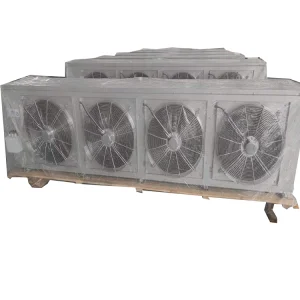
To resolve these critical pain points, forward-thinking manufacturers like Feijin have integrated digitalized quality control loops into their assembly lines. From the precise cutting of stainless steel plates to the pressure-testing of gas lines within evaporator arrays, every step is rigorously logged. This data-driven production model guarantees that the physical units delivered to overseas ports match the strict engineering tolerances expected in Western and European markets.
Shandong Linru Import & Export Trading Co., Ltd. is a professional enterprise integrating the design, production, testing, and global sales of commercial kitchen and supermarket refrigeration equipment. With 15 years of continuous manufacturing experience in this specialized field, our brand has evolved from producing localized commercial kitchen stoves to fabricating a highly diversified, premium portfolio of branded cooling and kitchen machinery. Our growth trajectory is built upon a fundamental operational philosophy: rejecting low-cost, low-quality shortcuts in favor of long-term stability and engineering excellence.
In the refrigeration sector, we operate under strict, multi-tier quality assurance audits. Every chiller unit, cold table, and condenser that exits our facility is engineered to satisfy national safety codes and customized to meet the specific requirements of our clients.
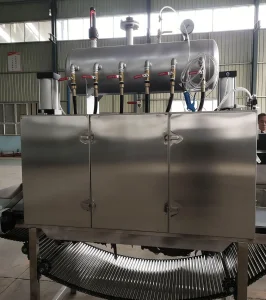
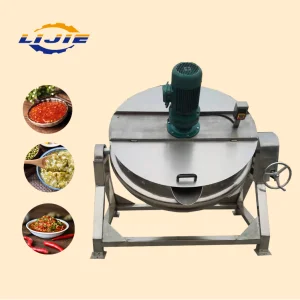
Our industrial-grade jacketed kettles and steam units hold the prestigious National Pressure Vessel Manufacturing License alongside standard CCC certifications. This enables our enterprise to cater to heavy-duty central food processing facilities and high-volume commercial kitchens with total safety compliance.
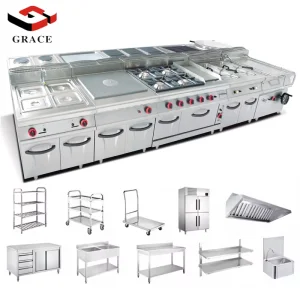
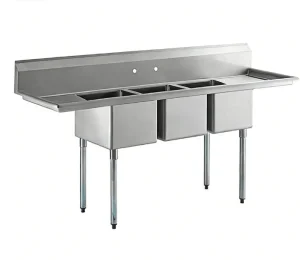
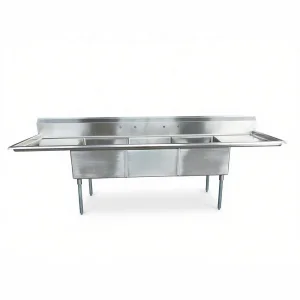
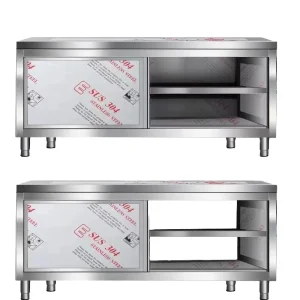
We construct our food preparation cabinets, sliding-door worktables, and commercial triple-compartment sinks using high-grade 304 or 201 stainless steel. By optimizing the load-bearing profiles and finishing details, we ensure lifetime durability, resistance to pitting corrosion, and easy sanitation.
Our active refrigeration systems utilize top-tier compressors, notably Copeland scroll compressors. This optimization ensures low noise, high heat transfer coefficients, and exceptional energy efficiency under extreme industrial duty cycles.

Feijin Factory Quality Assurance: Certified manufacturing standards matching global cold chain expectations.
Supermarket cooling systems do not operate in isolation; they are part of a larger food logistics ecosystem. Feijin addresses this reality by engineering integrated thermal solutions that bridge the gap between back-of-house food preparation and front-of-house merchandising. Whether configuring systems for a suburban hypermarket or an urban express mart, our engineers design layouts that balance refrigerant mass flow with localized air distribution patterns.
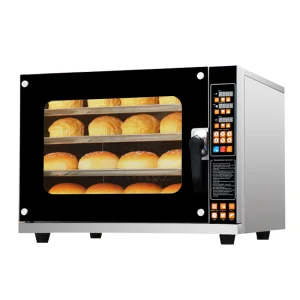
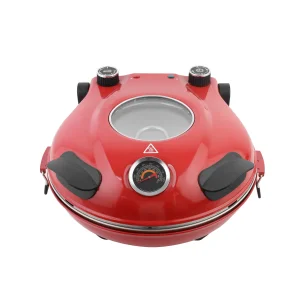
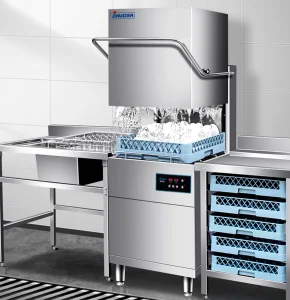
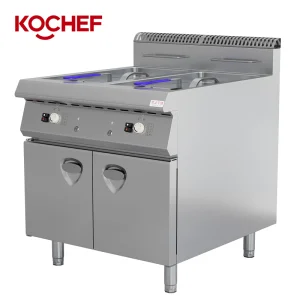
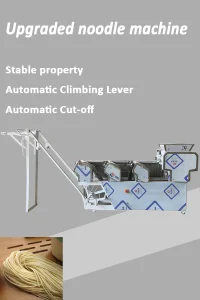
For instance, in massive retail operations, central cold prep zones must maintain precise climate control to prevent biological activity during butchery and packaging. Our custom stainless steel three-compartment sinks, sliding-door prep tables, and hood-type dishwashers work in tandem with walk-in freezers and Copeland condensing systems. This structural synergy allows grocery operators to secure HACCP (Hazard Analysis Critical Control Point) certifications easily. By utilizing our dual-tank deep fryers, convection ovens, and specialized pasta machinery alongside our cooling cabinets, operators can establish a seamless cook-chill loop that maximizes product shelf life and reduces waste.
The horizon of commercial refrigeration is defined by digitization and eco-preservation. Our engineering team at Feijin is currently pursuing a multi-track technical roadmap aimed at introducing smart capabilities across all food storage systems:
1. Intelligent Defrost Cycles: By integrating micro-differential pressure sensors and ambient humidity monitoring, our future evaporation units will defrost dynamically based on frost accumulation, replacing energy-intensive scheduled timer defrost systems. This development alone is projected to reduce refrigeration operating costs by up to 14%.
2. IoT Fleet Management: Future generations of our Copeland-driven condensing systems will feature native Modbus and Wi-Fi telemetrics. This allows facility operators to track real-time suction pressure, liquid line temperatures, and energy draw from a centralized desktop interface, facilitating predictive maintenance.
3. Low-Charge Natural Refrigerant Circuits: We are continually refining our internal coil geometries to reduce the overall charge required in Propane (R290) systems. This ensures compliance with global safety limits while taking full advantage of the excellent thermodynamic properties of hydrocarbon gases.
Shipping highly technical machinery across borders requires strict adherence to international verification codes. All heating and mechanical systems engineered by Feijin, including commercial ovens and mixers, are certified under the China Compulsory Certification (CCC). More importantly for heavy-duty industrial food prep, our jacketed boiler kettles carry the certified National Pressure Vessel Manufacturing License, signifying adherence to rigorous hydraulic pressure testing and weld X-ray inspections.
To support our global distributors and enterprise buyers, Shandong Linru Import & Export provides comprehensive logistical transparency. Every shipment includes structural drawings, electrical wiring diagrams, and complete lists of spare parts. Additionally, we provide localized support for installation guides and offer customize-to-order parameters for voltage variations (e.g., 220V/60Hz, 380V three-phase, or 110V single-phase configurations) to match regional power grids without sacrificing performance.
 Linru Kitchen Equipment