In the rapidly changing global foodservice industry, the performance and reliability of commercial refrigeration equipment serve as the backbone of operational success. Shandong Linru Import & Export Trading Co., Ltd. (operating under the flagship manufacturing branch, Feijin Import & Export) stands as a leading enterprise integrating the high-performance production and sales of commercial kitchen equipment. With over 15 years of dedicated industrial experience, we have advanced from a focused manufacturer of kitchen stoves to a globally recognized provider of commercial kitchen and refrigeration systems.
Our journey is defined by a commitment to quality. From our initial designs to our multi-line systems, we prioritize consistency and certification. Every product we manufacture complies with rigorous quality standards, customized to meet the demands of commercial kitchens, catering services, and large-scale food manufacturing operations.
"Strict quality standards and rigorous requirements are the core pillars of our refrigeration and heating equipment lines. Every system is built to meet national quality guidelines, customized to satisfy specific client demands, and crafted with attention to detail."
The commercial soft serve and batch freezer market has transitioned from traditional mechanical operations to highly automated, energy-efficient thermodynamic systems. Modern commercial establishments demand ice cream machines that minimize down-time, guarantee consistent viscosity, and satisfy stringent global health and environmental regulations.
Environmental regulations, including the European Union's F-Gas Regulation and the US EPA’s transition pathways, have accelerated the phase-out of traditional high-GWP (Global Warming Potential) refrigerants like R404A. Current industry standards emphasize the use of natural refrigerants such as Propane (R290) and eco-friendly blends like R448A and R449A. These cooling solutions minimize carbon footprints while offering high heat transfer coefficients and energy savings of up to 15%.
Smart kitchen ecosystems rely on remote monitoring. Next-generation ice cream machines incorporate integrated telemetry modules that log pasteurization cycles, track consistency variations, and flag component fatigue. This proactive framework allows multi-location chains to maintain product consistency and identify refrigeration issues before they cause costly system shut-downs.
Food hygiene remains a primary operational focus. Modern ice cream units feature computerized pasteurization systems that heat the liquid mix to 65.5°C (150°F) for 30 minutes, automatically sanitizing the system. This thermal cycle extends disassembly intervals up to 14 days, reducing daily product waste and labor expenses while maintaining complete sanitary safety.
For procurement managers in quick-service restaurant (QSR) chains, high-volume catering, and food distribution networks, purchasing an ice cream machine involves evaluating specific engineering metrics. Choosing the right machinery requires matching mechanical performance to the demands of commercial operations:
The system's core value is determined by its continuous dispensing ability. High-efficiency machines utilize dedicated scroll compressors and direct-drive beating motors to speed up recovery times, preventing soft or runny ice cream during peak service hours.
Overrun refers to the amount of air incorporated into the ice cream mix. Gravity-fed systems produce overruns between 30% and 45%, offering a dense, rich texture. Pressurized air pump systems can reach 80% to 100% overrun, producing a lighter texture and higher yield per unit volume, which increases profit margins for high-volume franchises.
To resist corrosion from lactic acid and sanitizing chemicals, freezing cylinders and agitator shafts must be crafted from high-grade, polished 304 stainless steel. Beaters fitted with self-adjusting scraper blades ensure complete heat exchange, preventing the formation of ice crystals on the interior cylinder walls.
Industrial refrigeration units must operate efficiently under diverse local power supplies (e.g., 220V/50Hz, 208-230V/60Hz, or 380V three-phase configurations). High-performance factories construct tropicalized condensers capable of maintaining efficient cooling cycles at ambient working temperatures up to 43°C (109°F).
Feijin Import & Export operates with a clear commitment: providing long-term reliability and value by avoiding the low-cost shortcuts common in the commercial equipment market.

With 15 years of experience in commercial kitchen equipment manufacturing, Feijin Import & Export is committed to continuous product refinement, rejecting low-cost, low-quality shortcuts to ensure every piece of equipment delivers long-term stability and reliability.
For refrigeration products, Feijin Import & Export combines high standards with customization — guaranteeing full compliance with national quality standards while tailoring technical parameters to match each client’s specific application and usage environment.
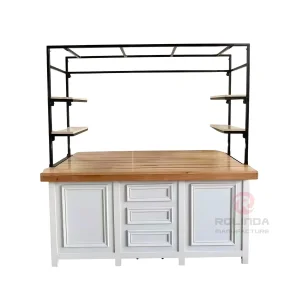
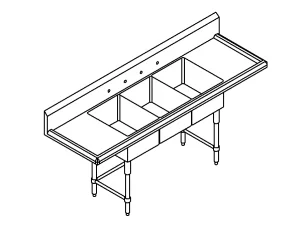
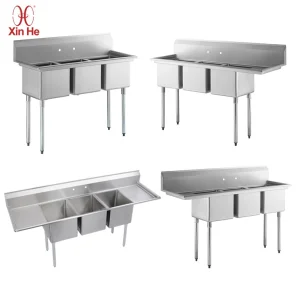
Feijin’s stainless-steel preparation equipment is built using high-grade 304 or 201 stainless steel, with meticulous attention to load-bearing design, craftsmanship, and finishing details, ensuring both durability and aesthetic excellence.
With 15 years of experience in commercial kitchen equipment manufacturing, Feijin Import & Export is committed to continuous product refinement, rejecting low-cost, low-quality shortcuts to ensure every piece of equipment delivers long-term stability and reliability.
Industrial ice cream production requires integrating machinery into broader cold chain and foodservice systems. We provide comprehensive layout and engineering plans designed for a variety of commercial spaces:
For fast-paced QSR environments, system downtime is not an option. Our solutions integrate high-capacity, twin-twist soft-serve dispensers with advanced glycol-based pre-cooling systems. These systems maintain liquid mix temperatures below 4°C (39.2°F), preventing microbial growth and easing load demands on the primary freezing cylinder. This dual-zone cooling design enables continuous service during peak operational hours.
Artisanal gelato production depends on precise control over consistency. Our advanced batch freezers feature variable-speed beating configurations that allow operator adjustment of overrun percentages. This control enables kitchens to produce dense, high-quality gelato alongside lighter, airy whipped sorbets using the same machinery.
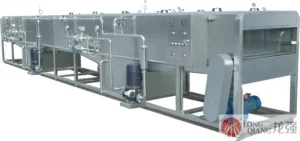
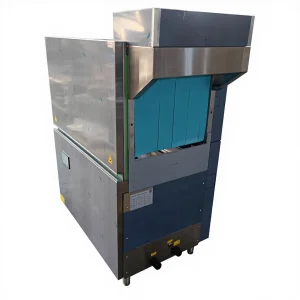
Large banquet operations require efficient production and storage. By combining our heavy-duty preparation tables, conveyor dishwashers, and fast-freezing batch units, institutional kitchens can transition smoothly from recipe prep to automated clean-up. This integrated workflow increases throughput, reduces manual handling, and helps maintain strict food safety standards.
Exporting refrigeration systems worldwide requires strict adherence to international regulatory certifications. Our quality management systems align with global compliance standards to ensure trouble-free customs clearance and operational safety:
Our heating systems and commercial ranges carry complete China Compulsory Certification (CCC). Furthermore, our jacketed kettles comply with the demanding requirements of the National Pressure Vessel Manufacturing License. This certification demonstrates our factory's capability to manufacture safe, high-pressure thermal units, a level of engineering expertise we also apply to our commercial refrigeration lines.
For European markets, our ice cream machines carry complete CE Certification, meeting the standards of the Machinery Directive 2006/42/EC and the Low Voltage Directive 2014/35/EU. Additionally, we use food-grade contact surfaces that comply with FDA and NSF-6 standards, providing operators with reliable, clean performance that satisfies local health department requirements.
Our design teams focus on incorporating next-generation technologies to improve machine efficiency, reduce waste, and simplify operations.
Developing torque-sensing software that monitors beater motor resistance. This system automatically adjusts refrigeration cycles to prevent over-freezing, ensuring consistent product texture regardless of recipe variables.
Developing eco-friendly dual-stage refrigeration systems. By combining air-cooled condensers with integrated glycol pre-chilling, these systems reduce energy consumption by up to 22% in warm kitchen environments.
Integrating contactless optical sensors for dispensing alongside automated cloud storage of temperature logs. This feature provides franchise operators with automated records for HACCP compliance and food safety inspections.
We address common technical inquiries from procurement teams, food manufacturers, and commercial operators:
 Linru Kitchen Equipment