Hamburg, Germany's second-largest metropolis, functions as a premier logistical epicentre and a culinary powerhouse of Europe. From the high-volume catering demands of the Port of Hamburg (the third-busiest port in Europe) to upscale Michelin-starred restaurants along the Inner Alster and expansive cruise ship galleys, the operational strain on kitchen equipment is unique. Industrial food service operations in Northern Germany require thermal infrastructure capable of 24/7 continuous operation, conforming precisely to stringent European hygiene, energy efficiency, and safety codes.
Within this territory, food service systems must satisfy specific DIN (Deutsches Institut für Normung) standards. Particularly, DIN 18865 (governing food service equipment design and thermal elements) demands uncompromising standards regarding material safety, heat distribution, and ease of sanitation. To maintain structural integrity in highly saline, humid coastal environments, marine galleys and local shorefront catering operations require heavy-gauge SUS304 or SUS316 stainless steel alloys. Standard residential-grade or low-spec alloys corrode and fail under the combined chemical load of high-chlorine sanitizers, sea salt, and organic acids.

Analyzing procurement requirements, technical specifications, and thermodynamic efficiencies for modern commercial catering equipment.
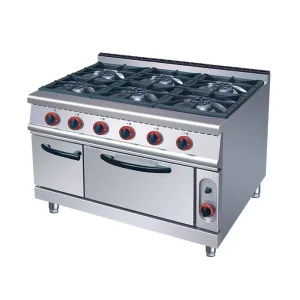
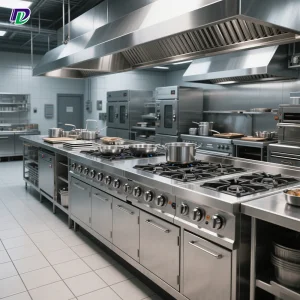
Every junction, weld, and seam in our cooking ranges is designed to eliminate microbial accumulation. Fully welded, radii-curved internal corners prevent food waste build-up, ensuring simple sanitization cycles that meet HACCP audit protocols in Germany.
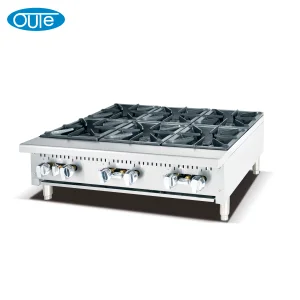
Incorporating high-performance burners with optimized air-to-fuel ratios, achieving up to 35% fuel savings. The integrated flame failure safety devices (FFD) guarantee automatic gas shutoff within seconds if the flame is accidentally extinguished.
Utilizing high-grade CNC fiber laser cutting and robotic welding systems (Factory 4.0), we maintain dimensional tolerances below 0.1mm, resulting in structural integrity that prevents warping under continuous thermal cycling.
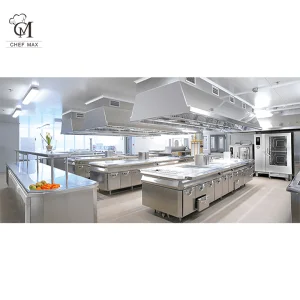
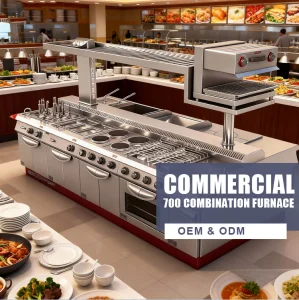
Sourcing professionals representing hospitality groups, high-capacity central kitchens, and maritime vessel caterers in Germany demand high levels of transparency. The modern sourcing paradigm focuses heavily on three critical factors: material tracing, environmental, social, and governance (ESG) compliance, and long-term technical reliability. In Hamburger commercial kitchens, equipment footprint optimization is vital. High real estate costs in urban areas like Altona or the Hafencity require compact multi-functional kitchen suites.
SUS304 (18/8 Stainless Steel): Composed of 18% chromium and 8% nickel, this alloy exhibits exceptional resistance to wet corrosion and chemical agents. It is the mandatory standard for components in direct contact with food and high-heat burner surrounds.
SUS201 Stainless Steel: Utilizing manganese to replace a portion of the nickel content, SUS201 offers a cost-effective solution for structural framing, backing sheets, and panels that are not subjected to intense acidic or high-humidity exposure. Our engineering process utilizes both alloys to balance cost and structural longevity.
Our manufacturing facility leverages Factory 4.0 methodologies to transition beyond traditional steel fabrication. Operating from Shandong, China, our specialized lines integrate robotic assembly, automatic sheet metal folding, and unified QA systems. By replacing manual welding processes with automated multi-axis TIG and MIG welding robots, we ensure that every seam is sealed to prevent grease intrusion and structural degradation.
Our advanced supply chain offers strategic resilience against global trade shocks. By maintaining direct integration with major steel mills and employing automated inventory systems, we guarantee consistent production lead times. This allows procurement departments in Hamburg to coordinate delivery timelines precisely with their installation deadlines. This optimization lowers capital expenditure and ensures swift commissioning.
| Performance Specification | Industry Standard (Typical) | Linru Factory 4.0 Standard | Operational Value to Hamburg Buyers |
|---|---|---|---|
| Steel Gauge Thickness | 1.0 mm - 1.2 mm | 1.5 mm - 2.0 mm (Heavy Duty) | Prevents structural deformation under heavy cast-iron pots. |
| Burner Energy Output | 5.0 kW - 6.0 kW | up to 9.0 kW (High Efficiency) | Accelerates cooking times during high-volume peak service. |
| Corrosion Resistance (Salt Spray Test) | 72 Hours | 240+ Hours (SUS304 Treatment) | Highly reliable in high-humidity and marine harbor environments. |
| Seam Construction | Spotted / Tack Weld | Continuous Robotic Weld | Eliminates dirt accumulation points and meets HACCP requirements. |
(Also operating as Feijin Import & Export) — A 15-year legacy of engineering excellence in commercial catering systems.
Shandong Linru Import & Export Trading Co., Ltd. is a professional enterprise integrating the production and sales of commercial kitchen equipment. With 15 years of experience in the field, we have grown from a single line of kitchen stoves to a diversified portfolio of high-quality branded products. From the very beginning, we have been committed to improving our product quality step by step, firmly believing that only by ensuring consistent quality can we truly earn our customers’ trust and recognition.
In the field of refrigeration equipment, we adhere to strict quality standards and rigorous requirements. Every product is built to meet national quality standards, customized to satisfy client needs, and crafted with attention to detail that reflects our company’s commitment to excellence.
Our heating products, including stoves, have obtained full-range CCC (China Compulsory Certification). In addition, our jacketed kettles are certified not only with CCC but also with the National Pressure Vessel Manufacturing License, ensuring customers can purchase with confidence and use with peace of mind.
With 15 years of experience in commercial kitchen equipment manufacturing, Feijin Import & Export is committed to continuous product refinement, rejecting low-cost, low-quality shortcuts to ensure every piece of equipment delivers long-term stability and reliability.
For refrigeration products, Feijin Import & Export combines high standards with customization — guaranteeing full compliance with national quality standards while tailoring technical parameters to match each client’s specific application and usage environment.
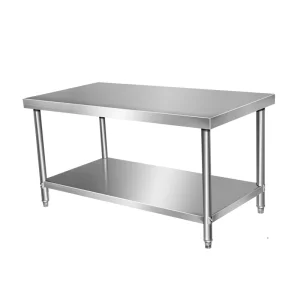
Feijin’s stainless-steel preparation equipment is built using high-grade 304 or 201 stainless steel, with meticulous attention to load-bearing design, craftsmanship, and finishing details, ensuring both durability and aesthetic excellence.
How our technical designs solve operational challenges across specific gastronomy and catering sectors in Northern Germany.
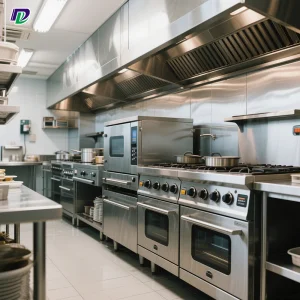
Operating a cooking range on container vessels, cruise liners, or portside terminals introduces significant vibration, humidity, and atmospheric salt. Under these conditions, basic mild steels rust within weeks, and standard cast iron burners clog from ocean salt crystallization. Our SUS304/SUS316 double-insulated ranges, fitted with anti-spill heavy guard rails and secure floor-mounting flanged feet, ensure safe operation even during vessel rolls. High-temperature mineral wool insulation keeps surface temperatures low in confined galley spaces, reducing cooling loads on air systems.
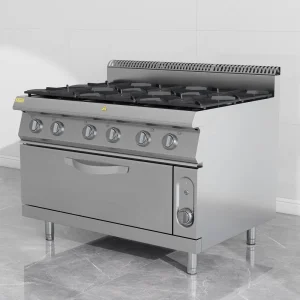
Catering operations serving schools, hospitals, and corporate headquarters demand rapid cycle times. Our range systems, with dual-fuel configurations (high-power gas burners paired with convection electric ovens), allow operators to switch fuels based on real-time energy tariffs. Deep-drawn burner bowls contain overflows, minimizing clean-up time between shifts.
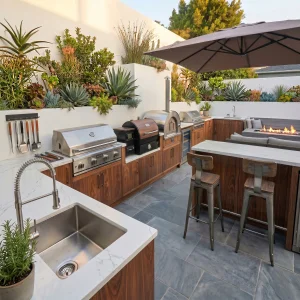
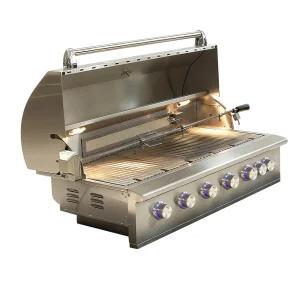
High-end outdoor dining spots along the Elbe River require kitchen equipment that blends clean aesthetics with environmental resilience. Our modular outdoor BBQ systems and modular cooking suites are built with brushed satin-finish SUS304 stainless steel. This surface resists weathering and fingerprints while maintaining a premium appearance that suits open-kitchen designs.
With Germany's strict energy policies and commitment to climate neutrality, Hamburg's hospitality sector is moving away from high-emission gas appliances. We support this transition with commercial induction range systems that deliver over 90% thermal efficiency (compared to 45% for conventional gas). These systems feature:
Direct answers regarding certifications, logistics, material properties, and customization capabilities for commercial kitchens in Hamburg.
Yes. Our commercial cooking ranges exported to Germany are built to accommodate standard European gas pressure configurations: natural gas (H-gas at 20 mbar) or liquefied petroleum gas (LPG/Propane at 50 mbar). We supply corresponding gas injection orifices and pressure regulators to match German regional requirements. All systems are fitted with integrated thermoelectric flame-out protection (thermocouples) that conform to CE gas appliance regulations (GAR).
SUS304 contains a high percentage of nickel (minimum 8%) and chromium (minimum 18%), providing excellent resistance against rust, acids, and high temperatures. It is recommended for cooking tops, burner surrounds, and food-contact areas. SUS201 uses manganese to replace some nickel, reducing cost while retaining high tensile strength. It is suitable for structural parts, support channels, and exterior panels that do not come into direct contact with acidic food materials.
We offer comprehensive FOB, CIF, and DDP shipping configurations. Through our dedicated logistics networks, we handle all export custom filings, container load optimizations, and bill of lading documents. Shipments arrive at the Port of Hamburg securely packed in heavy-duty, moisture-sealed plywood crates designed to withstand maritime shipping environments without damage.
Yes. We build our equipment using standardized European-specification modular components, including SIT gas valves, Robertshaw thermostats, and standard cast iron burners. This ensures that in-house technicians or third-party service providers in Hamburg can easily source and install replacement parts locally, minimizing operational downtime.
Our jacketed kettles are manufactured under our National Pressure Vessel Manufacturing License and undergo rigorous hydraulic and pneumatic pressure testing. For the European market, we provide design calculations, material certificates, and safety valve assemblies that meet local pressure safety requirements, ensuring safe operation at high steam pressures.
Explore our full range of certified commercial kitchen solutions, designed for high durability and performance.
 Linru Kitchen Equipment