Engineered for absolute reliability, precision processing, and continuous commercial operations across demanding global industries.
Metrics detailing our consolidated industrial footprint and technical contribution to the commercial food preparation market.
Evaluating manufacturing dynamics, precision engineering advancements, and the critical role of leading exporters.
In the highly competitive commercial kitchen and beverage equipment sectors, precision electric coffee grinders serve as the structural backbone of specialty beverage preparation. The consistency of a grind profile directly governs extraction parameters, solute yield, and flavor repeatability. To support global demand, B2B procurement professionals must analyze the macro-industrial capabilities of top exporters. This analysis focuses specifically on factories that leverage advanced CNC tooling, brushless DC motor integration, and automated assembly processes.
China's comprehensive manufacturing ecosystem provides unparalleled advantages for coffee grinder production. Key regional hubs in Guangdong, Zhejiang, and Shandong host robust supply chains. These chains integrate precision alloy casting, high-durability electric motor manufacturing, and microprocessor design. This high concentration of resource access yields several key competitive advantages:
The global coffee market is evolving rapidly from simple blade fragmentation mechanisms toward advanced, high-uniformity particle size distributions (PSD). Industry-leading factories are focusing development resources on key engineering fronts:
Brushless DC (BLDC) Motors: Conventional AC induction motors suffer from significant thermal output, rotational speed variability under load, and high energy draw. Integrating BLDC motors delivers high starting torque, ultra-low thermal transfer to the coffee grounds, and variable RPM controls. Variable RPM controls allow operators to tune particle structures for different brew styles.
Anti-Static Plasma Technology: Static electricity generated during high-speed grinding causes significant ground retention and chaff dispersion. High-end exporters now integrate active plasma generators. These generators neutralize electrostatic charges at the exit chute, minimizing waste and ensuring precise dosage weights.
Aerospace-Grade Burr Materials: Modern coffee grinder burrs are machined from high-carbon steel, tool-grade ceramic, or custom titanium alloys. Titanium coatings extend burr lifespans to over 2,500 kg of throughput. This lifespan is crucial for lowering maintenance costs in high-volume commercial installations.
Electric coffee grinders must adapt dynamically to diverse installation environments. An enterprise-level approach maps specific mechanical features to localized usage cases:
Addressing complex commercial variables, certification alignment, and quality assurance workflows for international trade.
We build our electrical assemblies to match regional electrical grids. We configure systems for 110V/60Hz in North America, 220V/50Hz in Europe and Asia, and custom three-phase layouts for heavy-duty commercial installations.
We provide full-spectrum OEM services. These include custom housing colors, laser-etched metal branding plates, customized digital displays, and customized retail packaging designs.
Every manufacturing run undergoes strict validation protocols. These include CE, CB, RoHS, and UL safety checks, alongside national quality standards.
Leveraging decades of mechanical engineering experience to manufacture high-performance commercial equipment.
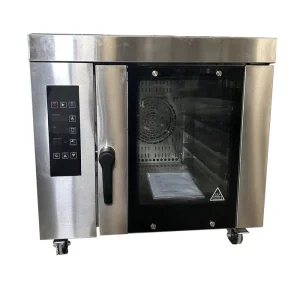
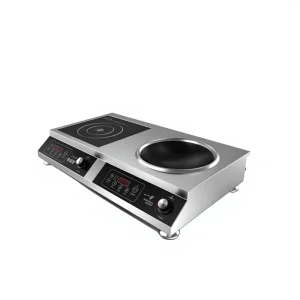
Our industrial experience is built on 15 years of technical expertise. Shandong Linru Import & Export Trading Co., Ltd. (operating under Feijin Import & Export) is a professional enterprise integrating the production and sales of commercial kitchen equipment. With 15 years of experience in the field, we have grown from a single line of kitchen stoves to a diversified portfolio of high-quality branded products. From the very beginning, we have been committed to improving our product quality step by step, firmly believing that only by ensuring consistent quality can we truly earn our customers' trust and recognition.
In the field of refrigeration equipment, we adhere to strict quality standards and rigorous requirements. Every product is built to meet national quality standards, customized to satisfy client needs, and crafted with attention to detail that reflects our company's commitment to excellence.

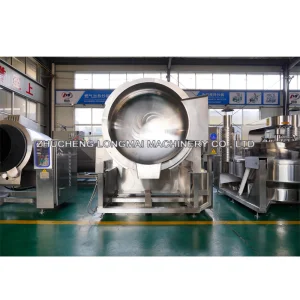
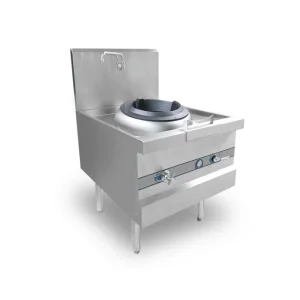
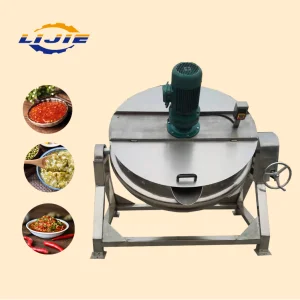
Our heating products, including stoves, have obtained full-range CCC (China Compulsory Certification). In addition, our jacketed kettles are certified not only with CCC but also with the National Pressure Vessel Manufacturing License, ensuring customers can purchase with confidence and use with peace of mind. We reject low-cost, low-quality shortcuts. This ensures every piece of equipment delivers long-term stability and reliability. This core value underpins our precision electric grinding manufacturing processes.
With 15 years of experience in commercial kitchen equipment manufacturing, Feijin Import & Export is committed to continuous product refinement, rejecting low-cost, low-quality shortcuts to ensure every piece of equipment delivers long-term stability and reliability.
For refrigeration products, Feijin Import & Export combines high standards with customization — guaranteeing full compliance with national quality standards while tailoring technical parameters to match each client's specific application and usage environment.
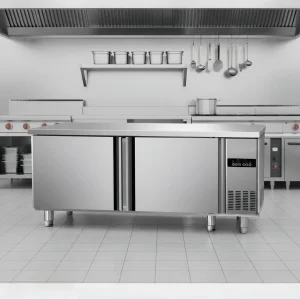
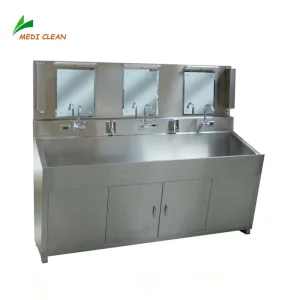
Feijin's stainless-steel preparation equipment is built using high-grade 304 or 201 stainless steel, with meticulous attention to load-bearing design, craftsmanship, and finishing details, ensuring both durability and aesthetic excellence.
Our 15-year history ensures robust quality assurance, stable supply chains, and engineering designs optimized for peak operational efficiency in commercial workspaces.
Technical details, export processes, and engineering answers from our support team.
Durable hardware and machinery designed to streamline commercial preparation, cooking, and sanitation workflows.
 Linru Kitchen Equipment