Precision-engineered machinery and configurations designed for industrial kitchens, large-scale catering, and retail food preparation environments.
A technical analysis of thermodynamics, materials selection, and sanitary compliance in commercial preservation architectures.
The global demand for healthy, fresh food alternatives has turned the modern salad bar from a simple restaurant side-feature into a centerpiece of high-margin foodservice operations. Whether situated in premium supermarkets, corporate dining facilities, institutional caterers, or quick-service restaurant (QSR) chains, salad bars demand precise thermal regulation to maintain food safety and organoleptic properties. Designing and manufacturing high-performance Custom OEM Salad Bar Equipment requires an in-depth understanding of thermodynamics, mechanical engineering, material science, and global sanitary standards.
From a technical perspective, preserving raw, delicate food products like leafy greens, chopped vegetables, meats, and dairy dressings requires a delicate balance of temperature and humidity. Unlike static refrigeration units, salad bars operate with open-top configurations, exposing cold wells directly to ambient room conditions. Engineers must deploy sophisticated air curtain dynamics, dual-zone evaporators, and insulated structural bodies to minimize thermal leakage while preventing surface dehydration of open food pans. Meeting these conditions consistently demands a reliable manufacturing partner equipped with advanced fabrication technologies and a deep compliance background.

Building high-grade refrigeration and thermal solutions backed by extensive domain expertise and quality certifications.
How our manufacturing infrastructure and material sciences optimize performance and increase operational lifespan.
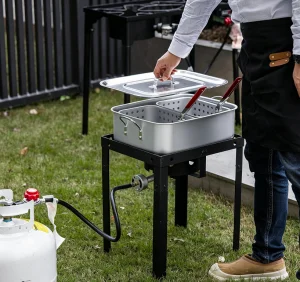
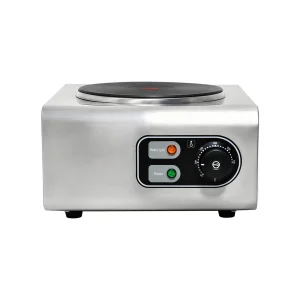
Feijin Import & Export's heating products, including heavy-duty stoves and cooking equipment, have obtained full-range CCC (China Compulsory Certification). Furthermore, our specialized jacketed kettles are certified not only with CCC but also with the National Pressure Vessel Manufacturing License, ensuring customers purchase with absolute confidence.
For refrigeration products, Feijin combines rigorous factory testing with high-level design customization. We guarantee compliance with food-safety standards while tailoring technical parameters, such as refrigeration output, compressor placement, structural configurations, and controller interfaces, to match client demands.
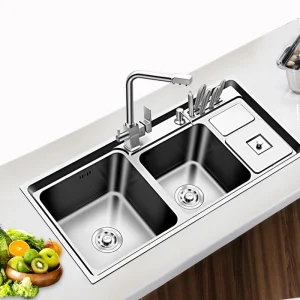
Feijin’s stainless-steel preparation equipment is built exclusively with high-grade AISI 304 or 201 stainless steel. By applying structural reinforcement, specialized sound-dampening underlays, and precision polishing, we deliver products characterized by maximum load capacity, corrosion resistance, and simple cleaning protocols.
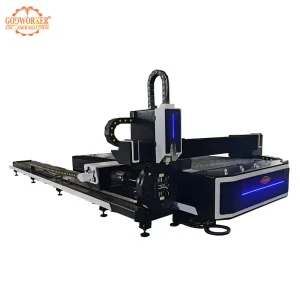
Leveraging high-precision 3015 Plate Tube CNC Fiber Laser Metal Cutting Machines (2000W to 6000W output powered by Raycus sources), our manufacturing facility delivers tight tolerances. Laser cutting ensures clean edges, zero heat-induced distortion of sheet metal, and perfect alignment for seamless welds.
Our salad bar units utilize green refrigerants like R290 and R600a, matching international environmental protocols. Paired with microcomputer temperature controllers, high-efficiency Embraco/Secop compressors, and optimized copper condensers, our units cut power draws by up to 35%.
Operating from our major manufacturing bases in Shandong, we maintain solid partnerships with leading maritime ports (Qingdao, Tianjin, Shanghai). We guarantee secure packaging, protective wooden crating, and complete export documentation to clear customs with zero delays.
Custom configurations tailored to the operational demands of distinct commercial spaces.
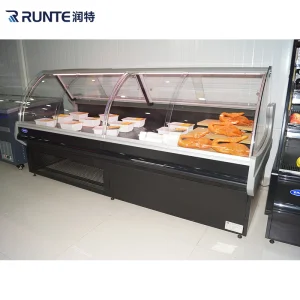
For large supermarkets, we construct double-sided, island-style salad bars featuring sneeze guards and electronic controls. Our units use durable horizontal refrigeration wells, designed to handle continuous loading and unloading cycles while maintaining constant temperatures. We match our designs to store aesthetics with custom panels and integrated LED lighting systems.
For corporate cafeterias, university dining halls, and military bases, we supply heavy-duty, modular drop-in units. These modular pieces easily integrate into custom millwork counters, giving designers flexibility. Built with thick-gauge stainless steel, they withstand high-traffic use and regular cleaning with harsh chemicals.
For fast-casual restaurants, speed of assembly and strict portion control are key. We design front-of-house prep tables with direct cooling wells, placing frequently used ingredients within easy reach. Our layouts focus on ergonomics, keeping cold storage bases right beneath the prep line to minimize restock times.
How new regulations, smart technologies, and sustainability goals are shifting the equipment design landscape.
Food safety regulations like the FDA's FSMA require strict temperature logging. Manual tracking is labor-intensive and prone to errors. Modern salad bars integrate digital controller cards with Bluetooth or Wi-Fi, allowing them to upload thermal logs directly to cloud databases. If a unit experiences a power outage or a drop in temperature, real-time alerts notify facility managers before food safety is compromised.
With global phasedowns of HFCs (like R134a and R404A), the industry is shifting toward natural hydrocarbon refrigerants like R290 (propane) and R600a (isobutane). These eco-friendly gases have zero ODP (Ozone Depletion Potential) and exceptionally low GWP (Global Warming Potential). Transitioning to these refrigerants requires optimized compressor configurations and spark-proof electrical safety controls, both of which are standard in our new equipment lines.
Operators need versatile layouts that can adapt to changing seasonal menus. Modern salad bars offer multi-temperature wells that switch between hot, cold, or ambient modes at the touch of a button. Our dual-mode designs use isolated thermal circuits, allowing operators to display chilled greens next to warm soup pots without thermal transfer between sections.
Post-pandemic food safety guidelines demand improved protection for self-serve stations. We integrate advanced features like touchless retractable sneeze guards, antimicrobial materials on high-touch surfaces, and built-in UV-C sanitation cycles. These features help keep display areas clean and rebuild consumer trust in self-service dining.
Answering critical technical and logistical questions for global procurement managers and foodservice professionals.
Explore our collection of commercial catering, baking, and chilling systems built to meet global performance standards.
 Linru Kitchen Equipment