In the highly competitive commercial food manufacturing sector, processing speed, cut consistency, and hygiene compliance are no longer optional metrics—they are critical pillars of operational profitability. Whether operating a large-scale central kitchen, a fast-casual restaurant franchise network, or an industrial food processing plant, selection of high-grade food machinery dictates long-term cost structures.
Shandong Linru Import & Export Trading Co., Ltd. (also operating under Shandong Binzhou Feijin Import & Export Trading Co., Ltd.) is an industry-leading manufacturer integrating professional production and global sales of premium commercial kitchen equipment. Over a 15-year manufacturing trajectory, the company has successfully scaled from a single line of high-performance kitchen stoves to a diversified portfolio of high-quality, globally branded food preparation and processing equipment.
Modern food prep demands high precision to increase Information Gain in the food processing pipeline. By retaining strict control over metallurgy, blade angle geometry, and electronic safety relays, Chinese manufacturing facilities produce heavy-duty commercial food cutters and vegetable dicers that match or exceed Western standard performance parameters at highly optimized capital expenditures.
B2B buyers, supply chain managers, and commercial kitchen engineers face complex decisions when sourcing industrial food preparation equipment. The modern procurement framework goes beyond the unit price, focusing extensively on operational durability, motor efficiency, thermal preservation of processed foods, and compliance certifications.
Acidic vegetable juices and high-humidity kitchen environments trigger rapid oxidation in low-grade steel. Feijin utilizes heavy-duty SUS304 stainless steel plates, providing premium resistance to corrosion, high tensile strength, and easy washdown capabilities.
Different foods demand specific cutting physics. Advanced commercial choppers utilize variable frequency drives (VFD) to adjust blade rotations from 500 RPM for fragile fruits to over 3000 RPM for emulsified meats and leafy greens, preventing structural cell damage.
Under continuous operations, motor thermal emission can cook products during the chopping cycle. Modern equipment designs integrate thermal cut-off switches and air-cooled ventilation ports to keep the temperature of the cutting chamber below 4°C.
To assist global procurement officers, we have compiled a structural comparison profile detailing operational performance benchmarks for commercial choppers sourced from leading Chinese factories:
| Equipment Category | Ideal Application Scale | Blade Steel Grade | Drive Type | Compliance Approvals |
|---|---|---|---|---|
| High-Speed Bowl Chopper & Emulsifier | Industrial Meat/Sausage Plants | High-Carbon Temper SUS420 | Variable Frequency Drive (VFD) | CE, CCC, ISO9001 |
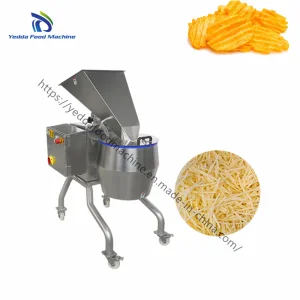
| Rotary Vegetable Dicer & Slicer | Central Kitchens & QSR chains | Tempered Food-Grade SUS304 | Direct Drive Induction Motor | NSF, CE |
| Industrial Food Processor (Tabletop) | High-Volume Restaurants & Hotels | Stainless Steel Alloys | Belt Drive with Safety Clutch | CE, CCC |
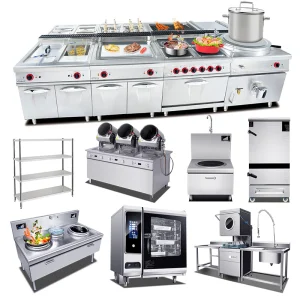
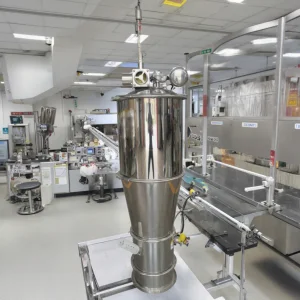
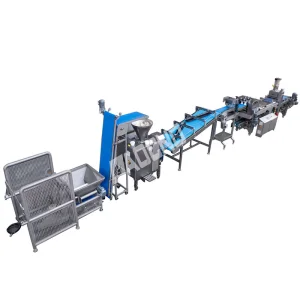
Modern food factories and commercial hospitality projects do not view kitchen tools in isolation. Rather, they require complete integrated processing layouts that optimize throughput and reduce human intervention. The integration of commercial choppers with automatic feeding hoppers, raw material washing stations, and pneumatic packaging lines is central to high-yield food logistics.
As shown by Feijin’s development of Food Factory Batching Systems and Automatic High Efficiency Powder Batching Machines, modern processing flows rely heavily on synchronization. For instance, when producing commercial baked goods or pre-packaged fresh meals:
By designing layout solutions that optimize spacing, reduce manual carrying, and control dust emissions, factories can cut labor overhead by up to 45% while maintaining compliance with local food safety regulations.
The food preparation machinery landscape is undergoing a digital transformation. Looking toward 2030, several technology currents are defining the engineering roadmaps of leading commercial chopper factories:
Integrating high-speed visual cameras above the chopper inlet allows real-time scanning to identify and eject bruised vegetables, stones, or foreign objects before they hit the rotating blades.
Acoustic and vibration sensors installed directly on the spindle shaft record changes in frequency patterns, notifying maintenance managers before blade dulling leads to product tearing.
By shifting from conventional belt-and-pulley systems to permanent magnet synchronous motors (PMSM), factories cut energy consumption while doubling low-speed torque profiles.
Shandong Province, particularly the Binzhou region, stands as one of the world's most dense manufacturing clusters for commercial kitchen hardware. This industrial ecosystem allows manufacturers like Feijin to access premium raw steel mills, specialized tooling shops, and electrical assembly facilities within a 50-mile radius.
This concentration provides a distinct advantage to international buyers:
Importing heavy machinery demands rigorous documentation to pass customs clearance and local health department inspections. In the refrigeration and cooking equipment sectors, Shandong Linru Import & Export Trading Co., Ltd. maintains strict compliance with national and international quality standards.
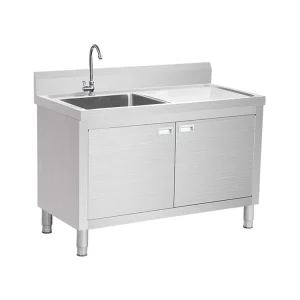
Feijin's heating product portfolio, including commercial stoves, carries full-range CCC (China Compulsory Certification). For high-temperature cooking systems, our jacketed kettles are manufactured with the National Pressure Vessel Manufacturing License, confirming that pressurized structural welds meet strict safety specifications under load. For global markets, products are manufactured in compliance with CE guidelines, and preparation tables/sinks are designed in accordance with NSF sanitation principles.
To ensure smooth startup phases, Feijin provides global partners with complete CAD installation layouts, electrical wiring diagrams, digital troubleshooting support, and rapid spare-parts distribution channels, minimizing operational downtime.
Discover the engineering philosophy and quality commitments that back every commercial kitchen installation we deliver.
With 15 years of experience in commercial kitchen equipment manufacturing, Feijin Import & Export is committed to continuous product refinement, rejecting low-cost, low-quality shortcuts to ensure every piece of equipment delivers long-term stability and reliability.
For refrigeration products, Feijin Import & Export combines high standards with customization — guaranteeing full compliance with national quality standards while tailoring technical parameters to match each client’s specific application and usage environment.
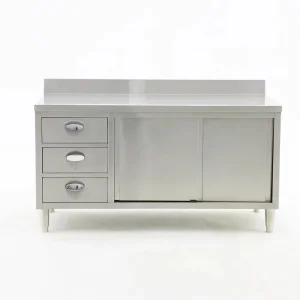
Feijin’s stainless-steel preparation equipment is built using high-grade 304 or 201 stainless steel, with meticulous attention to load-bearing design, craftsmanship, and finishing details, ensuring both durability and aesthetic excellence.
From the very beginning, we have been committed to improving our product quality step by step, firmly believing that only by ensuring consistent quality can we truly earn our customers’ trust and recognition.

For all primary food contact surfaces, including chopping chambers and blade assemblies, we exclusively utilize food-grade SUS304 stainless steel. Non-contact structural elements, like support legs or external cabinet skins, can be configured in SUS304 or SUS201 depending on the customer's budget and environmental requirements.
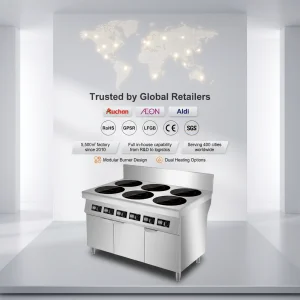
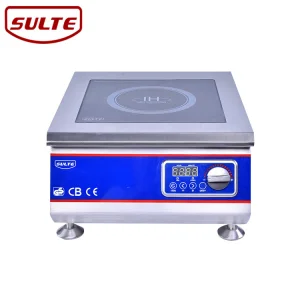
Yes, our heating product lines, including our high-power induction stoves, carry full-range CCC (China Compulsory Certification) and are engineered to meet international safety certifications such as CE. Our production facilities follow strict quality controls to ensure safe, stable electrical performance in high-voltage commercial environments.
Absolutely. Our jacketed kettles and pressurized cooking systems are certified under the National Pressure Vessel Manufacturing License. This guarantees that all structural pressure seams, safety valves, and pressure indicators have been rigorously inspected and approved for high-temperature commercial operations.
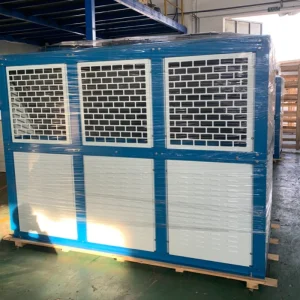
We adhere to strict refrigeration quality standards. Every cold storage unit, commercial display cabinet, and condensing unit (such as our 8HP Air-Water Cooled Condensing Unit) undergoes multi-stage pressure testing, refrigerant leak detection, and extended temperature stability testing before leaving the factory.
Standard product orders generally ship within 15–20 days. For custom engineering projects, which may require specialized CAD layouts, custom-molded parts, or specific motor modifications, our technical team will provide prototype reviews and manufacturing schedules, typically delivering finalized batches within 30–45 days.
 Linru Kitchen Equipment