Choosing the right kitchen equipment is crucial for catering success. It significantly impacts your efficiency and food quality. When diving into how to choose matching kitchen equipment for different catering business types, consider the unique requirements of each setup.
Different styles, such as buffet catering, food trucks, or fine dining, need varied tools. For instance, a food truck may prioritize compact cooking appliances. In contrast, a full-service restaurant may require larger, specialized machines. Understanding these differences is essential to maximize your resources and minimize waste.
Selecting equipment can be challenging. You may find yourself overwhelmed by options. It's not uncommon to choose tools that don’t fit your needs perfectly. Consider your specific menu items and customer expectations. Reflecting on past experiences can help guide your decisions. Ultimately, making informed choices leads to better efficiency and customer satisfaction.
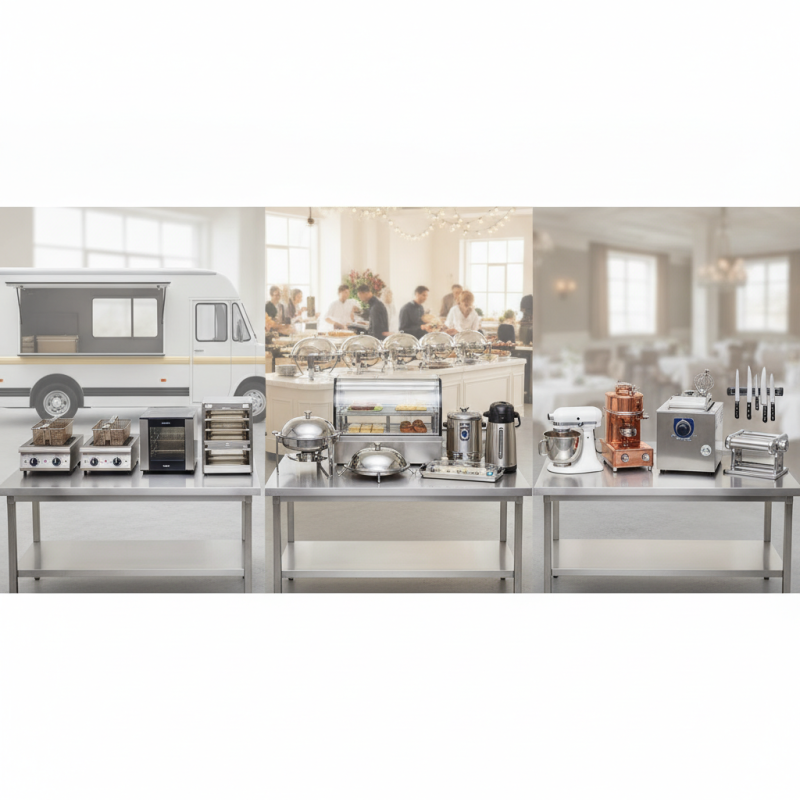
Understanding Different Catering Types and Their Equipment Needs
Choosing kitchen equipment tailored to specific catering types requires careful consideration. Different styles demand various tools to ensure efficiency and quality. For instance, a buffet setup often needs large warming trays, while a food truck may require compact, multi-functional appliances. Understanding these distinctions is key.
**Tip:** Assess the space you have. A confined area might limit your equipment choices. A food truck, for example, benefits from stackable items.
Different catering types also affect the type of food prepared. A sit-down dinner requires elegant serving dishes and proper cooking gear. In contrast, a casual picnic may focus on portable utensils and easy-to-clean options. It's important to reflect on the food experience you're aiming to create.
**Tip:** Consider the menu when selecting equipment. Choosing tools that serve multiple purposes can save both space and money.
Don't overlook the importance of reliable equipment. Investing in high-quality items can enhance your service and satisfaction. However, remember that purchasing too much can overwhelm your workspace. Regularly evaluate your inventory to improve efficiency.
Kitchen Equipment Needs for Different Catering Types
This chart illustrates the equipment needs for various catering types, showcasing the priority of equipment types based on their specific needs.
Essential Kitchen Equipment for On-Site Catering Events
When planning on-site catering events, selecting the right kitchen equipment is crucial. This choice directly impacts efficiency and meal quality. According to industry research, almost 72% of caterers regard efficient equipment as vital for success in this business. Everything from grills to refrigeration units plays a role in event execution.
Consider portable equipment tailored for on-site use. A reliable food warmer can maintain dish temperatures. It's a simple yet essential tool. Furthermore, mobile prep tables allow chefs quick access to ingredients, ensuring responsiveness. Notably, 58% of caterers believe that the ability to prep on-site enhances service quality. The fast-paced environment can be managed better with flexible kitchen setups.
However, investing in equipment isn't always straightforward. Financial constraints can limit choices. Many caterers report difficulties when upgrading outdated appliances. Regular maintenance of equipment is often neglected, leading to inefficiencies. This oversight can result in delays during high-pressure events. Reflecting on your equipment's reliability is as critical as choosing it. Therefore, always evaluate your current assets before securing new tools for future catering endeavors.
Kitchen Equipment for Off-Premise Catering: What to Consider
When selecting kitchen equipment for off-premise catering, durability is paramount. Equipment should withstand transport and frequent use. Consider portable appliances like food warmers and coolers, which maintain ideal temperatures. Heavy-duty containers are essential for safe storage and transport.
Versatility is another key factor. Choose multi-functional equipment to save space and money. For example, a compact grill can serve various menu items. Ensure your tools are easy to clean. This will reduce handling time and ensure food safety.
Think about energy efficiency too. Equipment that consumes less power can cut costs over time. Investing in energy-efficient units may have higher upfront costs but offers savings. Reflect on your specific catering style. Will you be cooking on-site or providing pre-prepared meals? Your answer impacts your choices. Each event may highlight different needs and capabilities.
Key Considerations for Choosing Equipment for High-Volume Catering
When selecting equipment for high-volume catering, efficiency and reliability are paramount. High-capacity ovens and warmers facilitate cooking and preserving food quality at scale. Choosing equipment that minimizes downtime is crucial. Breakdowns can lead to significant disruptions during busy events. Streamlining workflow is another important aspect. Equipment should be arranged for easy access and movement.
Consider energy consumption as well. High-efficiency models might have a higher upfront cost but save money over time. Balancing quality with cost is essential for budget-conscious caterers. Evaluate maintenance needs too. Complex machines may require specialized training, which can be a drawback. Simple designs might be less appealing but offer reliability.
A thorough understanding of the cooking processes is also vital. Some cuisines demand specific equipment types. For instance, a deep fryer is essential for certain fried dishes, while steamers are necessary for healthy options. Missing such details can affect the menu offerings. Always reassess what worked and what didn’t after each event. It’s an ongoing learning process. Adapting to feedback ensures continuous improvement.
Versatile Kitchen Tools for Specialized Dietary Catering Services
When it comes to specialized dietary catering services, choosing the right kitchen tools is crucial. Equipment must be versatile to handle various dietary needs, including gluten-free, vegan, and allergy-sensitive options. According to a recent industry report, nearly 30% of consumers follow specific dietary restrictions. Catering services need to be equipped to meet this demand efficiently.
Investing in multifunctional kitchen tools is essential. A high-quality food processor, for instance, can assist in creating diverse dishes quickly. This tool allows chefs to prepare everything from nut-based spreads to vegetable purees. Moreover, using different cutting boards for allergens can prevent cross-contamination. Many chefs also find that digital scales help achieve precise measurements, particularly when crafting gluten-free recipes. These tools ensure consistency and quality.
Despite advancements, challenges remain. Some catering services struggle with adapting to new dietary trends or fail to educate staff adequately. Training and consistent practice are vital for maintaining high standards. Equipment may also require regular upgrades to tackle evolving dietary needs. Implementing a review system can help identify gaps in the kitchen setup. Understanding the importance of versatile kitchen tools ultimately leads to better service and customer satisfaction.
FAQS
: Assess the type of catering. Different setups require specific tools to maintain quality and efficiency.
Limited space can restrict choices. Compact, stackable items work well in smaller areas like food trucks.
Large warming trays and serving dishes are essential for keeping food at the right temperature.
High-quality items enhance service quality, but too much equipment can overwhelm your workspace.
Invest in multifunctional tools and use separate cutting boards to avoid cross-contamination.
Financial constraints and outdated appliances can hinder upgrades and efficiency during events.
Mobile prep tables and reliable food warmers allow for quick access to ingredients and maintain dish temperatures.
A food processor and digital scales assist in creating diverse dishes and achieving precise measurements.
Proper education regarding dietary tools ensures consistent quality and helps adapt to new trends.
Regular assessments can reveal gaps and help optimize the setup for different catering demands.
Conclusion
In the article titled "How to Choose Kitchen Equipment for Different Catering Types," the author explores the diverse equipment needs of various catering styles, highlighting the importance of matching kitchen tools to specific business types. Understanding the nuances of on-site catering events versus off-premise options is essential, as each requires tailored equipment to ensure efficiency and effectiveness.
When selecting kitchen equipment for high-volume catering, factors like durability and capacity take precedence, while specialized dietary services demand versatile tools that can accommodate unique requirements. The article serves as a guide on how to choose matching kitchen equipment for different catering business types, emphasizing that careful consideration of each event's demands is crucial for success in the catering industry.

 Linru Kitchen Equipment