Outdoor catering looks simple until wind, uneven ground, and limited water challenge the cooking team. A compact kitchen must support speed, hygiene, safety, and consistent food quality. This guide explores China Top 10 Portable Kitchen Equipment for Outdoor Catering, focusing on tools that can handle busy service conditions. It considers portable stoves, gas burners, food warmers, preparation tables, sinks, refrigerators, ovens, grills, storage units, and waste containers. Not every product suits every event. Field conditions differ.
Readers will compare equipment by capacity, weight, fuel use, setup time, cleaning requirements, and durability. Heat control matters. Stainless steel surfaces are easier to sanitize and maintain during long outdoor shifts. Foldable designs can save vehicle space, but some lightweight frames may feel unstable on rough ground. How to select portable kitchen equipment for outdoor catering service depends on the menu, guest volume, power access, weather, and available staff. A high-output wok burner may suit noodles and stir-fries, while an electric warmer may work better for quiet indoor-style service. A weak choice can slow the entire operation.
Reliable recommendations require practical experience and careful product evaluation. Where possible, buyers should review load ratings, insulation quality, spare parts, warranty terms, and manufacturer testing information. Operators must also confirm local food safety, fire prevention, fuel storage, and electrical requirements before use. Real sites are rarely perfect. One windy afternoon can expose a poor design quickly. That limitation deserves attention. The following overview offers useful options, while encouraging caterers to test equipment before trusting it at a crowded event.
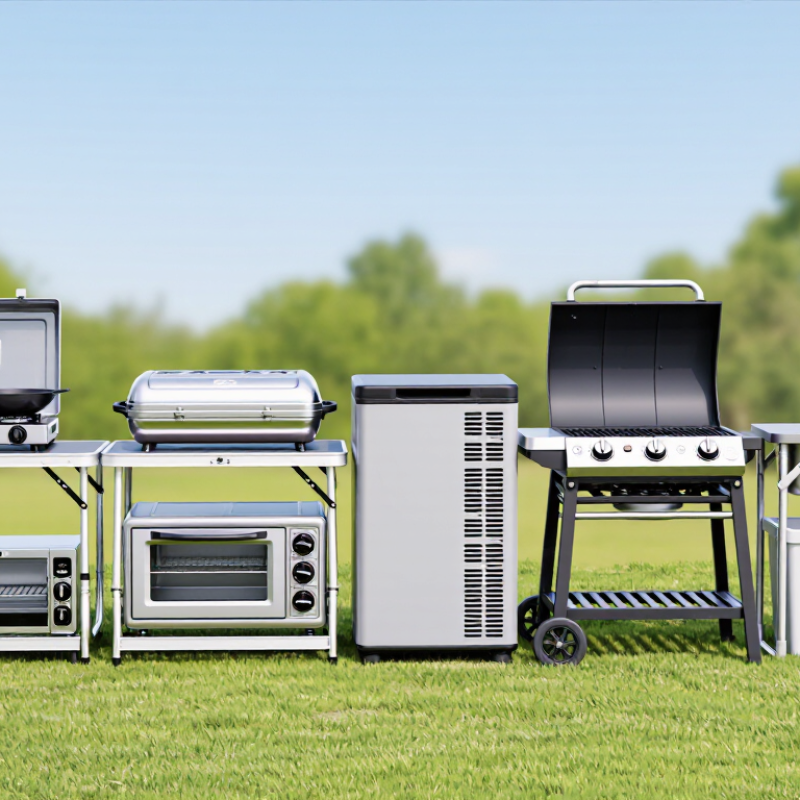
Portable kitchen equipment for outdoor catering is a set of movable tools that lets a crew prepare, cook, hold, and serve food away from a fixed kitchen. It can include folding prep tables, insulated food carriers, handwashing stations, mobile burners, coolers, and compact serving counters. The defining feature is not simply small size. Equipment must be practical to transport, quick to set up, and suited to the available power, water, and weather conditions. A windy field changes the cooking plan. So does a long walk from the vehicle.
The scale of food service helps explain the need for flexible setups. The National Restaurant Association’s 2024 State of the Restaurant Industry report projected U.S. restaurant sales of $1.1 trillion for that year, across a sector serving varied settings and customer needs. That figure is not an outdoor-catering market estimate, but it shows the size of the food-service ecosystem. In practice, caterers choose equipment around menu and service time: insulated carriers help keep prepared dishes hot, while separate coolers protect chilled ingredients. These choices need checking against the actual job. A compact burner may look ideal, yet struggle with a large pot in gusty weather. That detail is easy to miss. Reliable layouts also leave clear paths for staff and keep raw ingredients apart from ready-to-serve food, following guidance in the U.S. Food and Drug Administration’s Food Code.
Portable kitchen equipment for outdoor catering refers to compact, movable cooking, preparation, refrigeration, and sanitation equipment designed for use at temporary food-service locations. The specifications below show typical commercial ranges; actual dimensions, weight, capacity, and performance vary by equipment configuration and local safety requirements.
| Rank | Equipment | Primary Function | Typical Packed or Folded Size | Typical Weight | Typical Capacity or Output | Power or Fuel | Typical Setup Time | Best Outdoor Catering Use |
|---|---|---|---|---|---|---|---|---|
| 1 | Portable Commercial Cooking Station | Provides one or more burners for boiling, sautéing, simmering, and general cooking. | Approximately 600–1,200 mm W × 450–750 mm D × 700–900 mm H | 25–70 kg | Usually 1–4 burners; approximately 10–30 kW total heat input for gas models | Propane, natural gas where available, or electric power | 10–25 minutes | Mobile meal production, street food, festivals, and temporary service kitchens |
| 2 | Portable Griddle or Flat-Top Grill | Provides a heated flat surface for burgers, pancakes, eggs, vegetables, and sandwiches. | Approximately 700–1,000 mm W × 500–750 mm D × 300–500 mm H | 30–80 kg | Cooking surface commonly 0.35–0.70 m²; approximately 8–25 kW heat input | Propane, natural gas, or electric power | 10–20 minutes | High-volume breakfast service, burgers, grilled sandwiches, and quick-service menus |
| 3 | Portable Deep Fryer | Fry-cooks foods such as chips, chicken, seafood, and snack items in heated oil. | Approximately 400–800 mm W × 600–800 mm D × 800–1,100 mm H | 20–55 kg | Typically 8–25 L oil capacity; approximately 8–30 kW heating power | Propane, natural gas, or high-amperage electric power | 15–30 minutes | Temporary food stalls and events requiring fast, batch-based fried foods |
| 4 | Portable Convection or Combi Oven | Bakes, roasts, reheats, and cooks food with circulating hot air; combi units may also use steam. | Approximately 600–900 mm W × 650–900 mm D × 650–1,000 mm H | 45–120 kg | Commonly 4–10 tray positions; approximately 4–15 kW heating power | Electric power, with water connection or tank for steam-capable models | 20–40 minutes | Prepared meals, baked goods, roasted foods, and menu operations needing controlled cooking |
| 5 | Portable Food Preparation Table | Offers a hygienic, stable work surface for chopping, portioning, plating, and ingredient assembly. | Approximately 900–1,800 mm W × 600–750 mm D × 850–900 mm H when assembled | 15–45 kg | Typical working area of 0.55–1.35 m²; optional lower shelf or storage area | No direct power requirement | 3–10 minutes | Food preparation, service-line organization, and separation of raw and ready-to-eat foods |
| 6 | Mobile Refrigerated Cabinet or Prep Counter | Keeps perishable ingredients and prepared foods within a controlled chilled range. | Approximately 700–1,500 mm W × 700–850 mm D × 850–1,100 mm H | 55–130 kg | Approximately 100–450 L internal storage; operating range commonly 0–5°C | Electric power, usually 220–240 V or 110–120 V depending on configuration | 15–30 minutes, excluding pre-chilling | Outdoor catering involving meat, dairy, seafood, salads, desserts, and other temperature-sensitive foods |
| 7 | Portable Food Warmer or Heated Holding Cabinet | Maintains cooked food at serving temperature during transport, holding, and service. | Approximately 500–800 mm W × 600–850 mm D × 700–1,300 mm H | 25–75 kg | Commonly 5–16 tray positions; holding temperature often adjustable from approximately 60–90°C | Electric power; some insulated units require no continuous power | 10–20 minutes | Buffets, weddings, corporate events, banquets, and delayed service periods |
| 8 | Portable Beverage and Hot-Water Station | Heats and dispenses water, coffee, tea, soup, or other hot beverages. | Approximately 300–700 mm W × 300–650 mm D × 500–1,000 mm H | 8–35 kg | Approximately 5–30 L boiler or beverage capacity; around 5–20 L per hour output | Electric power or gas, depending on the heating system | 5–15 minutes | Breakfast service, beverage counters, outdoor receptions, and self-service stations |
| 9 | Portable Ice Maker or Insulated Ice Station | Produces or stores ice for beverages, food display, chilling, and temporary service. | Approximately 350–700 mm W × 450–700 mm D × 500–1,200 mm H | 15–55 kg | Approximately 10–50 kg of ice production per 24 hours; storage commonly 3–15 kg | Electric power; requires a water supply or manual filling | 10–20 minutes for installation; initial ice production may take 15–60 minutes | Beverage catering, outdoor bars, seafood displays, and hot-weather events |
| 10 | Portable Hand-Washing and Utility Sink | Supports hand hygiene, utensil washing, and basic cleaning where fixed plumbing is unavailable. | Approximately 500–900 mm W × 450–700 mm D × 900–1,300 mm H | 15–50 kg when empty | Fresh-water tank commonly 10–40 L; wastewater tank usually equal to or larger than the fresh-water capacity | Manual pump, foot pump, or low-voltage electric pump; hot-water models require electricity or gas | 10–25 minutes | Temporary kitchens, markets, mobile catering units, and locations without permanent sanitation facilities |
Operational note: Outdoor catering equipment should be selected according to local food-safety regulations, electrical and gas codes, ventilation requirements, potable-water access, wastewater handling rules, and the expected service volume.
It includes movable tools for preparing, cooking, holding, and serving food outdoors. Examples include folding tables, coolers, food carriers, burners, sinks, and serving counters. It must be easy to transport and quick to assemble. Small size alone is not enough.
Match the equipment to the menu, guest count, service speed, and location. A 100-guest lunch may need several cooking stations during peak service. Check packed dimensions, fuel access, power supply, and setup time. A suitable unit can still fail if it blocks the service path.
Wind can weaken burner performance and make cooking slower. Direct sunlight can make coolers work harder. Rain may interrupt electrical equipment and food service. Use stable equipment with secure lids, handles, and suitable weather protection. Weather changes everything.
Keep hot food at 135°F or above and cold food at 41°F or below. Use a calibrated probe thermometer, not appearance alone. Measure the food’s center, especially inside deep containers. A simple temperature log helps staff notice problems early.
Arrange handwashing, cold storage, preparation, cooking, and serving in one clear direction. Keep raw ingredients away from ready-to-eat food. Leave safe space around hot surfaces, cables, hoses, and fuel connections. Staff should not cross constantly. That wastes time.
Place equipment on firm, level ground. Inspect legs, wheels, latches, cables, hoses, plugs, and seals. Confirm that ventilation remains open around heat-producing units. Prepare clean water, soap, sanitizer, and covered waste containers. Test the complete setup before guests arrive.
Wipe preparation surfaces often during service. Empty grease containers safely and clean removable parts after each event. Inspect burners, thermostats, wheels, plugs, and seals regularly. Replace damaged parts instead of making improvised repairs. Shortcuts can create larger problems.
Prepare for rain, wind, equipment failure, and power interruptions. Keep alternative cooking, cooling, or holding options available when practical. I once placed the waste container too far away. The layout looked tidy, but staff walked unnecessarily. Test the workflow, not just the equipment.
Portable kitchen equipment for outdoor catering includes compact, movable, and durable tools that allow food preparation, cooking, storage, serving, and cleaning at temporary venues. This may include portable cooking units, preparation tables, food warmers, refrigeration containers, water tanks, sinks, storage boxes, lighting, serving counters, and waste-management equipment. How to select portable kitchen equipment for outdoor catering service depends on menu requirements, event size, mobility, power or fuel availability, weather conditions, food safety, setup time, durability, and cleaning convenience. Equipment should be easy to transport, stable during operation, and suitable for the available workspace.
The top 10 options in China can be organized by function: portable stoves, griddles, ovens, steamers, refrigerators, insulated containers, preparation stations, hand-washing sinks, serving counters, and storage or waste units. Together, these tools support cooking, temperature control, ingredient handling, service, hygiene, and cleanup. Proper setup should separate raw and cooked foods, ensure ventilation and safe connections, and maintain clear work areas. Regular cleaning, inspection, temperature monitoring, and secure storage help extend equipment life and support efficient outdoor catering operations.

 Linru Kitchen Equipment