Commercial kitchens combine open flames, hot grease, electrical loads, and limited working space. Small gaps can become serious fire risks.
NFPA’s Structure Fires in Eating and Drinking Establishments report recorded an estimated 7,410 structure fires annually between 2017 and 2021. These incidents caused about $165 million in direct property damage. The figures show why supplier selection must extend beyond stainless-steel appearance and equipment price.
This guide examines China’s top 10 commercial kitchen fire safety suppliers. It focuses on hood systems, wet-chemical suppression, fire-rated ductwork, gas safety controls, detection devices, and maintenance support. Buyers should also verify testing records, installation experience, spare-parts availability, and local code compatibility. A polished certificate is not enough.
For readers asking “How to comply with fire prevention requirements for commercial kitchen installation,” NFPA 96 remains a key technical reference. It addresses exhaust systems, grease removal, clearances, access panels, suppression equipment, and inspection practices. UL 300 testing is also important for commercial cooking fire-extinguishing systems.
Robert Solomon, a former NFPA division director, summarized the principle clearly: “Fire safety is a system, not a single product.”
That sentence matters.
A strong supplier should connect design, installation, commissioning, inspection, and staff training. The best ranking can still miss regional service quality or weak after-sales support. Therefore, this comparison treats supplier reliability as an operating issue, not merely a manufacturing claim. Real kitchens need visible protection above the fryer, clean filters, accessible shutoff controls, and documented inspections. Safety becomes credible when those details remain correct during the busiest service.
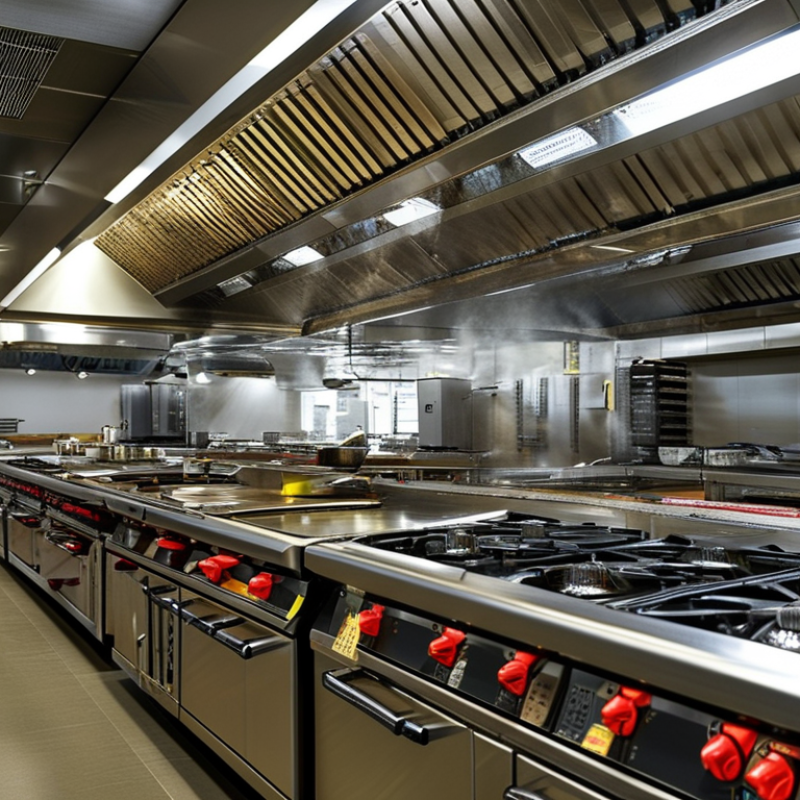
A reliable commercial kitchen fire safety supplier starts with the kitchen, not a product catalog. Experienced technicians inspect cooking lines, exhaust hoods, grease filters, fuel sources, and nearby storage. They ask how staff actually work during a busy service. That practical experience matters because a fryer station creates different risks from a wood-fired oven. A serious supplier records these details before proposing equipment. They should explain detection methods, suppression coverage, alarm links, and manual activation points in plain English. No rushed promises.
Professional knowledge appears in the design documents. The supplier should provide clear drawings, equipment schedules, inspection intervals, and maintenance records. Installation teams need documented training and field experience. They must test alarms, release mechanisms, pressure indicators, and kitchen shutdown functions after installation. Staff training should include a live demonstration, not only a signed attendance sheet. Ask for evidence of qualifications, product testing, insurance, and compliance with applicable local requirements. Independent references from restaurants, hotels, or institutional kitchens can reveal service quality better than polished brochures.
Reliability is proven after handover. A dependable supplier offers scheduled inspections, replacement guidance, emergency contact procedures, and traceable service reports. They respond when a suppression cylinder shows a fault, not months later. Response times should be written into the service agreement. Cost still matters, but the cheapest quote may exclude training or follow-up visits. That is where confusion begins. I would question suppliers who promise zero risk. Kitchens change, staff rotate, and grease accumulates quickly. A useful supplier admits these limits and helps operators review them regularly. A perfect checklist does not exist. Honest review does.
How China’s Top 10 Commercial Kitchen Fire Safety Suppliers Are Selected
Selection begins with verified fire performance, not product variety. NFPA’s recent fire analysis estimated 158,400 home structure fires involving cooking equipment annually in the United States. Commercial kitchens face denser heat, grease, and operating hours. Therefore, suppliers should provide test records for extinguishing systems, kitchen hoods, duct protection, alarms, and manual release devices. Documents should match applicable Chinese standards and recognized references, including GB 55037-2022 and NFPA 96.
Testing matters. So does field experience. We review factory quality controls, third-party laboratory reports, installation photographs, maintenance logs, and emergency response records. A supplier with repeated commissioning evidence deserves more trust than one offering impressive brochures. We also examine detection speed, discharge coverage, corrosion resistance, replacement intervals, and compatibility with gas shutoff systems. FM Global property-loss guidance reinforces this practical view: ventilation, grease removal, inspection, and automatic suppression must work together.
Cost receives limited weight. Cheap equipment may create expensive gaps. We interview restaurant operators, inspectors, and service engineers where possible. Their feedback exposes weak training or delayed spare parts. Still, this method is imperfect. Service records can be incomplete, and factory demonstrations may not represent a busy kitchen. Human judgment remains involved. The final ranking rewards transparent evidence, dependable maintenance, local technical support, and continuous improvement rather than marketing claims.
A standards-based evaluation framework for comparing commercial kitchen fire safety suppliers without publishing company or brand data.
The 100-point model prioritizes compliance with applicable Chinese fire-safety requirements and recognized kitchen fire-protection practices, followed by independently documented testing, system engineering capability, after-sales coverage, and verifiable project experience. The percentages represent selection weights rather than market share or company revenue.
Leading commercial kitchen fire safety suppliers provide more than extinguishers. Their product ranges often include wet chemical suppression systems, kitchen hood protection, fire blankets, alarms, emergency lighting, and portable extinguishers. Some also supply detection sensors, control panels, and automatic fuel shut-off devices. These products should match the cooking equipment, ventilation layout, and available installation space.
Reliable suppliers usually offer site surveys, system design, installation, commissioning, and scheduled maintenance. Experienced technicians inspect grease ducts, nozzles, detection lines, and control connections. They also provide staff training and clear inspection records. A supplier should explain testing procedures and recommend products accepted by the relevant local authorities. Certification matters, but paperwork alone does not prove good field performance. Real installation experience is equally important.
Tips: Ask for a written maintenance schedule, service response time, and replacement-part availability. Request project references from similar kitchens. Check whether technicians receive practical training. Avoid choosing only by price. A cheaper system may lack suitable coverage or after-sales support. Even experienced teams can overlook a blocked nozzle or poorly positioned detector. Regular cleaning and honest inspections remain essential. No checklist is perfect, so kitchen managers should review risks after equipment changes.
China’s top 10 commercial kitchen fire safety suppliers should be compared by evidence, not catalog claims. A reliable supplier explains which certifications apply to each component. ISO 9001 supports production control, while CE, CCC, UL 300, or EN compliance may depend on the target market. Certification scope matters. A certificate for electrical parts does not automatically cover the complete extinguishing system.
Technology also separates capable suppliers from simple equipment traders. Look for automatic detection above cooking lines, wet-chemical release, fuel shutoff, manual activation, and alarm integration. During a site visit, engineers should measure hood length, duct layout, fuel type, and appliance spacing. These details affect nozzle placement and system capacity. Some suppliers now offer remote status monitoring. It is useful, but network dependence can create another failure point.
Pricing should include design, installation guidance, testing, training, spare cylinders, and replacement parts. The lowest quotation may omit commissioning or local documentation. Support quality becomes visible after delivery. Ask about response times, video training, English manuals, maintenance schedules, and parts availability. A serious supplier provides drawings and test records. Some comparison tables remain incomplete because suppliers disclose little about factory testing. That limitation deserves attention. A confident ranking can still be imperfect. Evidence from recent projects, inspection photographs, and signed performance records gives buyers a more reliable basis.
| Supplier Profile | Typical Product Focus | Certification & Compliance Package | Detection & Suppression Technology | Typical Project Range | Indicative Equipment Price | Typical Lead Time | Technical Support | Overall Fit |
|---|---|---|---|---|---|---|---|---|
| 01 | Wet-chemical systems for restaurant hoods, plenums, ducts, and cooking appliances | ISO 9001 commonly available; CE documentation for export models; local fire-product compliance must be checked | Linear fusible-link or pneumatic detection, wet-chemical discharge, manual pull station, gas and electrical shut-off interface | Small to medium commercial kitchens | CNY 8,000–25,000 | 15–30 working days | Remote design review, installation drawings, commissioning guidance, replacement-agent support | ★★★★☆ Value-focused projects |
| 02 | Integrated kitchen suppression packages with control panels and alarm interfaces | ISO 9001; CE or EMC/LVD test documentation may be available; verify EN 16282 or equivalent project requirements | Heat detection, electronic control panel, wet-chemical cylinders, alarm relay, emergency shut-off, optional remote monitoring | Medium kitchens and multi-outlet food-service sites | CNY 18,000–55,000 | 20–40 working days | CAD coordination, wiring diagrams, start-up checklist, online training, spare-parts advice | ★★★★☆ Balanced integration |
| 03 | Modular systems for chain restaurants, hotels, and standardized kitchen layouts | ISO 9001; export documentation; component-level CE, UL, or equivalent approvals may apply to selected parts only | Pre-engineered nozzle layouts, fusible links, wet-chemical agent, appliance-specific coverage, interlock controls | Repeated layouts and chain deployments | CNY 15,000–45,000 per kitchen | 20–35 working days | Template-based engineering, batch documentation, remote commissioning, standardized maintenance schedules | ★★★★☆ Good for rollouts |
| 04 | Custom-engineered fire suppression for large hotel, institutional, and central kitchens | ISO 9001; project-specific fire-code review; third-party testing and local authority approval may be required | Hydraulic calculation, multi-zone detection, wet-chemical suppression, gas/electric interlocks, alarm and BMS integration | Large or technically complex kitchens | CNY 45,000–150,000+ | 30–60 working days | Site survey, engineered drawings, method statements, commissioning records, operator training | ★★★★★ Complex projects |
| 05 | Compact systems for cafés, food courts, bakeries, and small cooking lines | ISO 9001 may be available; CE documentation is common for export electrical components; verify agent and cylinder approvals | Compact wet-chemical cylinder, thermal detection cable, simple manual release, appliance shut-off connection | Small kitchens with limited hood coverage | CNY 6,000–18,000 | 10–25 working days | Basic layout assistance, video installation guidance, operation manuals, consumables supply | ★★★☆☆ Budget installations |
| 06 | Export-oriented suppression equipment and private-label manufacturing | ISO 9001; CE and export test files often available; confirm whether approvals cover the complete assembled system | Wet-chemical cylinders, stainless-steel pipework, detection links, discharge nozzles, configurable control accessories | Distributor and OEM/ODM programs | CNY 10,000–40,000 | 25–50 working days | Private-label documentation, packaging customization, product training, export logistics support | ★★★★☆ OEM and distribution |
| 07 | Stainless-steel kitchen fire protection assemblies and installation accessories | ISO 9001 may be available; material certificates and component test reports should be requested | Wet-chemical suppression paired with stainless-steel piping, appliance nozzles, fusible links, and manual activation | Projects prioritizing corrosion resistance and appearance | CNY 12,000–42,000 | 20–40 working days | Fabrication drawings, material documentation, installation coordination, maintenance-part availability | ★★★★☆ Durable installations |
| 08 | Fire alarm and kitchen suppression integration for commercial building systems | ISO 9001; electrical products may carry CE or CCC documentation; confirm compatibility with the building fire-alarm system | Electronic heat detection, addressable or conventional alarm interface, wet-chemical release, relay outputs, remote fault indication | Buildings requiring centralized monitoring | CNY 25,000–85,000 | 25–55 working days | Protocol review, alarm-matrix preparation, panel programming support, commissioning assistance | ★★★★☆ Integrated facilities |
| 09 | Replacement cylinders, wet-chemical agents, nozzles, detection links, and maintenance kits | Product-specific test reports and material documentation should be checked; certification varies by component and destination market | Compatible replacement components for wet-chemical systems; selection must match agent type, pressure rating, and nozzle design | Retrofit, maintenance, and service contracts | CNY 1,500–20,000 per service package | 7–25 working days | Parts identification, maintenance instructions, replenishment planning, service-provider coordination | ★★★☆☆ After-sales supply |
| 10 | Turnkey kitchen fire-safety packages combining suppression, exhaust, and site services | ISO 9001 may be available; final compliance depends on local fire code, installation quality, and authority acceptance | Kitchen hood suppression, exhaust-system coordination, gas detection option, emergency isolation, alarm and ventilation interlocks | New-build restaurants and renovation projects | CNY 35,000–180,000+ | 30–75 working days | Site measurement, project management, installation supervision, testing, training, and maintenance planning | ★★★★★ Turnkey delivery |
Choosing among China’s top commercial kitchen fire safety suppliers requires more than comparing prices. Look for manufacturers with documented experience in restaurants, hotels, and food-processing kitchens. Ask for factory photographs, production records, and recent project references. A reliable supplier should explain how its equipment protects cooking lines, exhaust hoods, ducts, and gas shutoff points.
Request technical drawings before ordering. Confirm detection methods, suppression coverage, alarm connections, cylinder capacity, and maintenance access. Components should have clear test reports and traceable quality records. Check whether the supplier understands your local installation requirements, not just its own catalog. A low quotation may hide weak documentation or difficult replacement procedures.
Communication also matters. Test response times with practical questions about grease buildup, false alarms, and humid kitchen conditions. Ask for installation training, commissioning support, spare parts, and inspection guidance. Video calls can reveal whether engineers understand the system or simply repeat prepared answers. I have seen attractive proposals fail because room dimensions were guessed. That mistake is expensive. Even experienced buyers should review drawings with an independent fire safety professional before payment. A thoughtful supplier will accept technical questions, clarify limitations, and record every agreed specification in writing.
They should inspect cooking lines, exhaust hoods, grease filters, fuel sources, and nearby storage. Staff workflow matters too. A fryer station differs from a wood-fired oven.
They should explain detection methods, suppression coverage, alarm connections, and manual activation points. The explanation should use plain English. No rushed promises.
Request clear drawings, equipment schedules, inspection intervals, and maintenance records. Ask for training evidence, testing documents, insurance, and applicable compliance records.
Technicians should test alarms, release mechanisms, pressure indicators, and kitchen shutdown functions. Staff need a live demonstration. A signature alone proves little.
Reliable suppliers schedule inspections and provide emergency contact procedures. They also offer replacement guidance and traceable service reports. Response times should appear in writing.
Evaluation should consider verified fire performance, factory controls, laboratory reports, installation photos, and maintenance logs. Strong evidence matters more than attractive brochures.
Heat, grease, ventilation, and long operating hours create changing risks. Detection should trigger suitable suppression and fuel shutdown functions. Every connection needs testing.
Not always. A low quote may exclude training, spare parts, inspections, or follow-up visits. That creates expensive gaps later.
No honest supplier should promise zero risk. Kitchens change, staff rotate, and grease accumulates quickly. Risk can be reduced, not erased.
Service records may be incomplete, and factory demonstrations may not reflect busy service. Human judgment remains involved. I would review the decision regularly.
This article presents a practical overview of China’s top 10 commercial kitchen fire safety suppliers, focusing on the qualities that define a reliable partner. It explains how suppliers can be evaluated through product quality, engineering experience, safety performance, certifications, installation capability, maintenance services, response times, and customer support. The discussion also covers essential solutions such as fire suppression systems, detection devices, alarm controls, exhaust-duct protection, emergency shutoff equipment, and inspection services.
Readers will learn how leading suppliers compare in technology, customization, pricing transparency, compliance documentation, and after-sales support. Special attention is given to How to comply with fire prevention requirements for commercial kitchen installation, including risk assessment, proper system design, professional installation, regular testing, staff training, and preventive maintenance. The article concludes with a clear supplier-selection framework to help restaurants, hotels, catering facilities, and institutional kitchens choose a qualified Chinese supplier that offers dependable protection, practical project support, and long-term service value.
Linru Kitchen Equipment