In 2026, eco-friendly kitchen appliances must do more than reduce electricity use. They should also support quieter, healthier indoor living. A refrigerator humming beside a dining table can affect sleep, conversation, and concentration. An efficient dishwasher may still waste water if its cycles do not match household needs. Small details matter.
This guide explores the 2026 top eco-friendly low noise kitchen appliances for indoor kitchens. It considers measured sound levels, energy labels, water consumption, repairability, and material durability. Product specifications offer useful evidence, but real kitchens can sound different. Cabinets, flooring, and wall surfaces often amplify vibration. We should remember that laboratory results are not perfect.
How to choose eco-friendly low noise kitchen appliances for indoor kitchens depends on more than a low decibel number. Look for independent testing, transparent efficiency data, replaceable parts, and a warranty from a responsible manufacturer. Check whether the appliance remains quiet during startup, draining, or compressor cycling. Those moments are easily overlooked.
A practical evaluation might include standing one meter away, listening during evening use, and recording energy readings over several weeks. This approach reflects real household experience rather than marketing language alone. Professional reviews and recognized certification programs can strengthen that assessment. Still, no single appliance suits every home. Floor plans, cooking habits, budgets, and local electricity sources change the result.
Quiet choices can feel modest. Their daily impact is not.
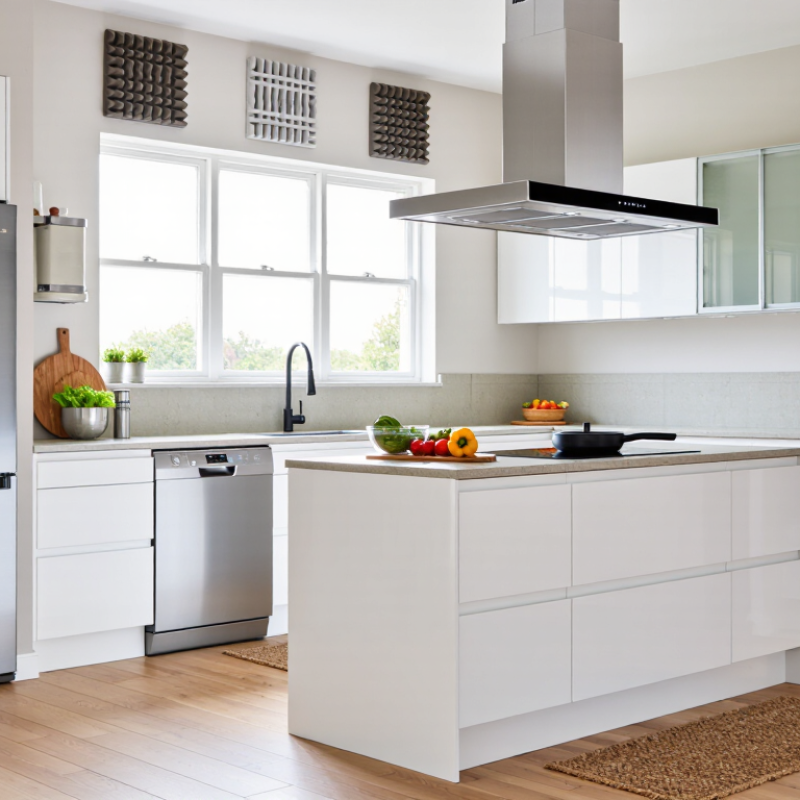
What Makes a Kitchen Appliance Eco-Friendly and Low Noise?
An eco-friendly kitchen appliance uses fewer resources throughout its life, not only during operation. Check its electricity, water, and standby consumption. A lower wattage does not always mean better performance. A poorly insulated appliance may run longer and waste more energy. Look for clear test results, repair information, and durable materials. Replaceable seals, accessible filters, and recyclable metal parts can extend useful life. That matters.
Noise requires more than a marketing phrase. Look for measured sound levels in decibels, preferably from independent testing. A quiet dishwasher may operate near 42–48 decibels, while a refrigerator can sound different during cooling cycles. Installation also changes the experience. Uneven floors, loose panels, and blocked ventilation can create rattling or humming. Small details matter. Soft-close hinges and rubber feet may reduce vibration, but they cannot fix a poorly designed motor.
I once chose an appliance because its energy label looked impressive. Its pump, however, became noticeably louder after several months. The published rating was accurate, but it did not describe every operating mode. That experience changed my checklist. I now compare annual energy use, cycle duration, noise measurements, warranty terms, and repair access. Some newer materials also raise recycling questions. Eco-friendly design is improving, but it is not perfect. Consumers should question vague claims and keep realistic expectations.
| Appliance Type | Eco-Friendly Features to Look For | Useful Efficiency Measures | Typical Noise Considerations | Practical Buying Check |
|---|---|---|---|---|
| Refrigerator | Efficient compressor, good door seals, well-insulated cabinet, and refrigerant with a lower global-warming impact. | Compare annual electricity use in kWh/year on the applicable energy label; choose a size suited to household needs. | Many household models operate around 32–47 dB(A), though compressor cycles, ice makers, and installation can affect sound. | Check the energy label, refrigerant information, stated operating noise, and clearance requirements for ventilation. |
| Dishwasher | Low-water and low-energy cycles, soil sensors, efficient drying options, and a filter that can be cleaned and maintained. | Compare energy use per 100 cycles and water use per cycle where these figures are provided on the local energy label. | Quiet household models are often rated about 38–45 dB(A); sound levels depend on the cycle and the kitchen installation. | Compare like-for-like capacity and cycle figures. Check whether eco cycles take longer and whether a removable filter is accessible. |
| Induction Cooktop | Directly heats compatible cookware, reducing heat lost to the room; durable glass surfaces can be cleaned with little water. | Look for clearly stated power settings and controls that let users match heat output to the pan and cooking task. | The cooktop itself has no flame, but its cooling fan and cookware can make audible sounds; noise varies by setting and pan. | Confirm cookware compatibility, ventilation needs, and whether the product provides a stated sound level or fan-control details. |
| Range Hood | Efficient motor, washable or replaceable filters, and a capture area sized for the cooking surface. | Compare airflow (often given in m³/h or CFM) with electrical input; more airflow is not automatically more efficient. | Noise rises with fan speed. Some models publish sound ratings in sones or dB(A), which should be compared using the same measure. | Check duct size, installation method, filter availability, and sound ratings at the airflow levels you expect to use. |
| Electric Oven | Good insulation, an accurate thermostat, efficient convection where suitable, and controls that avoid unnecessary preheating. | Use the applicable energy label or standardized energy-use figures; compare products with similar capacity and cooking modes. | Fans and cooling systems create most operating sound. Noise may change during cooking and after the oven is switched off. | Review energy-use figures for conventional and fan-assisted modes, useful capacity, and the manufacturer’s cleaning guidance. |
| Food Processor or Blender | Long-lasting construction, replaceable parts, durable seals, and efficient motors that avoid unnecessary idle operation. | Compare rated power in watts alongside capacity and intended use; wattage alone does not show total energy use. | Motor and blade noise can be substantial and varies with load, speed, and ingredients. Published ratings are not always available. | Look for repair information, spare-part availability, stable operation, and a speed setting suited to everyday tasks. |
| Small Kitchen Appliances | Repairable design, durable materials, minimal standby consumption, and automatic shutoff where appropriate. | Check rated power, standby use if stated, and energy use for the appliance’s typical task rather than power alone. | Sound depends on the appliance and operating mode; compare published ratings only when measurement conditions are comparable. | Consider expected frequency of use, product lifetime, replaceable components, and whether the appliance can be switched off fully. |
| How to compare: Energy labels and test methods vary by country and appliance category. Compare products of similar size and capacity, use the same units, and check the label’s measurement basis. Noise ratings are most useful when measured under comparable conditions; installation, room acoustics, flooring, and maintenance can affect perceived sound. | ||||
They use less electricity during repeated daily tasks. A refrigerator saves energy every hour, while induction transfers heat directly to suitable cookware. One meal may show little difference. Months of use can matter.
No. Check annual energy use, appliance size, water consumption, and useful features. A large refrigerator running half-empty may waste resources. Labels cannot correct poor household habits.
Not always. Compare sound ratings under similar testing conditions. Also check electricity and water use. A dishwasher may sound louder while draining.
Keep its vents clear and clean the door seals. Avoid placing hot leftovers inside. Decide quickly before opening the door. I sometimes forget this.
Run dishwashers and laundry machines with full, sensible loads. Choose lower-temperature cycles when cleaning results remain acceptable. Do not overfill the machine. Small habits matter.
An oversized appliance may consume resources while running half-empty. Choose capacity that matches regular household needs. A smaller, well-used model can be the better fit.
Clean filters and seals according to the manual’s schedule. A clogged filter can reduce airflow or cleaning performance. Worn seals may let cold air escape. Maintenance is easy to postpone.
Stop using it and inspect for loose items or uneven placement. Check that the appliance stands on stable, level flooring. Do not ignore sudden mechanical noise. That deserves attention.
Yes. An appliance that lasts longer may avoid repeated replacement costs and material use. Check repair support before buying. I may focus too much on energy ratings alone.
Choosing kitchen appliances that are both eco-friendly and quiet can reduce household energy use while making indoor spaces more comfortable. Efficient motors, effective insulation, water-saving cycles, and thoughtful power controls can lower operating costs and environmental impact. In 2026, options such as induction cooktops, efficient refrigerators, quiet dishwashers, and well-designed ventilation systems may offer a useful balance of sustainable performance and reduced noise. Compare appliances by their energy and water use, sound levels, materials, durability, repairability, and expected lifetime costs—not just their purchase price.
How to choose eco-friendly low noise kitchen appliances for indoor kitchens begins with matching features to your household’s actual needs. Select an appropriate size, check independent performance information where available, and consider whether parts can be maintained or replaced. Responsible use matters too: run full loads when practical, choose efficient settings, keep filters and vents clean, and follow care instructions. These habits can help appliances perform efficiently, remain quieter, and last longer.

 Linru Kitchen Equipment