Commercial kitchens are entering a practical, technology-led phase. Operators now expect equipment to cook faster, consume less energy, and remain easy to clean. These demands shape the 2026 equipment market.
What is the mainstream development trend of modern commercial kitchen equipment? The answer is not simply automation. It is connected efficiency, compact design, safer operation, and measurable performance. Combination ovens, induction ranges, smart refrigeration, automated cooking systems, and water-saving warewashers are gaining attention. Each type solves a visible problem, from crowded preparation lines to unstable utility costs.
Richard Young, a recognized foodservice energy-efficiency specialist, expresses the principle clearly: “The best energy is the energy you do not use.” His observation remains highly relevant. A modern combi oven may adjust temperature automatically, while a smart refrigerator can warn managers about abnormal door openings. Small signals matter.
Yet technology is not automatically progress. A connected appliance can still fail when staff lack training. An automated fryer may reduce repetitive work, but it cannot replace sound menu planning. This is where the 2026 discussion becomes more realistic.
The strongest equipment choices will balance output, durability, maintenance, and staff experience. Stainless-steel surfaces should withstand constant wiping. Controls should remain understandable during a busy dinner service. Replacement parts should be accessible.
Some predictions may age badly.
That is normal.
This guide examines the leading commercial kitchen equipment types expected to influence purchasing decisions in 2026. It focuses on practical value, operational evidence, and the details that determine whether new equipment performs beyond the showroom.
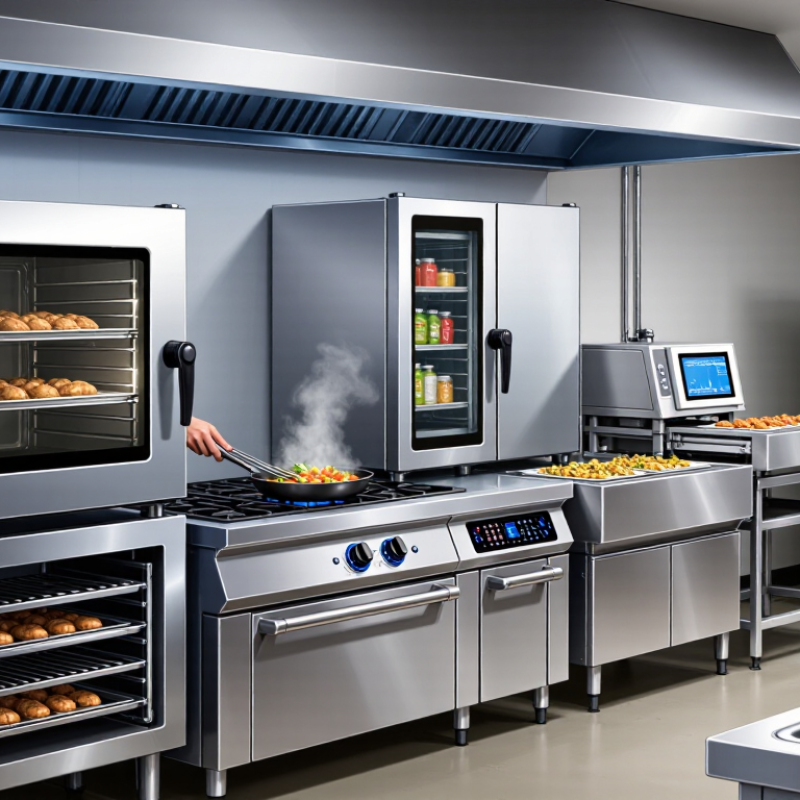
What defines top commercial kitchen equipment in 2026 is not a shiny finish or a long feature list. It is measurable performance under pressure. The U.S. Environmental Protection Agency reports that restaurants can use five to seven times more energy per square foot than many commercial buildings. Therefore, efficient refrigeration, induction cooking, ventilation, and warewashing deserve serious attention. ENERGY STAR guidance also shows that certified commercial refrigerators can use about 20% less energy than standard models. These savings matter during long service hours.
Labor efficiency is equally important. The National Restaurant Association’s 2024 industry report identified persistent labor and operating-cost pressure across foodservice businesses. The best equipment now reduces repetitive work without removing operator control. Combi ovens with programmable cooking, rapid-chill systems, and connected temperature monitoring can improve consistency. However, connected equipment is not automatically better. Weak networks, poor training, and expensive repairs can reduce its value. That is an uncomfortable but practical point.
Tips: Measure energy use, recovery time, cleaning minutes, noise, and service access before buying. Ask staff to test the controls with wet hands. Check whether replacement parts are locally available. My first instinct is often to choose the fastest machine, but slower equipment may be safer and easier to maintain. A perfect specification rarely exists. Choose equipment that fits the menu, room layout, staff skills, and real peak-hour workload.
What Are the 2026 Top Commercial Kitchen Equipment Types?
High-volume food preparation depends on equipment that delivers steady heat, speed, and repeatable results. Combi ovens remain central because they roast, steam, and bake in one chamber. They can handle multiple pans while protecting moisture in poultry, vegetables, and prepared grains. Convection ovens support fast baking and crisp finishing during crowded service periods. Heavy-duty ranges still matter for sauces, stock, sautéed vegetables, and last-minute adjustments. In my experience, recovery time matters more than impressive maximum temperature. A burner that weakens after repeated use can delay an entire ticket line.
Tilt skillets and braising pans help kitchens produce large batches with fewer transfers. They are useful for chili, rice, braised meat, and thick sauces. Large-capacity fryers support consistent output, but filtration and oil-temperature control require disciplined routines. Small temperature changes can affect texture and waste. Rapid-cook ovens may help with finishing or limited-space operations, though they should not replace equipment built for the main production load. I have seen kitchens overbuy speed and underplan ventilation, drainage, and service clearance. That mistake becomes expensive. Reliable layouts leave room for pan movement, cleaning, repairs, and safe staff access. Digital probes, automatic shutoffs, and programmable controls improve consistency, but employees still need practical training. Technology helps. It does not correct poor loading habits or rushed preparation.
This chart compares typical operating temperature ranges for widely used core cooking equipment in high-volume food preparation. Combi ovens offer the broadest range because they combine steaming, convection, and combination cooking, while deep fryers and griddles operate within more focused temperature bands. Actual settings vary by recipe, food load, and equipment configuration.
What Are the 2026 Top Commercial Kitchen Equipment Types?
Refrigeration and Cold-Storage Systems for Commercial Kitchens
Refrigeration remains a core equipment category for commercial kitchens in 2026. Daily service depends on stable temperatures, clean airflow, and quick access. In my experience, reach-in refrigerators suit busy prep stations because cooks can retrieve ingredients without crossing the kitchen. Undercounter units save space beneath worktables. Walk-in coolers support high-volume operations, especially when deliveries arrive several times weekly.
Cold storage is not only about capacity. Door seals, shelf spacing, and condenser maintenance directly affect performance. A crowded cooler blocks circulation and creates uneven temperatures. That small mistake can shorten the life of fresh produce, dairy, and prepared foods. Digital monitoring systems can record temperature changes and alert staff before a serious loss occurs. Still, sensors need regular checks. Technology is helpful, not flawless.
Blast chillers are becoming more valuable for kitchens preparing soups, sauces, and cooked proteins in batches. They reduce cooling time and support safer handling procedures when used correctly. Ice machines also deserve careful placement. Heat, grease, and poor drainage can reduce output and hygiene. I have seen well-equipped kitchens struggle because their refrigeration doors opened into narrow service paths. The equipment was good. The layout was not. A practical assessment should consider delivery schedules, menu volume, cleaning routines, and available ventilation before any purchase.
Food preparation equipment in 2026 will focus on speed, consistency, and safer workflows. High-capacity mixers, vegetable processors, combi ovens, and refrigerated prep tables remain practical choices. Grand View Research valued the global commercial kitchen equipment market at approximately 11.3 billion dollars in 2023. Its forecast also indicates steady growth through 2030. That growth reflects demand for labor-saving equipment, not simple replacement cycles.
Cleaning and sanitation equipment deserve equal attention. Commercial dishwashers, pre-rinse spray valves, grease management systems, and dedicated handwashing stations support safer daily operations. The CDC estimates that foodborne illnesses affect about 48 million people annually in the United States. It also reports approximately 128,000 hospitalizations and 3,000 deaths each year. These figures make sanitation equipment a risk-control investment, rather than a back-of-house convenience. The 2022 FDA Food Code also emphasizes proper cleaning, sanitizing, temperature control, and hand hygiene.
Energy performance will influence purchasing decisions. The U.S. Environmental Protection Agency reports that commercial kitchens can use roughly two to three times more energy per square foot than other commercial spaces. Efficient ovens, induction equipment, ventilation systems, and dishwashers can reduce waste. However, equipment alone cannot fix poor routines. A clean dishwasher still performs badly with overloaded racks or neglected filters.
That is the weak point. Operators should measure water use, cleaning time, chemical consumption, and staff compliance after installation, then adjust the process when real results disagree with the plan.
Commercial kitchens in 2026 are prioritizing equipment that saves energy without slowing production. High-efficiency induction ranges deliver fast, controlled heat and reduce waste around the cooking line. Modern combi ovens adjust temperature, humidity, and cooking time through built-in sensors. These controls help maintain consistent results during busy service.
Connected refrigeration systems now track internal temperatures, door openings, and compressor performance. Managers can review alerts before spoiled ingredients become an expensive problem. Heat-recovery systems also capture warmth from refrigeration or dishwashing operations. That recovered energy can support hot-water production.
Small changes matter. In my experience, accurate meter readings reveal savings that operators often overlook.
Automation is expanding through portioning machines, robotic stirring systems, and self-monitoring warewashers. These tools reduce repetitive labor and improve process consistency. However, automation is not a cure-all. A sensor may detect abnormal cooking temperatures, but trained staff must still inspect food quality and equipment condition. Poor calibration can quietly create waste. Kitchens should compare energy bills, maintenance records, cleaning time, and output before replacing reliable equipment. A practical purchase also needs accessible service support, clear safety controls, and simple staff training. The smartest system is useless when employees cannot understand its warnings or bypass its settings.
They keep ingredients within stable temperature ranges during storage and service. Reach-in units help cooks retrieve food near preparation areas. Undercounter models preserve space beneath worktables. Walk-in coolers suit larger deliveries and high-volume menus.
Review delivery frequency, menu volume, shelf space, and peak production days. A cooler should not be packed tightly. Blocked airflow creates uneven temperatures. More capacity is not always better.
Check door seals, clean condensers, and keep shelves properly spaced. Digital monitors can record temperature changes and send alerts. Sensors still require regular testing. Technology is helpful, not flawless.
Blast chillers support kitchens preparing soups, sauces, and cooked proteins in batches. They shorten cooling time when used correctly. Staff must still follow proper handling procedures. Fast cooling does not replace training.
Keep it away from heat, grease, and poor drainage. These conditions can reduce output and hygiene. Leave enough room for cleaning and service access. Placement matters greatly.
High-capacity mixers, vegetable processors, combi ovens, and refrigerated prep tables can improve consistency. They reduce repetitive labor during busy periods. The best choice depends on the menu. Bigger is not automatically wiser.
Commercial dishwashers, pre-rinse spray valves, grease management systems, and handwashing stations support safer routines. Dishwashers need clean filters and correctly loaded racks. Overloaded racks leave surfaces dirty. Small details matter.
Efficient ovens, induction equipment, ventilation systems, and dishwashers may reduce energy use. Operators should also track water, chemicals, cleaning time, and staff compliance. Equipment cannot repair poor routines. The plan may fail. Review real results.
In 2026, top commercial kitchen equipment is defined by reliability, high productivity, safety, flexible performance, and efficient use of energy and space. Core cooking systems such as ovens, ranges, fryers, grills, steamers, and induction units support high-volume food preparation while maintaining consistent results. Refrigeration and cold-storage equipment plays an equally important role by preserving ingredients, organizing inventory, and maintaining stable temperatures throughout busy service periods.
Food preparation tools, dishwashing systems, waste-management solutions, and sanitation equipment help kitchens improve workflow and meet strict hygiene expectations. At the same time, connected controls, automation, energy-saving designs, heat recovery, and intelligent monitoring are becoming central to modern operations. What is the mainstream development trend of modern commercial kitchen equipment? It is the integration of smart technology, sustainable performance, labor efficiency, modular design, and data-based management. Together, these developments enable commercial kitchens to reduce operating costs, improve consistency, support staff productivity, and adapt more easily to changing menus and customer demand.

Linru Kitchen Equipment